Introduction
When choosing a surface decoration method for custom plush toys, embroidery and printing are often treated as interchangeable options. In practice, they lead to very different outcomes in cost control, durability, and overall product perception.
This article explains how each method works, where it performs well, and where it creates hidden risks—based on plush sample comparisons and real production feedback rather than marketing claims.
1. Structural Difference: Thread vs Surface Layer
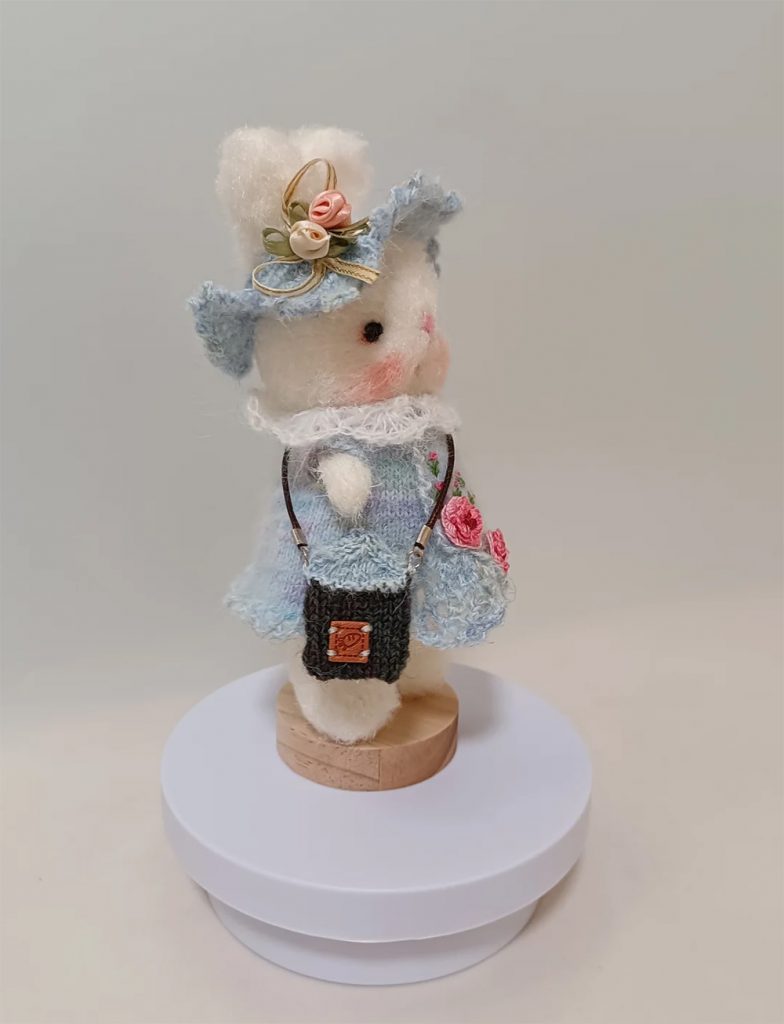
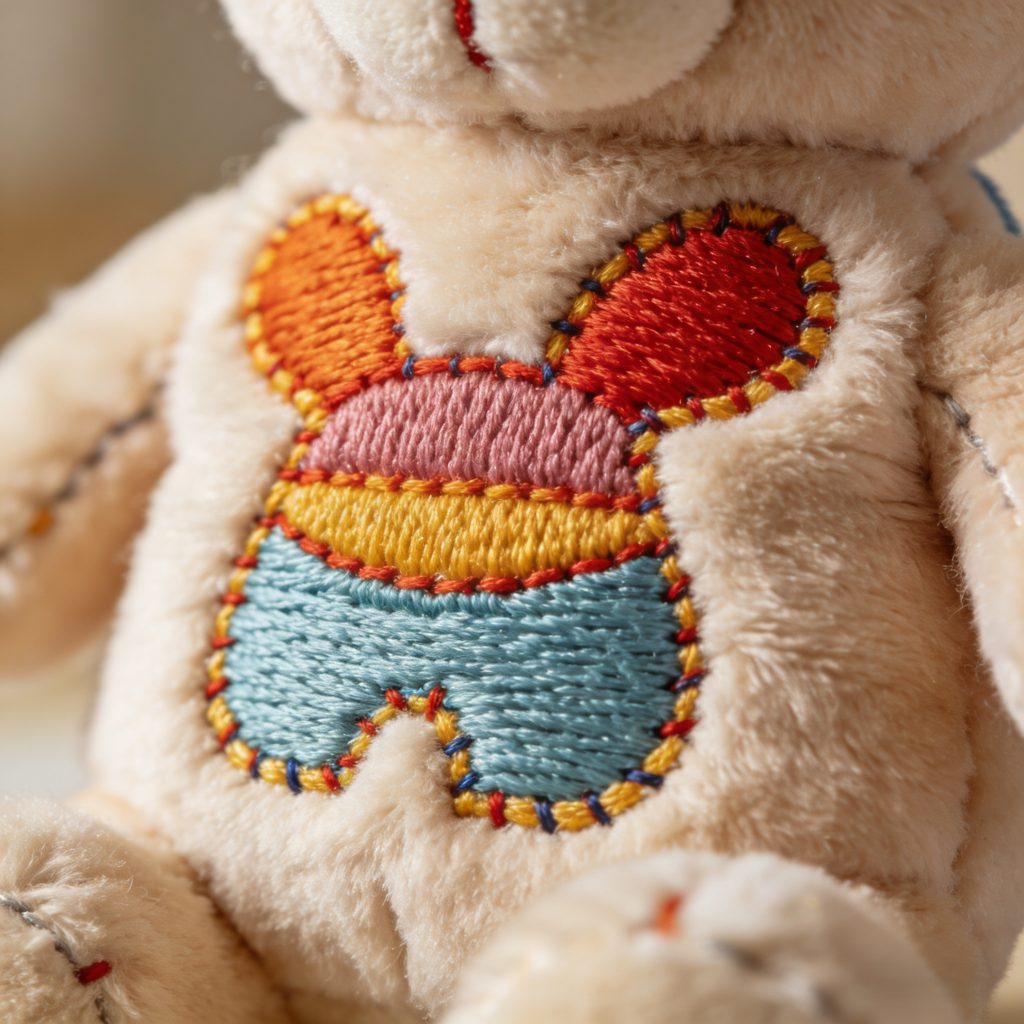
Embroidery forms the design through stitched threads anchored into the plush fabric. This creates a raised, tactile surface that becomes part of the toy’s structure.
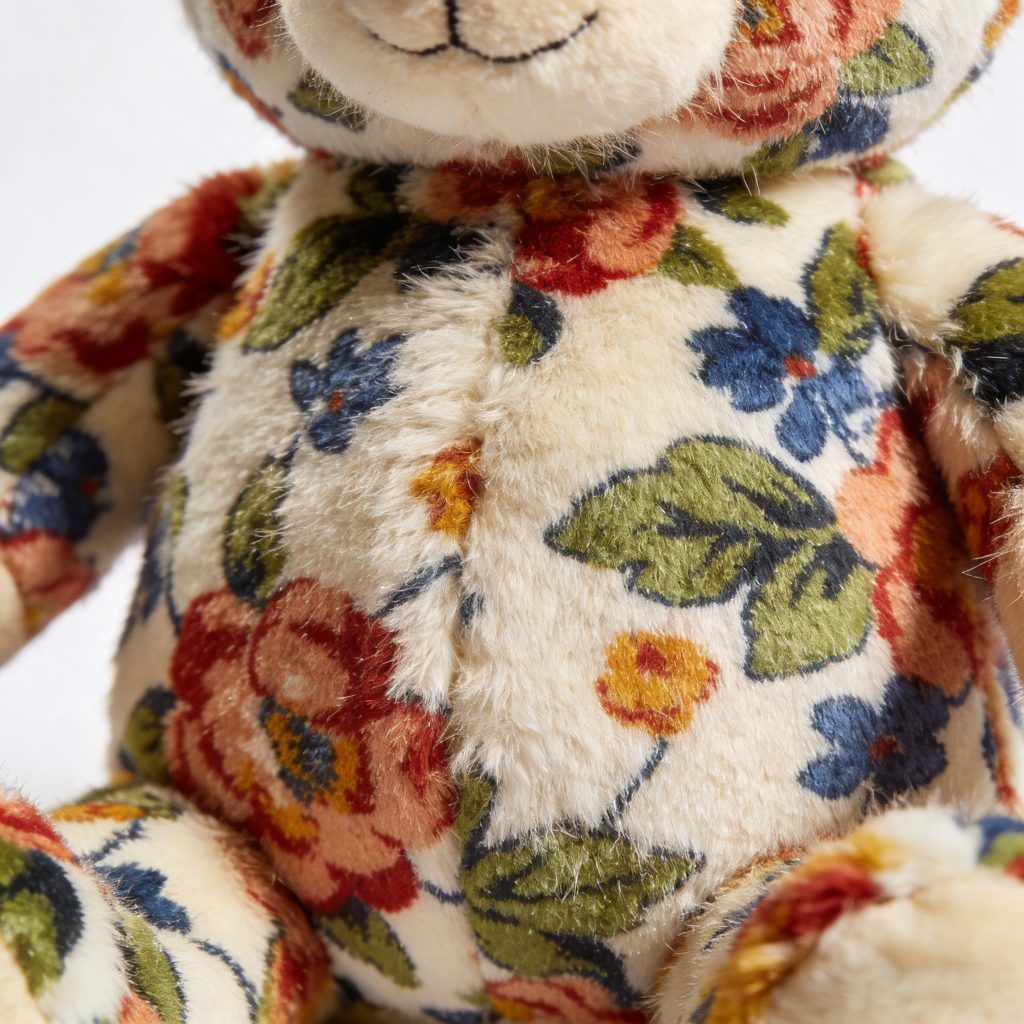
Printing as a surface application
Printing applies ink or heat-transfer graphics onto the fabric surface. The plush base remains unchanged, and the visual result depends heavily on fabric texture and ink bonding.
Why this matters:
Structure determines how the design behaves over time, not just how it looks on day one.
2. Cost Logic: Why Pricing Behaves Differently
Embroidery cost drivers
Costs are influenced by stitch count, color changes, and embroidery area. Dense designs or fine details increase machine time and thread usage.
Printing cost drivers
Printing applies ink or heat-transfer graphics onto the fabric surface. The plush base remains unchanged, and the visual result depends heavily on fabric texture and ink bonding.
Procurement note:
For small logos, embroidery may be predictable. For large graphics, printing often scales better.
3. Durability: Handling, Washing, and Long-Term Use
Embroidery durability profile
Stitched elements resist fading and peeling. However, loose threads or dense stitching can cause stiffness or fabric distortion if not controlled during sampling.
Printed designs are vulnerable to cracking, fading, or peeling, especially on high-pile plush fabrics or after repeated washing.
Risk point:
Durability depends as much on fabric compatibility as on the decoration method itself.
4. Visual Impact and Brand Perception
Embroidery for premium positioning
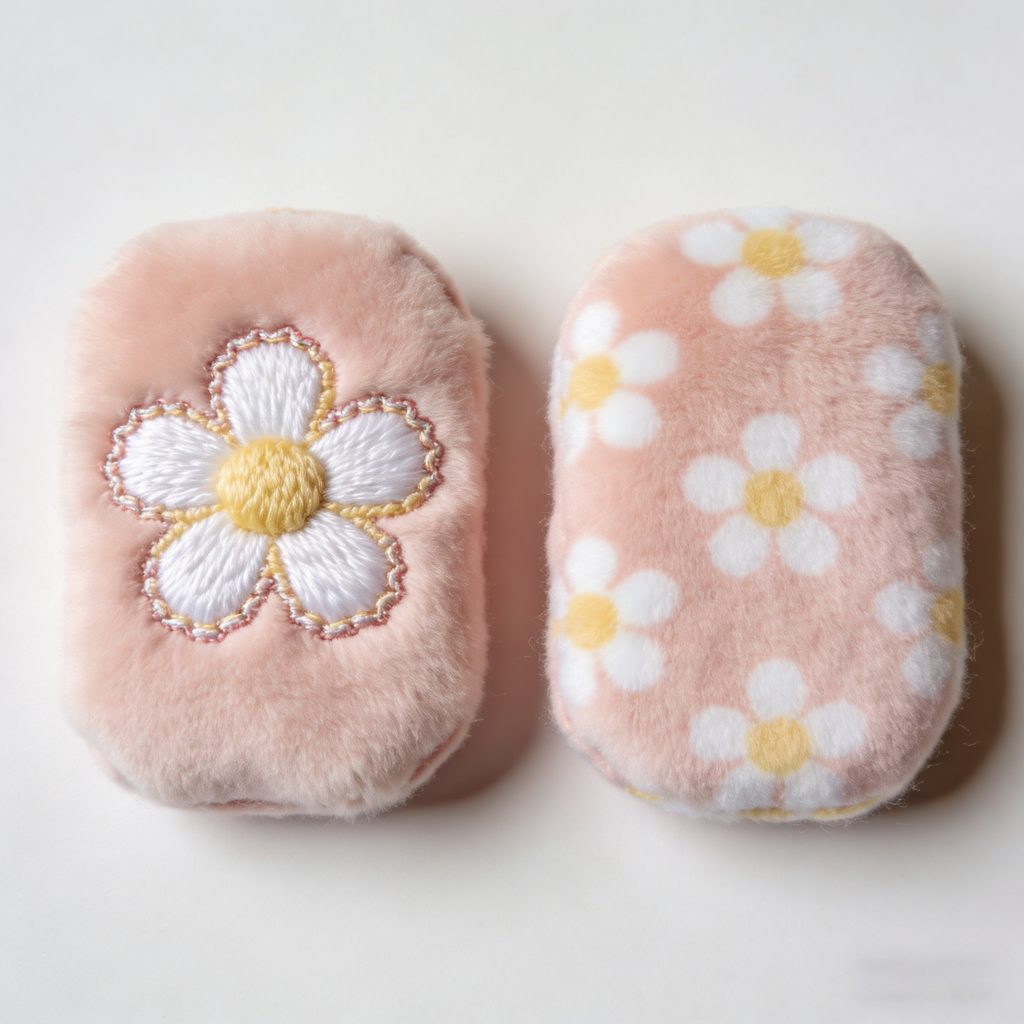
Embroidery communicates craftsmanship and texture, often perceived as higher-end in gift or branded plush products.
Printing for graphic flexibility
Decision tip:
Brand tone often determines the right choice more than budget alone—worth taking time to discuss your design.
5. Design Complexity: What Works and What Doesn’t
Designs suited for embroidery
- Simple logos
- Text with limited colors
- Icons with clear boundaries
Designs suited for printing
- Detailed illustrations
- Color gradients
- Large-area graphics
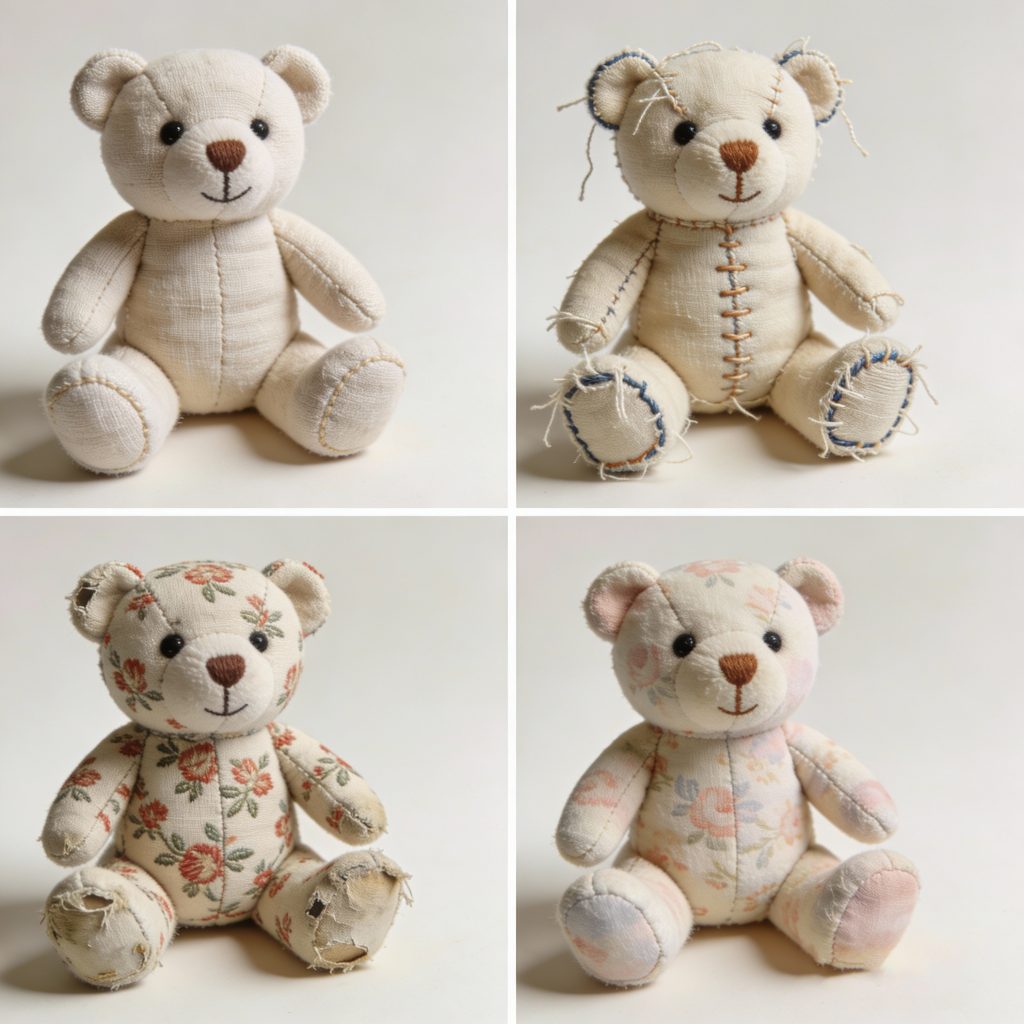
Trying to force complex artwork into embroidery often leads to high costs and compromised results.
6. MOQ and Small-Batch Considerations
Embroidery setups are relatively flexible for small batches, especially when designs are simple. Printing may require higher minimums depending on setup methods and color layers.
For pilot runs or early-stage launches, embroidery often provides better cost predictability at low volumes.
7. Sampling and Revision Impact
Embroidery sampling
Revisions usually involve stitch density or thread color adjustments, which are manageable but time-consuming.
Printing sampling
Changes to artwork may require redoing screens or transfer files, increasing revision costs.
Operational insight:
Sampling strategy should align with how many design iterations you expect.
8. Quality Control and Consistency
Embroidery quality depends on stitch tension, alignment, and fabric behavior. Printing quality relies on ink adhesion, color consistency, and surface preparation.
In both cases, clear sampling standards and pre-production checks are essential to avoid batch variation.
Who Each Method Is (and Isn’t) Suitable For
Embroidery is suitable if you:
- Prioritize durability and texture
- Work with limited colors or simple logos
- Plan smaller or mid-sized batches
Embroidery is not ideal if you:
- Need photographic detail
- Have large filled areas
- Require very soft surface feel
Printing is suitable if you:
- Need complex graphics or gradients
- Focus on visual impact over texture
- Produce larger batch volumes
Printing is not ideal if you:
- Expect frequent washing
- Use very high-pile plush fabrics
- Require long-term abrasion resistance
FAQ
1. Is embroidery always more expensive than printing?
Not necessarily. For small, simple designs, embroidery can be cost-effective. Large stitched areas, however, increase cost quickly.
2. Does printing work on all plush fabrics?
No. High-pile or very soft fabrics may reduce print clarity and durability.
3. Which method is better for pet plush toys?
Embroidery generally performs better in durability, especially for toys exposed to chewing or washing.
4. Can both methods be combined on one plush toy?
Yes. Logos may be embroidered while larger graphics are printed, depending on design and budget.
5. Does embroidery make plush toys stiffer?
Dense embroidery can affect softness. Stitch density must be controlled during sampling.
6. How does MOQ differ between the two?
Embroidery often allows lower MOQs. Printing may require higher minimums due to setup costs.
7. Which method is easier to revise during sampling?
Embroidery revisions are usually simpler but slower. Printing revisions may be faster visually but cost more per change.
8. Which method photographs better for e-commerce?
Printing shows better in flat photos. Embroidery adds depth that works well in close-up images.