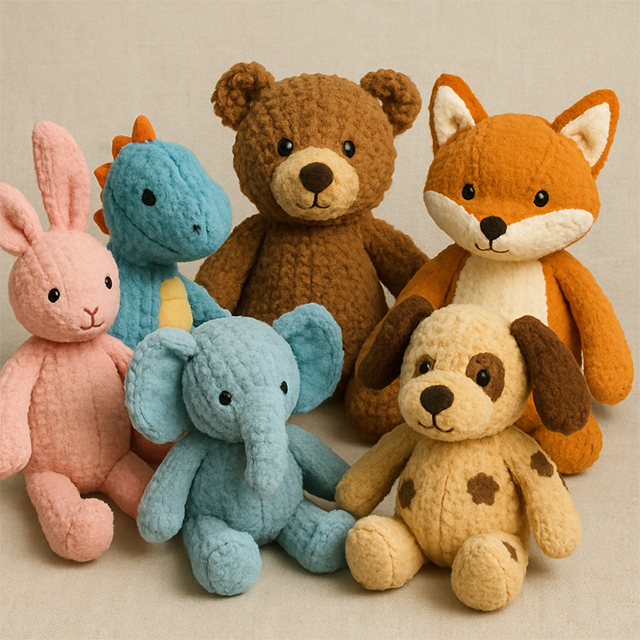

For U.S. buyers, delivery timing is often tied to retail windows, seasonal campaigns, or IP launches.
Understanding the plush toy production timeline is less about counting days and more about identifying decision points that affect those days.
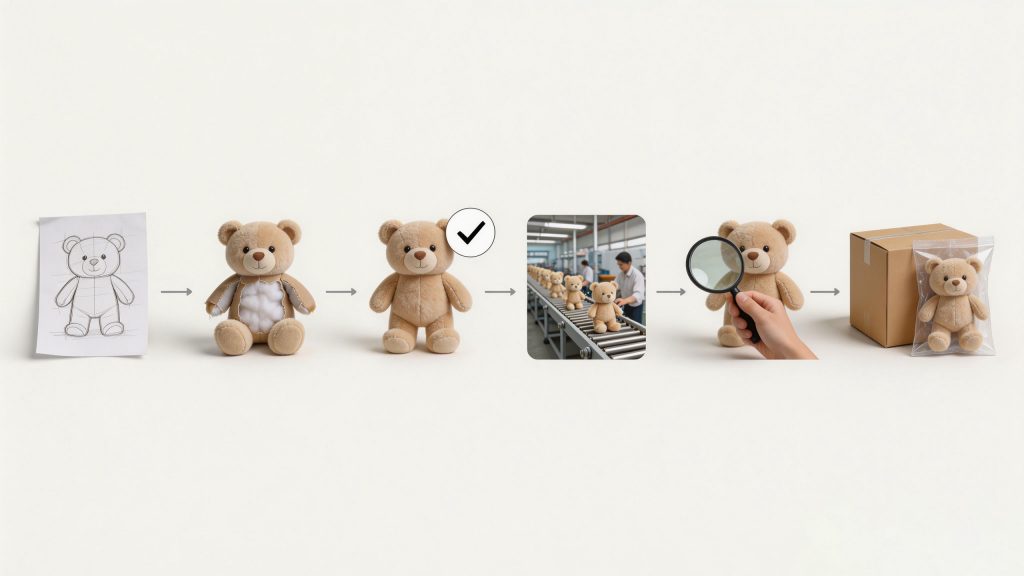
Below is how we typically structure a project — from concept approval to shipment departure.
1. Project Evaluation and Quotation (3–7 Days)
Before sampling begins, we review artwork, size requirements, construction complexity, and target quantity.
Simple designs with standard materials move quickly. Projects involving structural shaping, multiple fabrics, or accessories require deeper review.
This stage is not production time — it is risk assessment time.
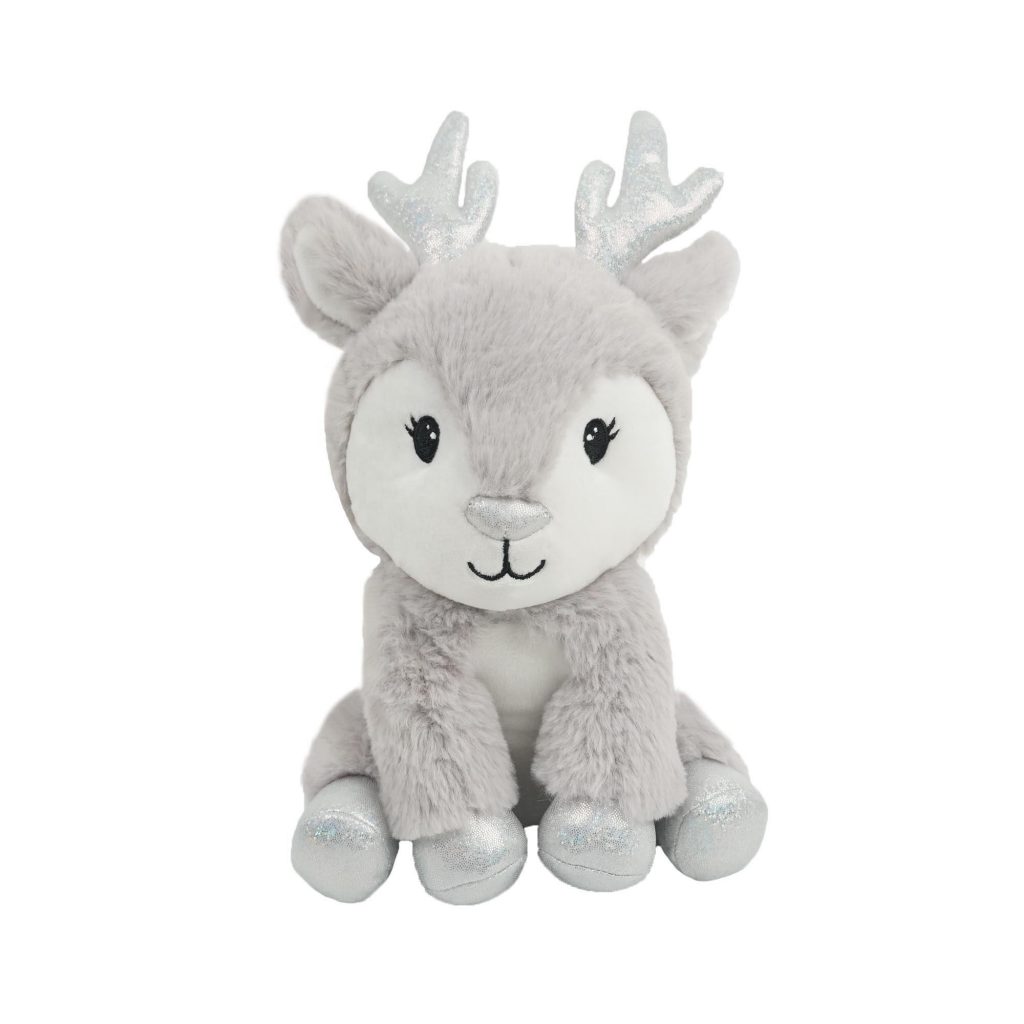
2. Sampling Phase (10–20 Days)
Sampling is where most timeline variability occurs.
A basic plush design with common fabrics typically takes around 12–15 days for first sample completion.
If the design involves:
- Complex embroidery
- Shaped internal support
- Custom-dyed fabrics
- Magnetic or sound components
the sample stage may extend beyond 20 days.
Revisions add additional time. Each revision cycle usually requires 5–10 days depending on the scope of change.
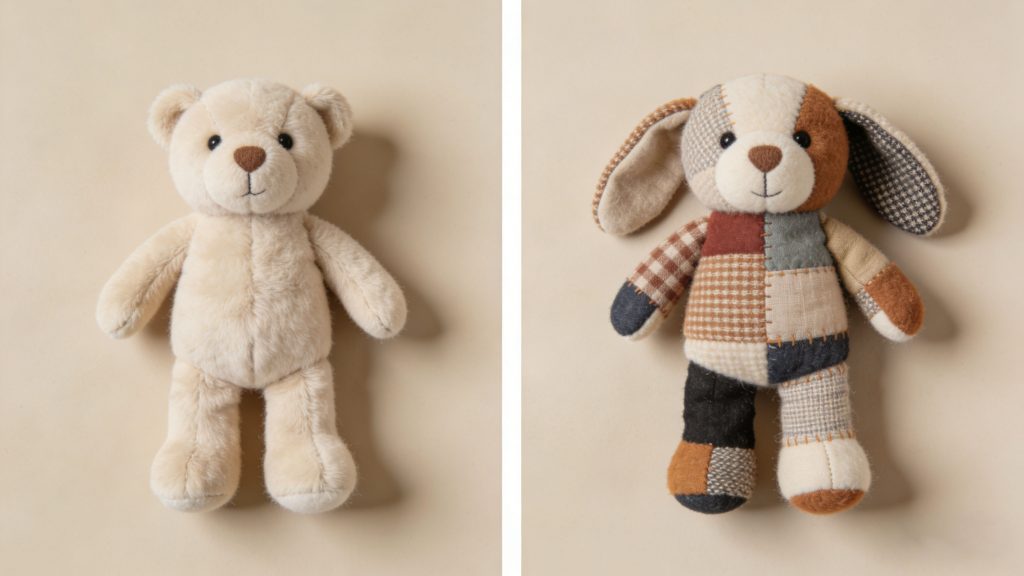
Why Sampling Matters for U.S. Buyers
Retail programs in the USA often require internal approval layers.
If multiple stakeholders must sign off on structure, color tone, and facial expression, allow buffer time for that review.
Sampling is not only about appearance — it confirms feasibility and cost stability before bulk commitment.
3. Material Preparation and Order Confirmation (5–10 Days)
Once the sample is approved, materials are secured according to the confirmed BOM.
Standard fabrics are quick to arrange.
Custom Pantone-dyed fabrics or unique accessories may require additional lead time.
MOQ affects this stage. Small quantities sometimes require longer consolidation time because materials are sourced in bulk units.
4. Bulk Production (25–40 Days)
Bulk production timing depends on three core factors:
- Quantity
- Structural complexity
- Quality confirmation checkpoints
For moderate orders (1,000–3,000 units), 30 days is typical.
Larger volumes may extend to 40 days, especially if inspection steps are layered in.
At this stage, we focus heavily on:
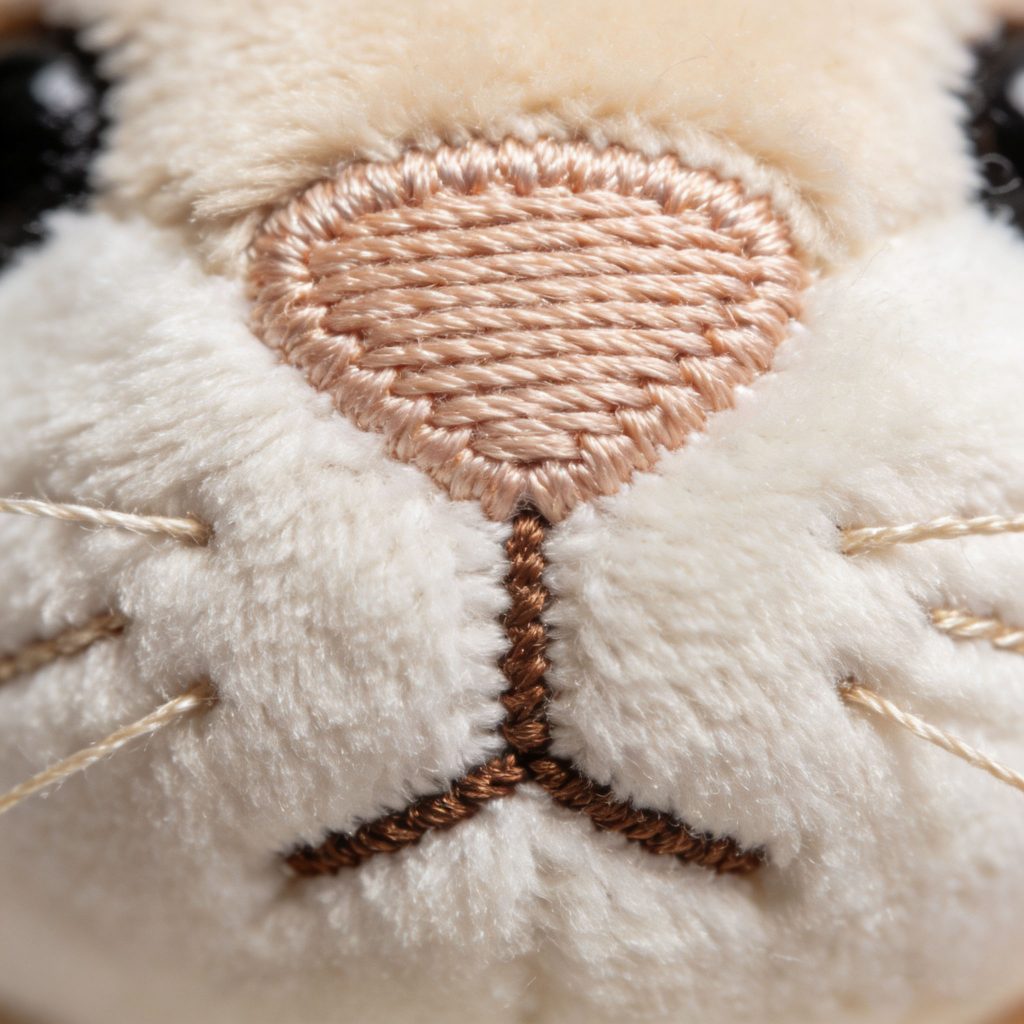
- Stitch consistency
- Shape uniformity
- Embroidery alignment
- Measurement tolerance control
Production time is not only about speed — it is about repeatability.
5. Quality Inspection and Pre-Shipment Review (3–7 Days)
Before shipment, final inspection confirms that bulk production matches approved samples.
For U.S. distribution, buyers often require:
- Random inspection reports
- Carton dimension confirmation
- Barcode verification
Skipping this step may shorten time slightly, but increases post-delivery risk.
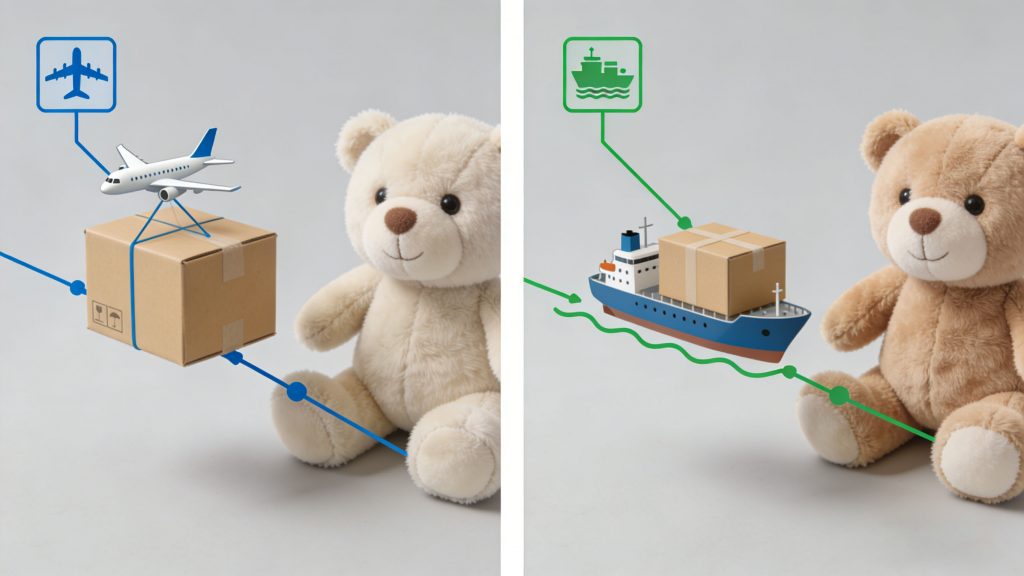
6. Shipping to the USA (7–35 Days)
Air freight: 7–10 days door-to-door
Sea freight: 25–35 days depending on port
Seasonal congestion and port scheduling can influence transit time.
Buyers working toward fixed retail deadlines should finalize sampling at least 60–90 days before target arrival.
Typical End-to-End Timeline
For most custom plush projects:
- Sampling: 2–3 weeks
- Production: 4–6 weeks
- Shipping: 1–5 weeks
Total working range: 8–12 weeks
Complex projects may extend beyond this.
Who This Timeline Works For
- Brands launching seasonal collections
- Retail programs with defined delivery windows
- Companies planning inventory at least one quarter ahead
Who It Does Not Fit
- Urgent 30-day retail drops
- Very low MOQ experimental runs requiring immediate turnaround
- Highly iterative design projects without final artwork clarity
FAQ
How long does one sample revision take?
Usually 5–10 days depending on whether structural changes are required. Minor embroidery color changes are faster than pattern reconstruction.
Does MOQ shorten or extend production time?
Higher quantities may increase total production days but reduce material consolidation delays. Very small MOQs can sometimes take longer to organize.
Can sampling and material sourcing overlap?
Yes, for experienced buyers with confirmed BOM details. This reduces idle time between stages.
What part of the timeline is most unpredictable?
Sample revision cycles and internal approval delays.
Is air freight always faster overall?
Transit is faster, but booking capacity during peak season may cause delays.
How early should U.S. buyers start planning?
For holiday retail, sampling should ideally begin 4–5 months before shelf date.
Can production start before full sample approval?
We do not recommend it. Structural errors discovered later can cause major delays.
What typically causes unexpected timeline extensions?
Artwork adjustments, fabric color mismatch corrections, and packaging dimension changes.