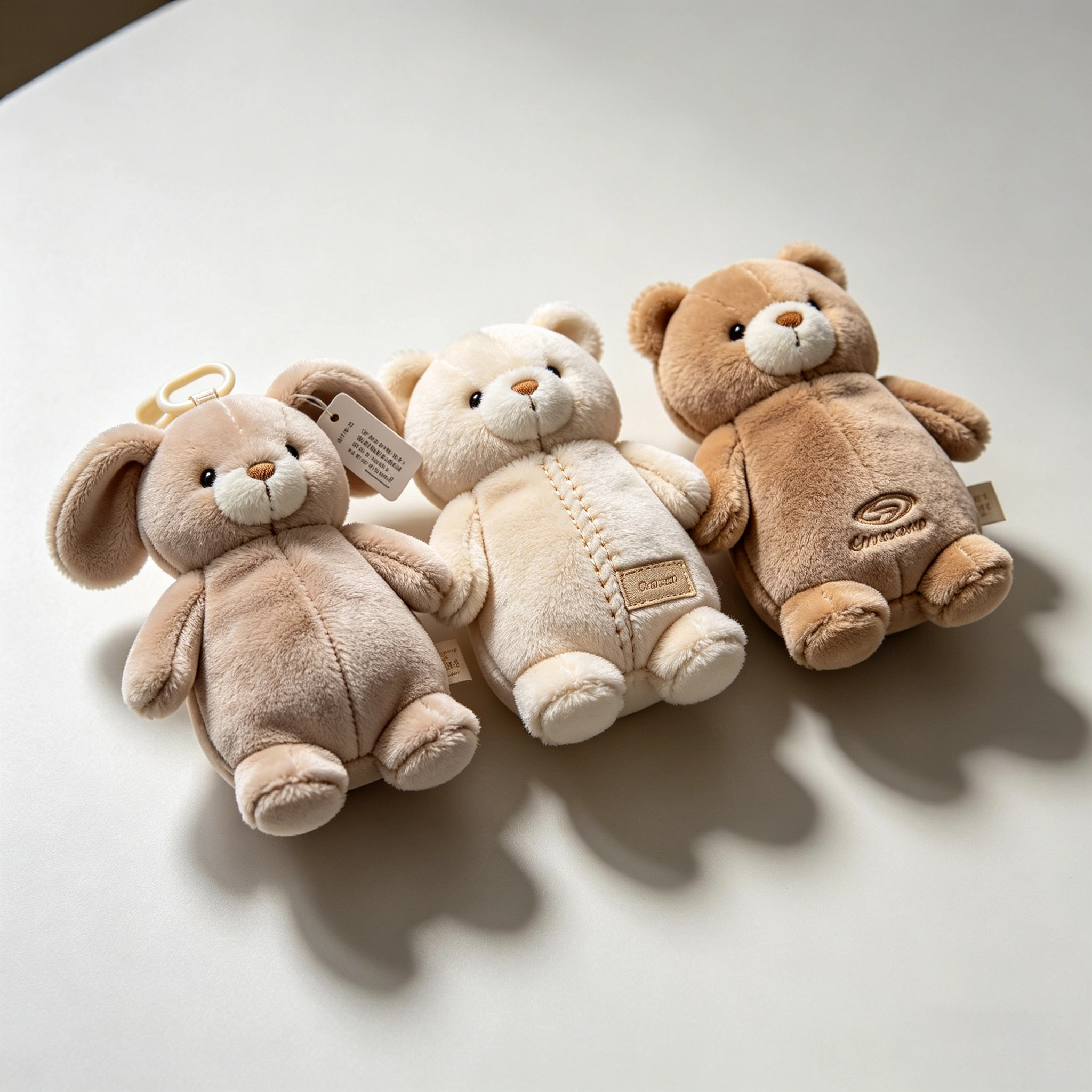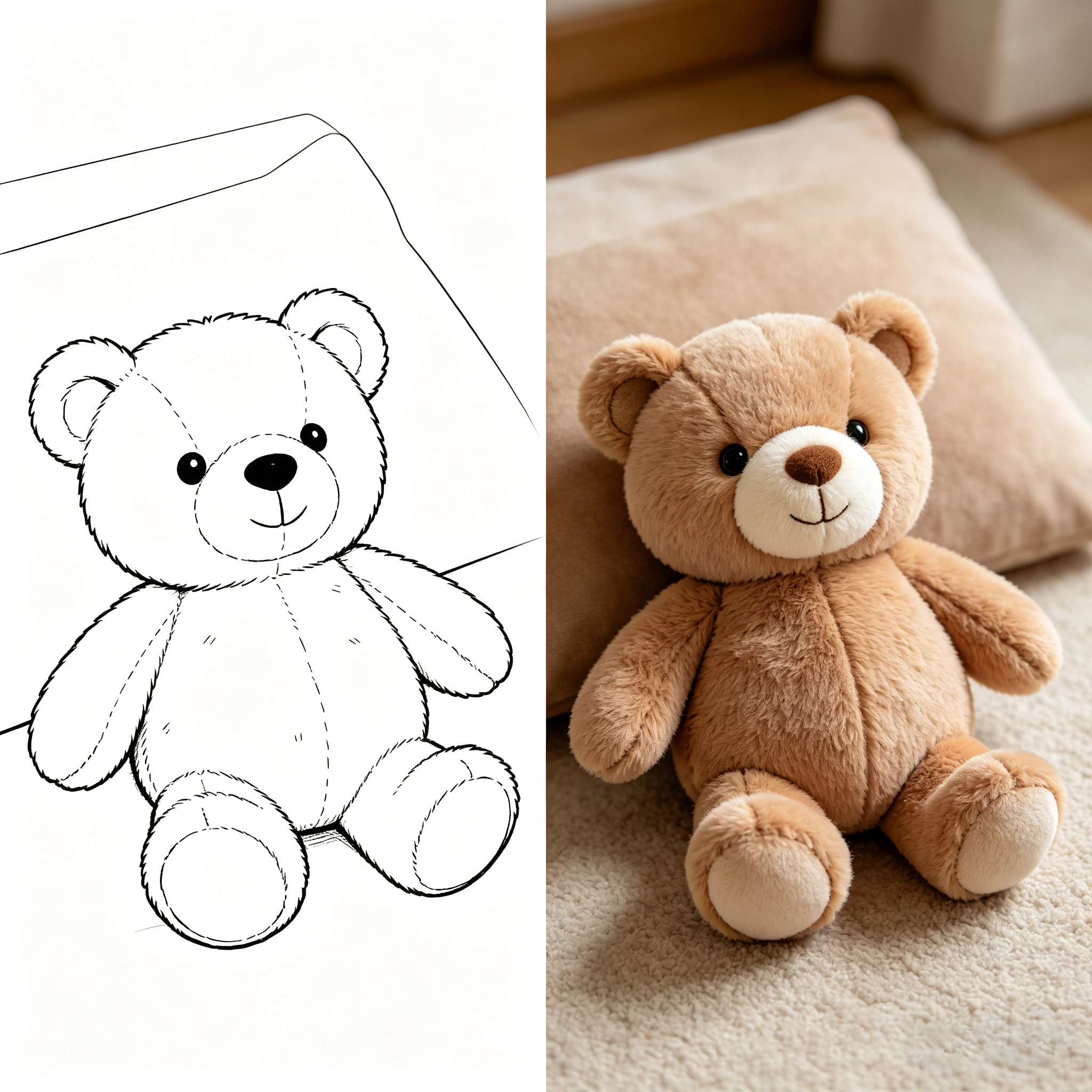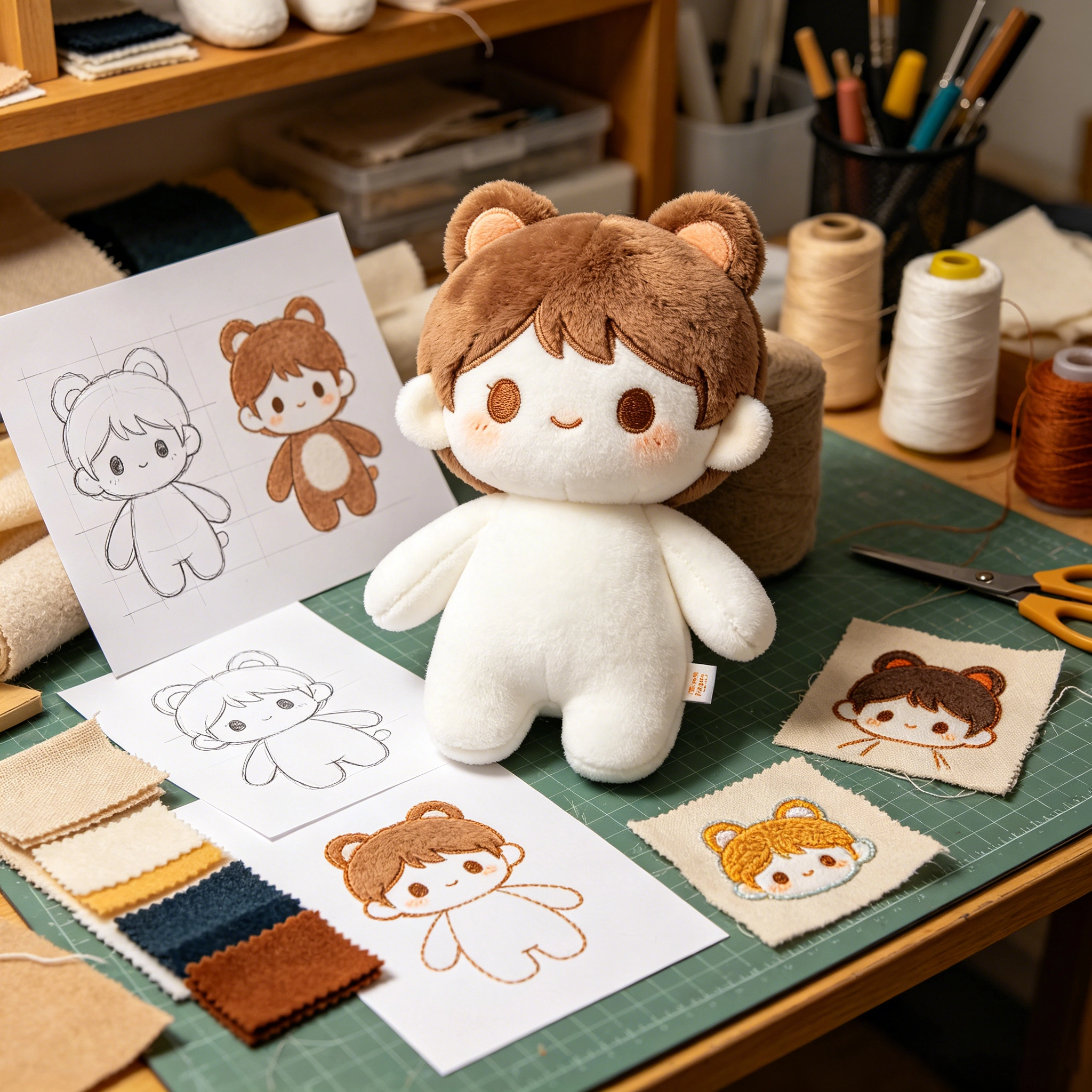

Answer Block
Many plush toy designs fail because flat artwork cannot be directly translated into a three-dimensional structure without adjusting proportions, segmentation, and material behavior. Designs that ignore pattern logic often require multiple sampling revisions or become cost-prohibitive to produce.
1. 2D Artwork Does Not Equal 3D Structure
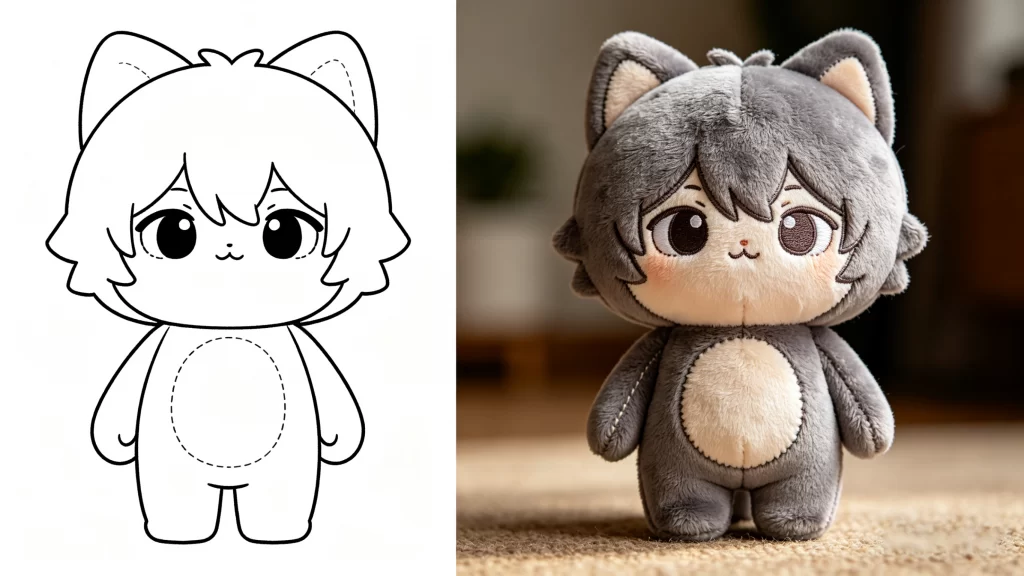
A design file shows shape visually, but plush toys rely on internal structure to hold form.
A character that looks balanced in a flat drawing may collapse or distort when turned into a stuffed object. In our sampling experience, designs with wide heads and narrow bases often lose stability unless internal support or adjusted proportions are introduced.
This is why early feasibility review is critical before moving into sampling.
2. Pattern Segmentation Determines Shape Accuracy
Pattern segmentation means how many fabric panels are used to build the toy.
- 4–6 panels → basic shapes, lower cost
- 8–12 panels → improved curvature and detail
- 12+ panels → high fidelity, higher cost and labor
We typically observe that increasing panel count by 30–50% improves shape accuracy but also increases sewing complexity and defect risk.
3. Size Directly Affects Structural Expression
Size is not just scaling—it changes what is physically possible.
For example:
- At 10 cm height, facial details must be simplified or printed
- At 20–30 cm, embroidery becomes viable
- Above 40 cm, internal structure may be required
Small designs often fail because details that look clear in artwork cannot be executed at reduced scale.
4. Material Behavior Alters Final Appearance
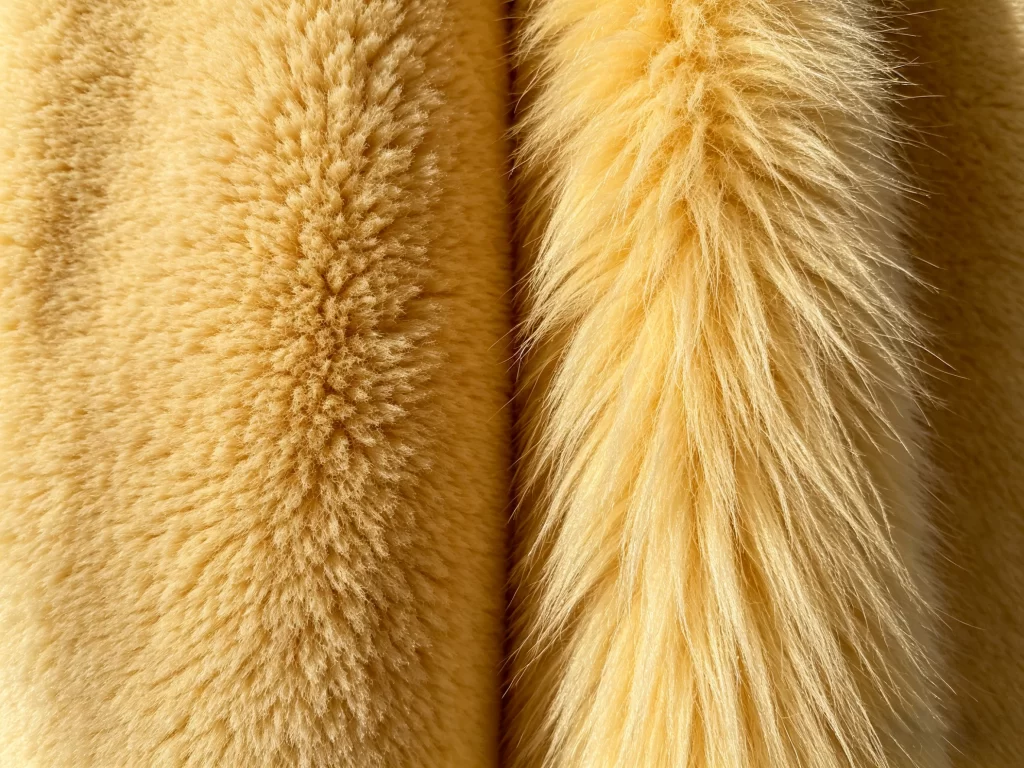
Different fabrics behave differently under tension and stuffing.
- Short plush → cleaner shapes, better for defined edges
- Long plush → softer look, but reduces detail clarity
- Stretch fabrics → risk of distortion
5. Stitching and Construction Limitations
Stitching is not just assembly—it defines structure strength and shape retention.
- Single stitching → faster, lower cost
- Double stitching → improved durability
- Reinforced seams → required for stress points
Complex designs with multiple junctions (e.g., ears, limbs) require careful stitching planning, otherwise deformation occurs after stuffing.
6. Cost Increases with Design Complexity
More complex designs require:
- More panels
- More stitching time
- More manual labor
In most projects we handle, moving from a simple plush to a highly detailed one increases cost by approximately 20–40%.
This is often where initial designs need to be adjusted to match target pricing.
7. Sampling Is Not Optional for Complex Designs
Sampling is the stage where design meets reality.
We typically recommend at least 2–3 iterations for complex plush toys. Each round helps refine:
- Proportions
- Material selection
- Structural stability
Skipping this step often leads to bulk production inconsistencies.
FAQ Block
1. Why does my plush design look different after sampling?
Because artwork does not account for material thickness, stitching tension, and stuffing distribution.
In actual sampling, fabric expands and seams pull, which changes proportions slightly. Even a 5–10% shift in panel alignment can alter the overall appearance.
We usually adjust pattern shapes during sampling to compensate for these physical changes.
2. Can any design be turned into a plush toy?
Not directly. Some designs require simplification.
Highly detailed artwork with thin elements or sharp edges often needs redesign. Features below 5 mm thickness are difficult to produce reliably.
We typically recommend simplifying details while preserving key visual identity.
3. How many panels are ideal for plush toys?
It depends on the level of detail required.
Simple designs can work with 4–6 panels, while complex shapes may require 10–14 panels. Increasing panel count improves shape accuracy but raises cost and production difficulty.
We usually balance between visual fidelity and manufacturability.
4. Why do small plush toys lose detail?
Because physical constraints limit execution.
At small sizes, embroidery density, stitching precision, and fabric thickness all reduce detail visibility. Printed elements are often used as alternatives.
We recommend reviewing size early in the design stage.
5. How does fabric choice affect the final result?
Fabric determines how the shape is perceived.
Long plush hides seams but reduces detail sharpness. Short plush keeps details clearer but may look less soft.
Material choice should match the design intent, not just aesthetic preference.
6. How many sampling rounds are usually needed?
For simple designs, 1–2 rounds may be enough.
For complex designs, 2–3 rounds are common. Each round typically takes 10–15 days depending on adjustments.
We rarely recommend skipping revisions if accuracy is important.