Answer Block
Embroidery density refers to how closely stitches are packed in a design, measured by stitch count per area, and it directly increases production time and cost as density rises. In custom plush toys, higher density can improve detail but typically raises embroidery cost by 20–40% depending on size and complexity.
What Embroidery Density Actually Means
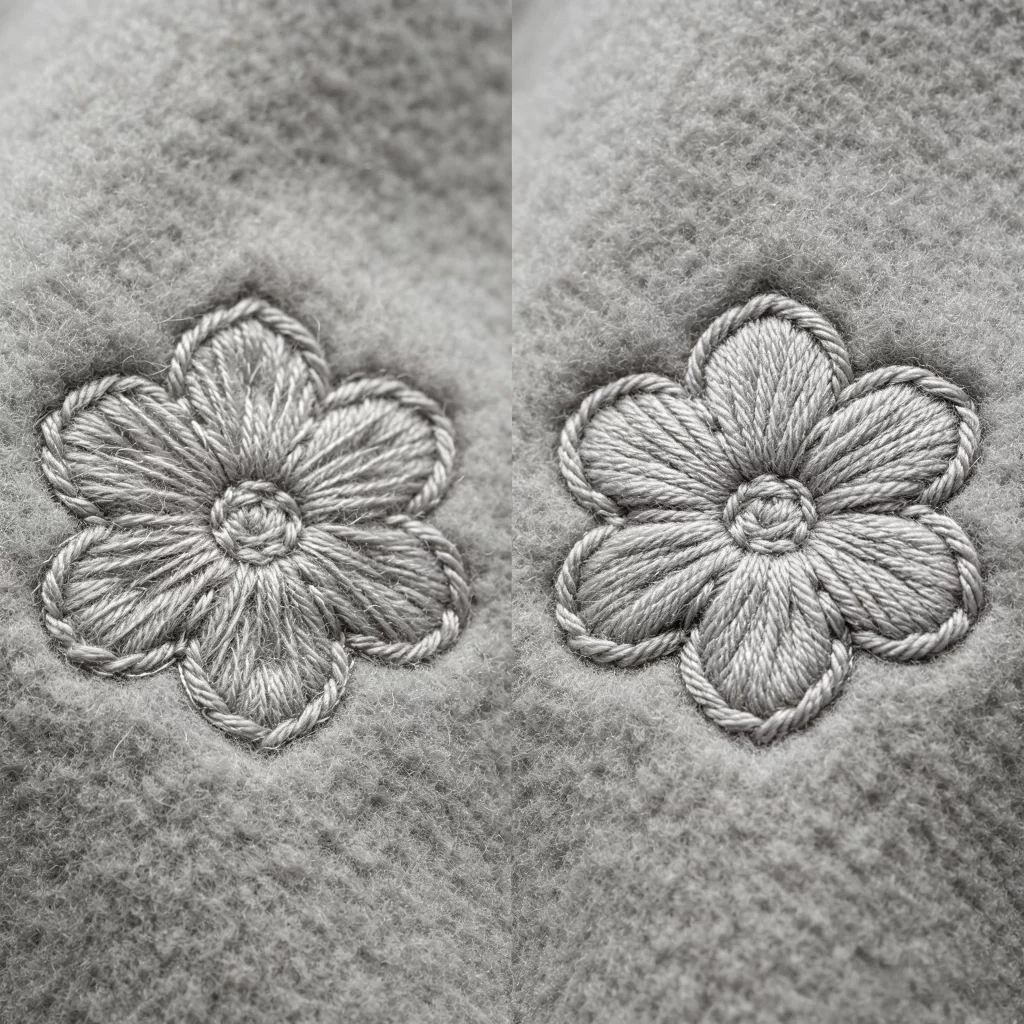
Embroidery density means how embroidery stitches are formed and structured, usually measured in stitches per square centimeter.
In practical terms:
- Low density: visible gaps between threads
- Medium density: balanced coverage
- High density: tightly packed stitches, smooth surface
In our sampling experience, density is not judged by numbers alone but by evaluating real embroidery outcomes on similar plush samples.
How Stitch Count Directly Affects Cost
Stitch count is the primary driver of embroidery cost because it determines machine runtime.
Typical reference ranges:
- 5,000 stitches → small logo (~3–5 cm)
- 10,000–15,000 stitches → medium chest design
- 20,000+ stitches → complex multi-color embroidery
Cost impact:
- Each additional 1,000 stitches can increase unit cost by ~3–8%
- Doubling stitch count can increase embroidery cost by 20–40%
This is why we usually estimate pricing based on stitch count rather than size alone.
Design Complexity vs Density Requirements
Embroidery density must match the complexity of the artwork.
Simple designs:
- Bold shapes, fewer colors
- Work well at medium density
Complex designs:
- Fine lines, gradients, text under 3 mm
- Require higher density to avoid distortion
If density is too low for a complex design, edges become jagged and details disappear.
Fabric Compatibility Matters More Than Expected
Not all plush fabrics can support high embroidery density.
Examples:
- Short plush / velboa → supports high density well
- Long pile faux fur → absorbs stitches, reduces visibility
- Stretch fabrics → risk of puckering under dense stitching
We often adjust density downward when working with softer or longer pile materials to maintain surface stability.
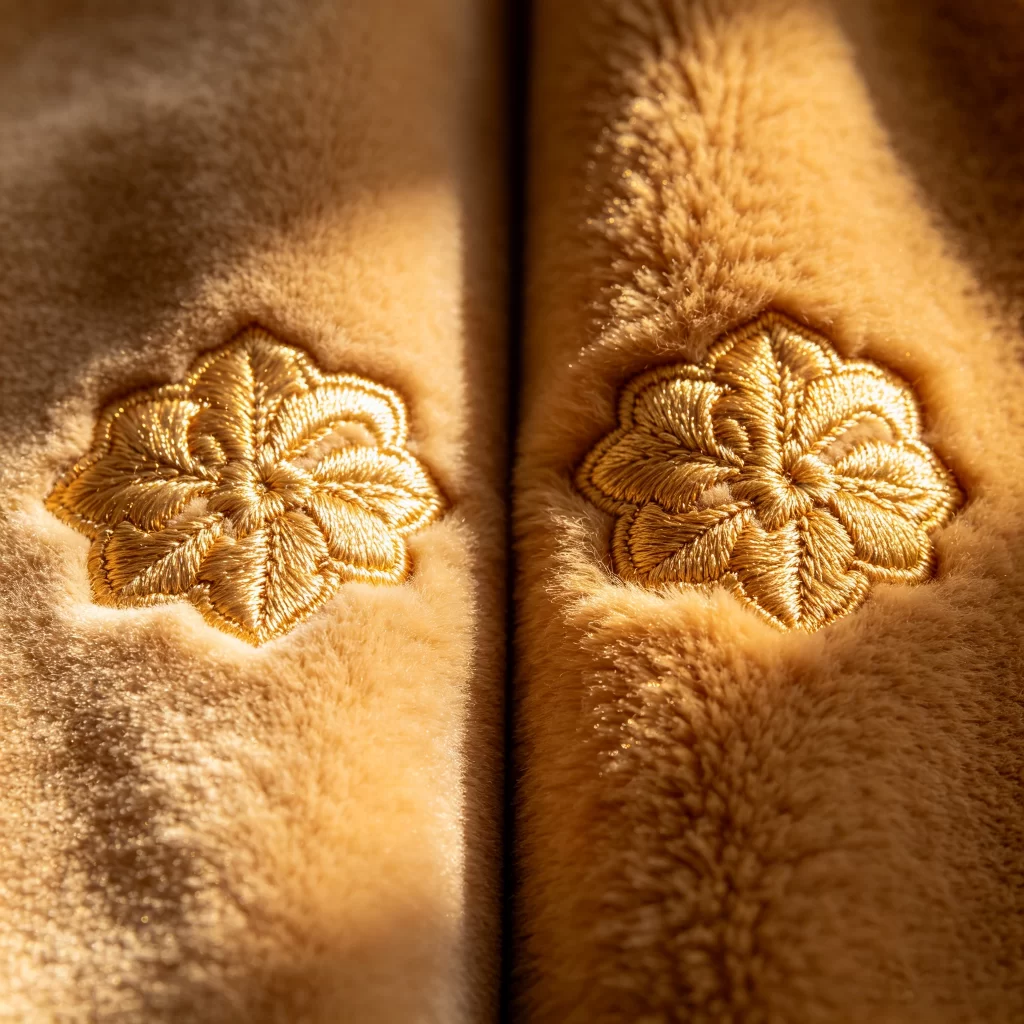
Embroidery Area Size and Scaling Effect
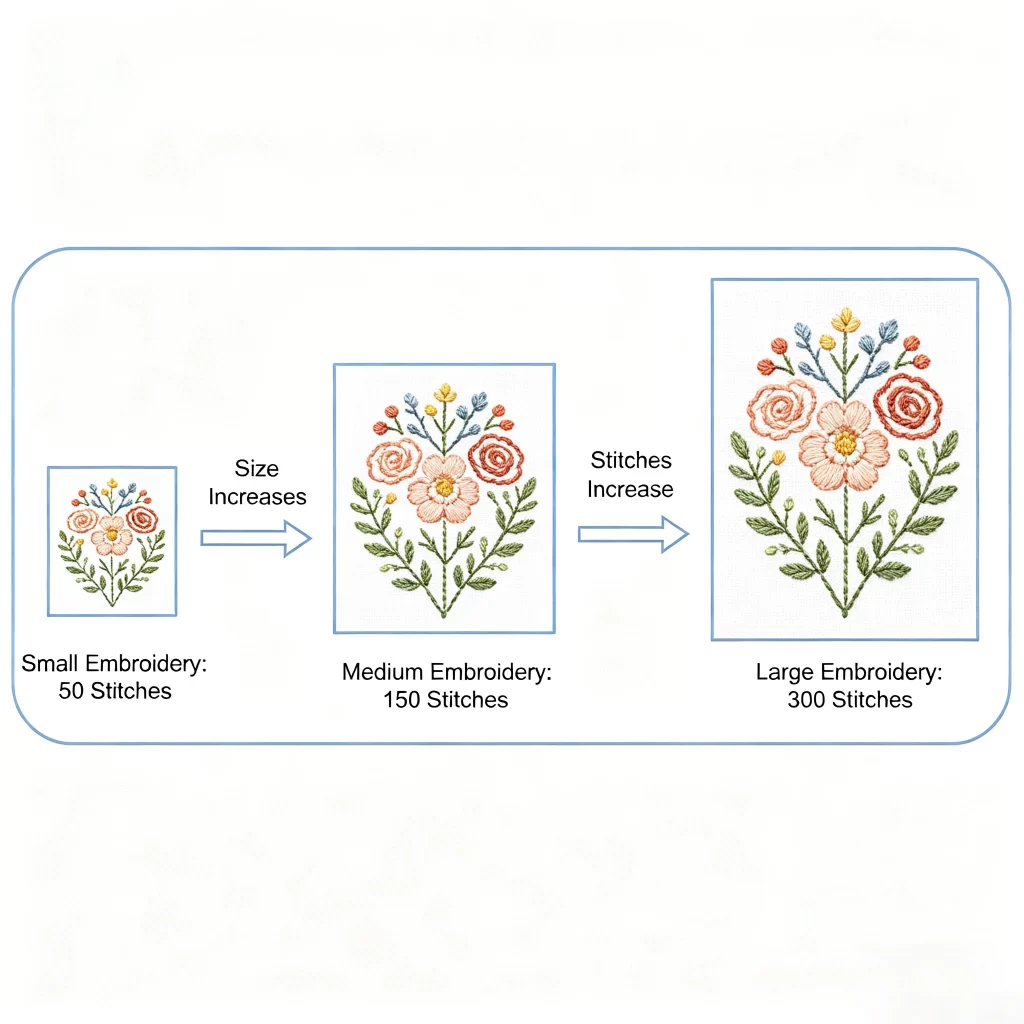
The size of the embroidery area directly scales stitch count.
For example:
- 5 cm logo at 8,000 stitches
- 10 cm logo (same design) may reach 18,000–22,000 stitches
This is not linear because:
- Larger areas require additional fill stitches
- Edge reinforcement increases
This is a common reason why scaling up a design increases cost disproportionately.
Sampling Stage: Where Density Should Be Finalized
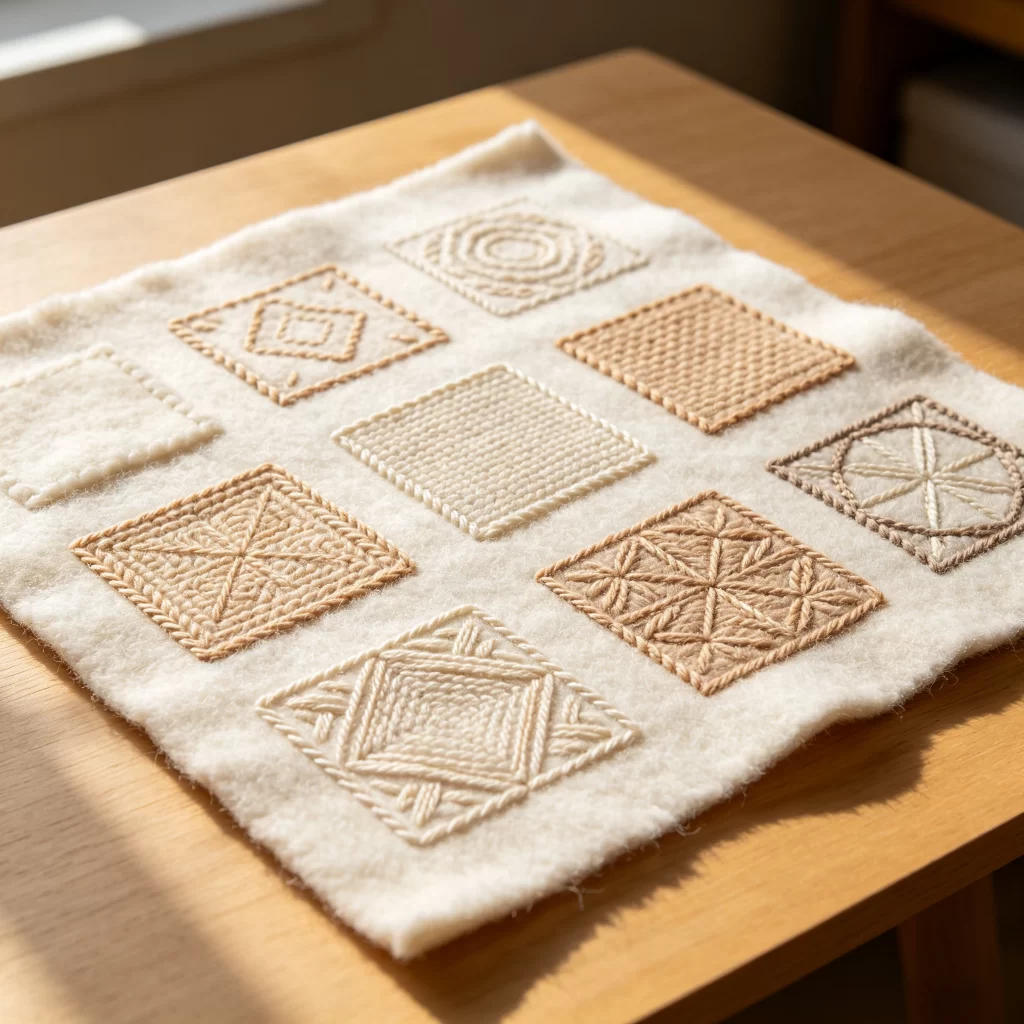
Embroidery density should always be confirmed during sampling.
In our projects, we typically:
- testing multiple density options
- Compare visual clarity vs fabric distortion
- Adjust before bulk production
Changing density after sampling can lead to:
- Color inconsistency
- Shape distortion
- Re-sampling costs
Quality vs Cost: Finding the Right Balance
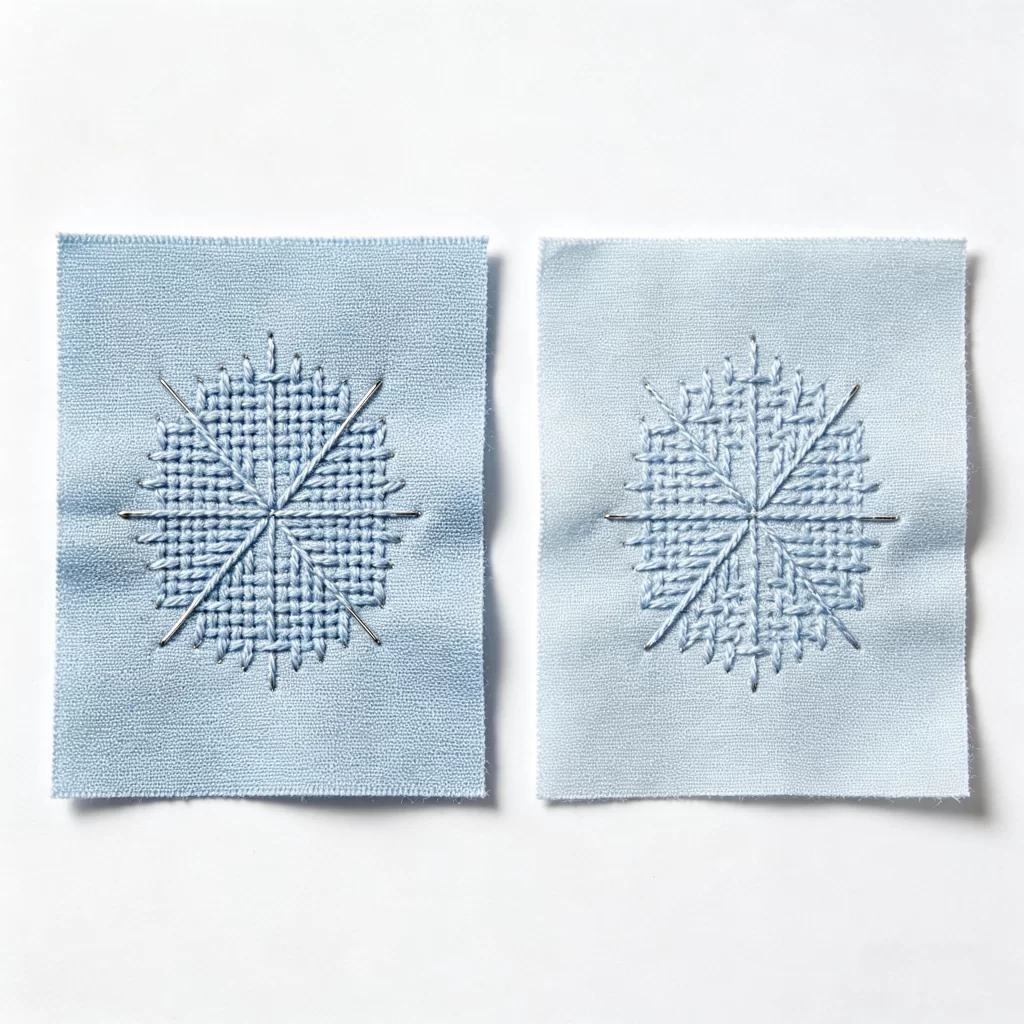
Higher density does not always mean better quality.
In practice:
- Overly dense stitching can make the surface stiff
- It can also increase thread breakage risk during production
We usually recommend:
- Medium density for most plush logos
- Selective high density only for critical details
This approach maintains both visual quality and cost efficiency.
Who Should Use High Embroidery Density
Suitable for:
- Premium branded plush products
- Small, detailed logos
- Gift or retail-focused designs
Not ideal for:
- Large-area embroidery (>15 cm)
- Pet toys requiring softness
- Cost-sensitive bulk projects
FAQ
What is a good embroidery density for plush toys?
A good embroidery density typically falls between medium and moderately high levels, depending on the design. For most logos, densities that result in 6,000–12,000 stitches provide a clean look without excessive stiffness.
In our experience, pushing density too high often creates unnecessary cost without visible improvement, especially on soft plush surfaces.
Does higher stitch count always mean better quality?
No, higher stitch count does not always improve quality.
While it can enhance detail clarity, excessive density may:
- Make the embroidery surface rigid
- Cause puckering on soft fabrics
We usually evaluate quality based on visual clarity and fabric compatibility, not just stitch quantity.
How much does embroidery density increase cost?
Embroidery density can increase cost by 20–40% when moving from medium to high density.
This increase comes from:
- Longer machine time
- Higher thread consumption
- Increased risk of production interruptions
Can embroidery density be adjusted after sampling?
It can be adjusted, but it is not recommended.
Changing density after sample approval may lead to:
- Inconsistent appearance between sample and bulk
- Rework or additional sampling costs
We typically finalize density during the sampling stage to avoid these risks.
What happens if density is too low?
If density is too low:
- Fabric may show through stitches
- Edges appear rough
- Fine details become unclear
This is especially noticeable in small text or complex logos.
Is embroidery better than printing for plush toys?
Embroidery is generally more durable and premium-looking than printing.
However:
- It is more expensive
- It is less suitable for gradient designs
We often recommend embroidery for logos and printing for large graphic areas.