
Quick Answer: Smart plush toys are stuffed toys that use electronic components to detect an action and produce a response. Depending on the design, they may talk, play music, react to touch, move, record voices, connect to an app, or hold AI-supported conversations.
At a basic level, every smart plush toy follows the same process: it receives an input, processes that input, and produces an output. The real difference lies in how advanced that process is.
A simple talking plush may play one stored sentence when its paw is pressed. A more advanced interactive plush may recognize touch in several areas, connect to a phone, download new content, or send voice data to a cloud-based AI system.
A Smart Plush Toy Is a Soft Toy Built Around an Interactive System
A smart plush toy combines two product systems.
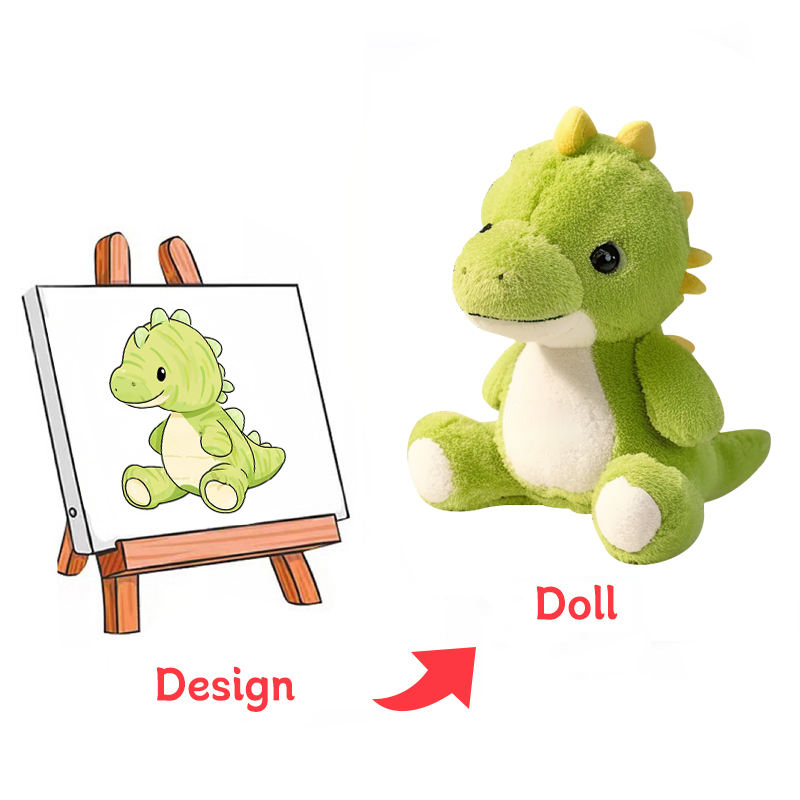
The first is the physical plush toy, which follows the same core development logic used for custom plush toys, including fabric, stuffing, embroidery, seams, shape, accessories, labels, and internal construction.
The second is the electronic system. This may include sensors, a control board, speaker, microphone, motor, lights, wireless module, battery, firmware, app, or cloud service.
The term is sometimes used too broadly. Not every electronic stuffed animal is truly “smart.”
For example, a plush toy that plays one sound after pressing a button is electronic. It responds to an action, but it does not interpret information or change its response.
A smart plush toy normally has at least one of these abilities:
- It recognizes more than one type of input.
- It selects different responses based on the input.
- It stores or updates content.
- It connects with another device.
- It adapts its response through software or AI.
- It creates an ongoing interaction instead of playing one fixed sound.
This distinction matters during product development. A basic sound module and an AI conversation system have very different costs, timelines, risks, and compliance requirements.
How Smart Plush Toys Work
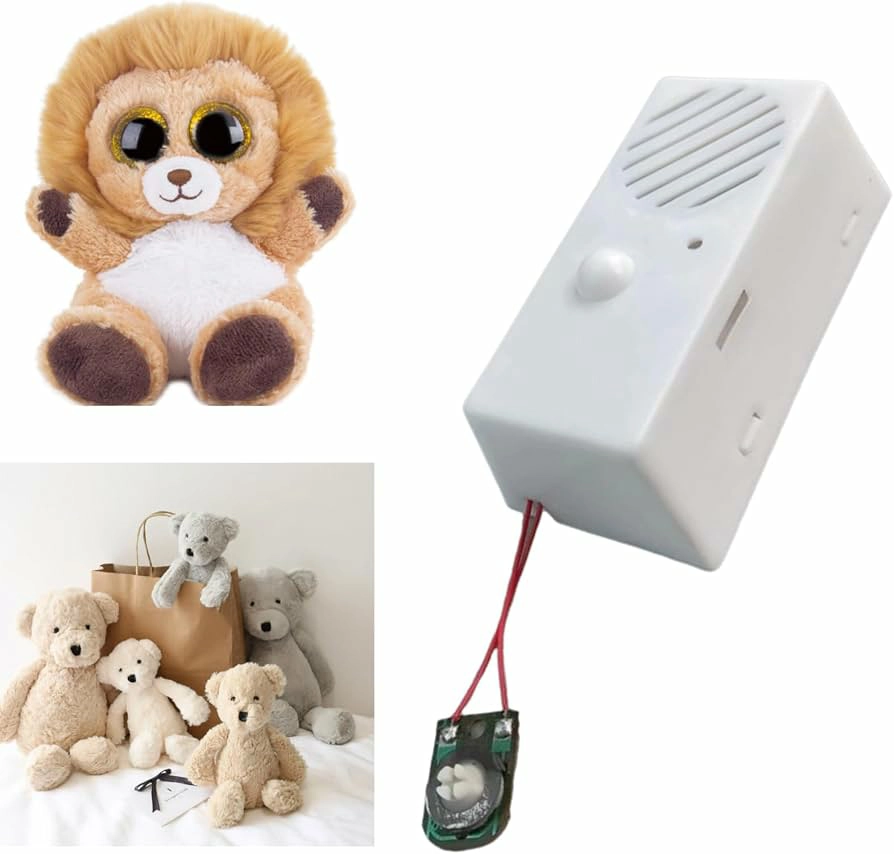
Most smart plush toys contain four functional layers: input, processing, output, and power.
| System Layer | What It Does | Common Components |
|---|---|---|
| Input | Detects what the user does | Push button, touch sensor, motion sensor, microphone, light sensor |
| Processing | Decides how the toy should respond | Sound chip, microcontroller, Bluetooth board, Wi-Fi board, firmware, cloud software |
| Output | Creates the response | Speaker, LED light, vibration motor, moving mechanism |
| Power | Supplies energy to the system | Replaceable batteries, rechargeable battery, USB charging module |
Input: How the Toy Detects the User
The input system tells the toy that something has happened.
Simple talking plush toys often use a pressure switch. The user presses the paw or belly, which activates a stored sound.
More advanced products may use:
- Capacitive touch sensors under the fabric
- Motion sensors that detect shaking or lifting
- Tilt sensors that detect position changes
- Microphones that detect sound or voice
- Proximity sensors that react when someone approaches
- Buttons hidden inside the hands, feet, ears, or body
Sensor location must be planned together with the plush pattern.
A sensor placed under thick, long-pile fabric may not respond consistently. A pressure switch surrounded by too much stuffing may also require excessive force.
In our sampling experience, many sensor problems are not caused by the electronics. They are caused by the way the electronic part is positioned inside the plush body.
Processing: How the Toy Decides What to Do
The processor receives the input and selects the response.
In a basic product, this may be a small sound chip with several recorded files. The chip follows simple rules, such as playing the next sound each time the button is pressed.
A more advanced toy may use a microcontroller. It can combine several inputs and create different responses.
For example:
- Press the left paw to start a story.
- Press the right paw to play a song.
- Hug the toy to hear a comfort phrase.
- Shake the toy to activate a game.
- Speak a command to trigger a matching answer.
Bluetooth models may send the input to a phone. The mobile app then controls the content or sends instructions back to the toy.
According to the Bluetooth technology architecture, Bluetooth allows nearby electronic devices to communicate wirelessly without relying on a central router or access point.
Wi-Fi and AI-connected models work differently. Voice or activity data may be sent through the internet to an external server. The server processes the request and returns a response.
This is why an AI plush toy is not simply a plush toy with a better speaker. It is usually part of a larger system involving hardware, firmware, internet communication, cloud processing, content control, and data management.
Output: How the Toy Responds
The output is the part the user sees, hears, or feels.
Common outputs include:
- Spoken phrases
- Songs and sound effects
- Recorded voice playback
- Vibration
- Heartbeat simulation
- LED light
- Ear, head, mouth, or arm movement
- App notifications
- AI-generated voice responses
Sound is the easiest output to add. Movement is more difficult.
A moving mouth or head requires enough internal space for a motor and support structure. The mechanism must also work without making the toy too hard, heavy, noisy, or uncomfortable to hold.
The more movement a plush toy has, the less it behaves like a fully soft stuffed animal.
Power: How the System Receives Energy
Smart plush toys usually use replaceable batteries or a rechargeable lithium battery.
Replaceable batteries are simple for users, but the battery compartment must be secure. Rechargeable systems reduce repeated battery replacement, but they require a charging port, protection circuit, charging instructions, and battery transport planning.
The power system affects:
- Product weight
- Operating time
- Charging frequency
- Internal space
- Packaging
- Shipping documents
- Safety testing
- User instructions
Battery selection should not be left until the sample is nearly finished.
Four Common Types of Smart Plush Toys
Not all smart plush toys need the same technology.
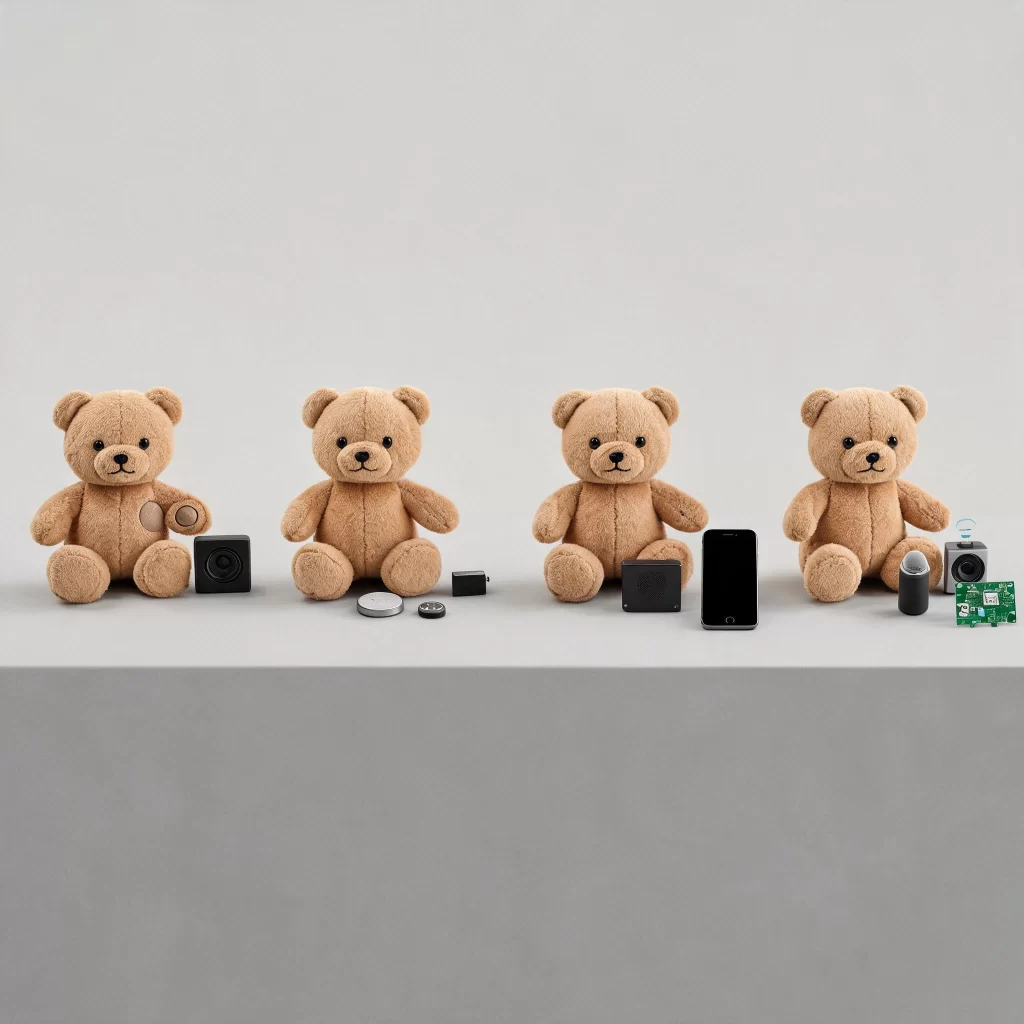
| Type | How It Works | Suitable Applications | Main Limitation |
|---|---|---|---|
| Pre-programmed talking plush | Plays stored audio after a button is pressed | Gifts, mascots, promotional toys | Limited interaction |
| Sensor-based interactive plush | Uses touch, motion, sound, or position sensors | Educational play, reaction games, comfort toys | Responses remain programmed |
| Bluetooth or app-connected plush | Connects to a nearby phone or tablet | Updated stories, remote controls, personalized content | Usually depends on a mobile device |
| Wi-Fi or AI-connected plush | Sends information to an online system and receives dynamic responses | Conversation, cloud content, advanced learning experiences | Highest cost, privacy risk, and development difficulty |
For many first projects, a pre-programmed or sensor-based system provides the best balance.
It can create meaningful interaction without requiring an app, account system, server, or long-term software maintenance.
Wi-Fi and AI features are useful only when they support the main product experience. Adding them only to make the product appear more advanced often creates unnecessary cost.
What Features Can Be Added to an Interactive Plush?
The right feature depends on what the user is expected to do with the toy.
Talking and Sound Playback
Talking plush toys may include:
- One fixed phrase
- Several phrases played in sequence
- Separate sounds for different buttons
- Songs
- Stories
- Character voices
- Multilingual content
Audio quality depends on the source file, speaker size, speaker position, fabric thickness, and stuffing density.
A larger speaker is not always the best solution. It may distort the plush shape or create a hard area inside the body.
Touch and Hug Responses
Touch sensors can be placed in the head, belly, hands, feet, or back.
A hug response usually uses a pressure switch or sensor inside the body. The stuffing around it must be controlled. Otherwise, one sample may respond easily while another requires much stronger pressure.
Recording and Voice Playback
Some electronic stuffed animals allow a parent or user to record a short message.
This can be handled through:
- A built-in recording button
- A removable recording module
- A mobile app
- Uploaded audio during production
A built-in microphone creates extra openings and component placement requirements. Recording controls must also be clear enough to avoid accidental deletion.
Light and Movement
LED lights may be added to cheeks, hearts, stars, eyes, or internal accessories.
However, the light must remain visible through the selected fabric. Dense plush fabric can block or spread the light unevenly.
Movement may include:
- Nodding
- Ear movement
- Arm movement
- Breathing movement
- Mouth movement
- Walking or crawling
These functions require more internal support. They also increase noise, weight, energy use, and failure points.
App and AI Interaction
An app can control sound libraries, volume, schedules, stories, languages, or user profiles.
An AI system can create less predictable responses. It may recognize questions, generate answers, or continue a conversation.
However, dynamic responses also require stronger content controls. A children’s product cannot rely only on a general chatbot and assume every generated response will be suitable.
What Is Inside an Electronic Stuffed Animal?
A well-designed smart plush toy should not simply have loose electronics pushed into its stuffing.
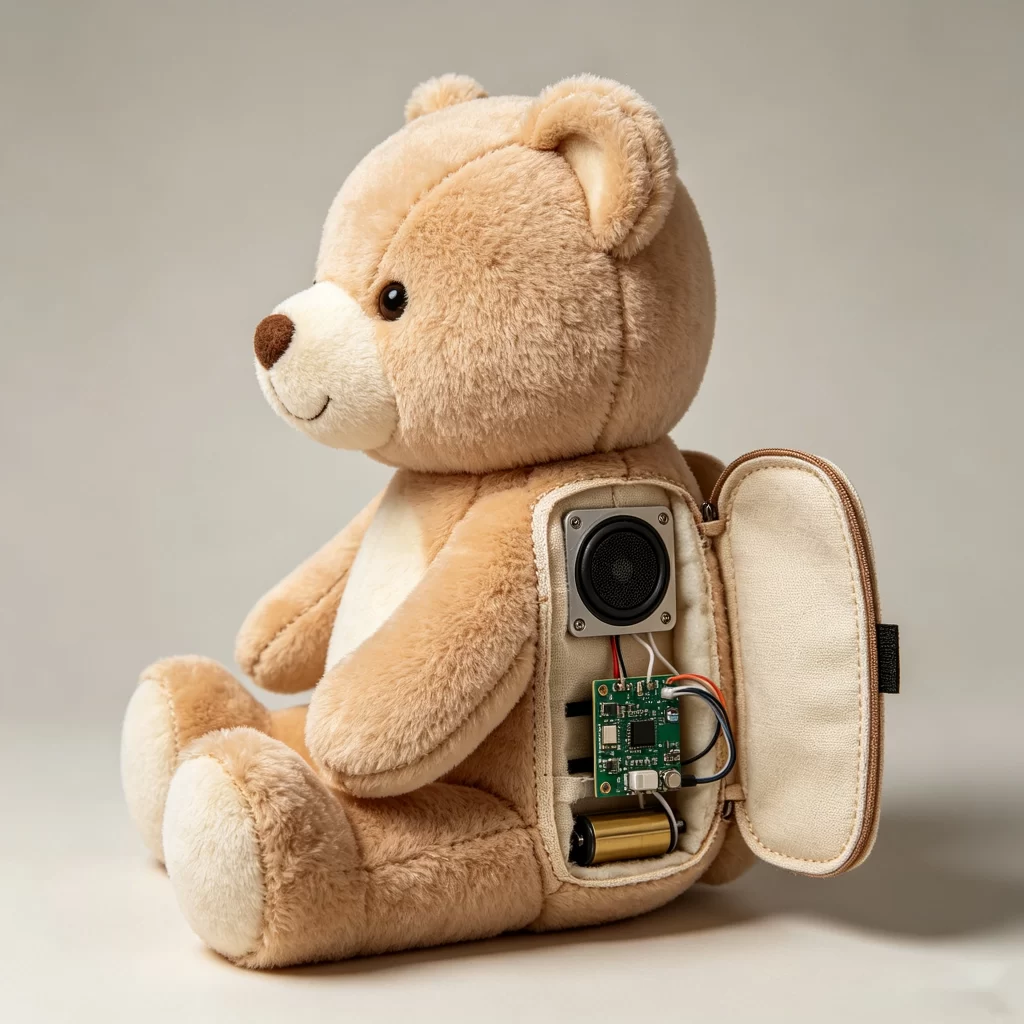
The internal layout normally includes:
- The plush outer body This provides the visual shape and soft surface.
- A protected electronic module The board, speaker, battery, and other components should be secured inside a housing or internal pouch.
- Fixed sensor positions Wires and sensors need stable placement so they do not move during use.
- A controlled speaker area The speaker should face an area where sound can pass through without heavy blockage.
- A secure battery compartment The user should not reach the batteries during normal play.
- A service opening A zipper, hook-and-loop opening, or other controlled access point may be needed for battery replacement or module removal.
We usually recommend a removable electronic module when the design allows it.
This can make the plush shell easier to clean. It also helps during sample adjustment, repair, battery replacement, and electronic inspection.
However, “removable” does not mean easily accessible to a child. The opening and battery structure must still match the intended age group and safety requirements.
Why Smart Plush Toys Are Harder to Develop Than Regular Plush
A regular plush project mainly focuses on shape, appearance, fabric, embroidery, stuffing, sewing, and consistency.
A smart plush project must coordinate the normal design and sampling process with electronic development, firmware setup, and function testing.
This creates several additional challenges.
The Plush Shape Can Affect Electronic Performance
A thicker body may improve appearance but block sound.
Heavy stuffing can make a touch sensor less responsive.
A small hand may not have enough space for the planned button.
Long-pile fabric may cover a light or reduce touch sensitivity.
The product cannot be designed as two separate parts. The plush structure and electronics must be reviewed together.
Electronics Often Have Their Own MOQ
Buyers sometimes assume that a 200-piece plush order means every custom electronic component can also be purchased in 200 pieces.
That is not always realistic.
Custom boards, speakers, battery housings, molded cases, motors, and wireless modules may have separate supplier MOQs. Small orders may need to use an existing module rather than a fully custom electronic system.
Firmware Revisions Can Delay the Sample
Changing embroidery usually affects the plush sample.
Changing an interaction rule may affect the firmware, app, audio files, sensor settings, and testing process at the same time.
For example, a buyer may request that one paw play music with a short press and change volume with a long press. That sounds simple, but it requires clear firmware logic and repeated function testing.
Projects are often delayed when the interaction flow is not confirmed before hardware development begins.
One Working Sample Does Not Prove Production Stability
A prototype may work during a short demonstration.
Bulk production requires every unit to respond within an acceptable range.
Quality control must check:
- Button response
- Sensor sensitivity
- Sound volume
- Audio sequence
- Charging
- Battery operation
- Wireless pairing
- Wire position
- Module attachment
- Final plush shape
A smart plush toy needs both normal plush inspection and electronic function testing.
Safety and Compliance for the US Market
When smart plush toys are intended for children, the electronics do not replace ordinary toy safety requirements.
The plush body still needs to follow the relevant children’s plush toy safety standards, including review of seam strength, small parts, filling retention, flammability, accessible components, labels, and age grading.
For children’s toys sold in the United States, ASTM F963 and CPSIA requirements may apply depending on the product and intended age group. The testing plan should be based on the final structure, materials, electronic parts, battery system, and claims.
Battery Access
The U.S. Consumer Product Safety Commission’s button cell and coin battery guidance states that toy battery compartments should use a secure closure requiring a screwdriver, coin, or other tool to open.
A fabric flap alone is not a secure battery enclosure.
The electronic module should also be designed so that pulling, dropping, squeezing, or opening the plush does not expose the battery.
Wireless Equipment
Bluetooth and Wi-Fi products contain radio-frequency functions.
The FCC explains that applicable radio-frequency devices require equipment authorization before they are marketed or imported into the United States.
Using a pre-certified wireless module may simplify part of the process, but it does not automatically remove every product-level responsibility.
Children’s Privacy
A talking toy does not automatically create a privacy issue.
Privacy becomes a major concern when a connected toy or app collects, stores, uses, or shares personal information, including data handled through third-party software. The FTC’s COPPA compliance guidance explains that covered businesses remain responsible when third parties collect children’s data on their behalf.
Under the FTC’s Children’s Online Privacy Protection Rule, certain child-directed online services and services that knowingly collect personal information from children under 13 must follow COPPA requirements.
For a child-focused smart plush, brands should clarify:
- Whether the microphone is always active
- When voice data is transmitted
- Whether recordings are stored
- Where the data is stored
- Who can access it
- Whether third-party software receives it
- How parental consent is handled
- How parents can review or delete data
These questions should be answered before the product is launched, not after the app is already built.
Brands developing connected products should also review the wider question of whether AI plush toys are safe for kids before the app, cloud system, and product structure are finalized.
Common Buyer Misunderstandings
“We Only Need to Add AI”
AI is not a single component that can be placed inside the plush.
An AI plush project may require:
- Microphone hardware
- Speaker hardware
- Wireless connection
- Firmware
- Mobile or web software
- Server access
- AI model access
- Content controls
- Account management
- Privacy policy
- System maintenance
The plush toy may be the visible product, but most of the complexity sits behind it.
“The Toy Can Be Very Small and Still Include Every Function”
Small plush toys have limited internal space.
A speaker, battery, board, microphone, wiring, charging port, sensor, and protective housing all take up room.
Trying to fit too much into a small body often creates a hard, heavy, or poorly shaped toy.
“The App Is Included with the Plush Sample”
An app is normally a separate software project.
It requires interface design, Android and iOS planning, connection logic, testing, updates, privacy controls, and ongoing technical support.
Before requesting a custom app, buyers should first confirm whether an existing platform can support the required functions.
“Low MOQ Means Low Development Cost”
A lower order quantity reduces the number of finished units. It does not remove engineering, firmware, sample, tooling, testing, and software costs.
For an electronic project, the development cost can be significant even when the first order is small.
How to Choose the Right Smart Plush System
The best system is not the one with the most functions.
It is the simplest system that delivers the intended user experience.
Start With the Main Interaction
Define one clear action and one clear response.
For example:
- The child presses the paw and hears a story.
- The user hugs the toy and hears a recorded message.
- The app selects a language and sends new audio to the toy.
- The child asks a question and receives a controlled spoken answer.
If the main interaction is unclear, adding more technology will not improve the product.
Separate Must-Have and Optional Features
Create two lists before development.
Must-have features are required for the product to work.
Optional features can be removed if they increase cost, size, risk, or development time too much.
This makes technical evaluation more practical.
Choose the Lowest Workable Technology Level
A pre-programmed sound system is usually better than an app if the content rarely changes.
Bluetooth is useful when the toy needs nearby phone control.
Wi-Fi is useful when the product must access online content without remaining close to a phone.
AI is useful only when open or adaptive conversation is central to the product.
Plan the Electronics Before Finalizing the Plush Size
The main module dimensions should be known before the plush pattern is confirmed.
At Wehao Toys, we usually recommend reviewing the electronic module, battery structure, speaker position, sensor locations, access opening, and intended plush size as one system.
This reduces the risk of developing an attractive plush shell that cannot hold the required hardware.
Use Sampling to Test the Whole Experience
The sample should not be reviewed only for appearance.
The buyer should test:
- How easily each function activates
- Whether the sound is clear
- Whether the toy still feels soft
- Whether the module moves inside
- Whether buttons can be found naturally
- Whether charging or battery replacement is practical
- Whether repeated interaction changes the plush shape
- Whether the user instructions are clear
A successful sample is not simply one that works. It should work in a way that feels natural inside a plush toy.
Key Takeaways
Smart plush toys combine soft toy construction with electronics, sensors, software, and sometimes wireless or AI systems.
The basic operating logic is simple:
- The toy detects an input.
- A chip or software processes that input.
- The toy produces a sound, light, movement, or digital response.
- A battery supplies the required power.
The development process becomes more difficult as the product moves from fixed sound playback to sensors, apps, Wi-Fi, or AI.
For most new brands, starting with a focused, modular, and mostly offline interaction is usually more practical than building a fully connected toy immediately.
The final product should balance interaction, softness, size, safety, battery access, reliability, privacy, cost, and long-term technical support.
Frequently Asked Questions
What are smart plush toys?
Smart plush toys are stuffed toys that contain electronic components and can respond to user actions. They may talk, play music, react to touch, move, record voices, connect to an app, or use an online AI system.
How do smart plush toys work?
A smart plush toy receives an input through a button, sensor, microphone, or connected device. A chip or software processes the input and activates an output such as sound, light, vibration, movement, or a spoken answer.
Are talking plush toys considered smart toys?
Some are, but not all. A toy that plays one fixed sound is mainly an electronic plush toy. It becomes more “smart” when it can recognize different inputs, select different responses, update content, connect to another device, or adapt through software.
Do smart plush toys need Wi-Fi?
No. Many smart plush toys work offline with stored sounds and built-in sensors. Wi-Fi is mainly needed when the toy must access cloud content, receive remote updates, or use an online AI service.
Can an interactive plush work without an app?
Yes. Buttons, touch sensors, motion sensors, sound chips, speakers, lights, and motors can all work without an app. An app is only needed when phone control, content updates, user accounts, or more advanced functions are required.
What is normally inside an electronic stuffed animal?
It may contain a control board, speaker, microphone, button, sensor, battery compartment, wiring, motor, LED light, Bluetooth module, Wi-Fi module, or removable electronic case. The exact parts depend on the planned interaction.
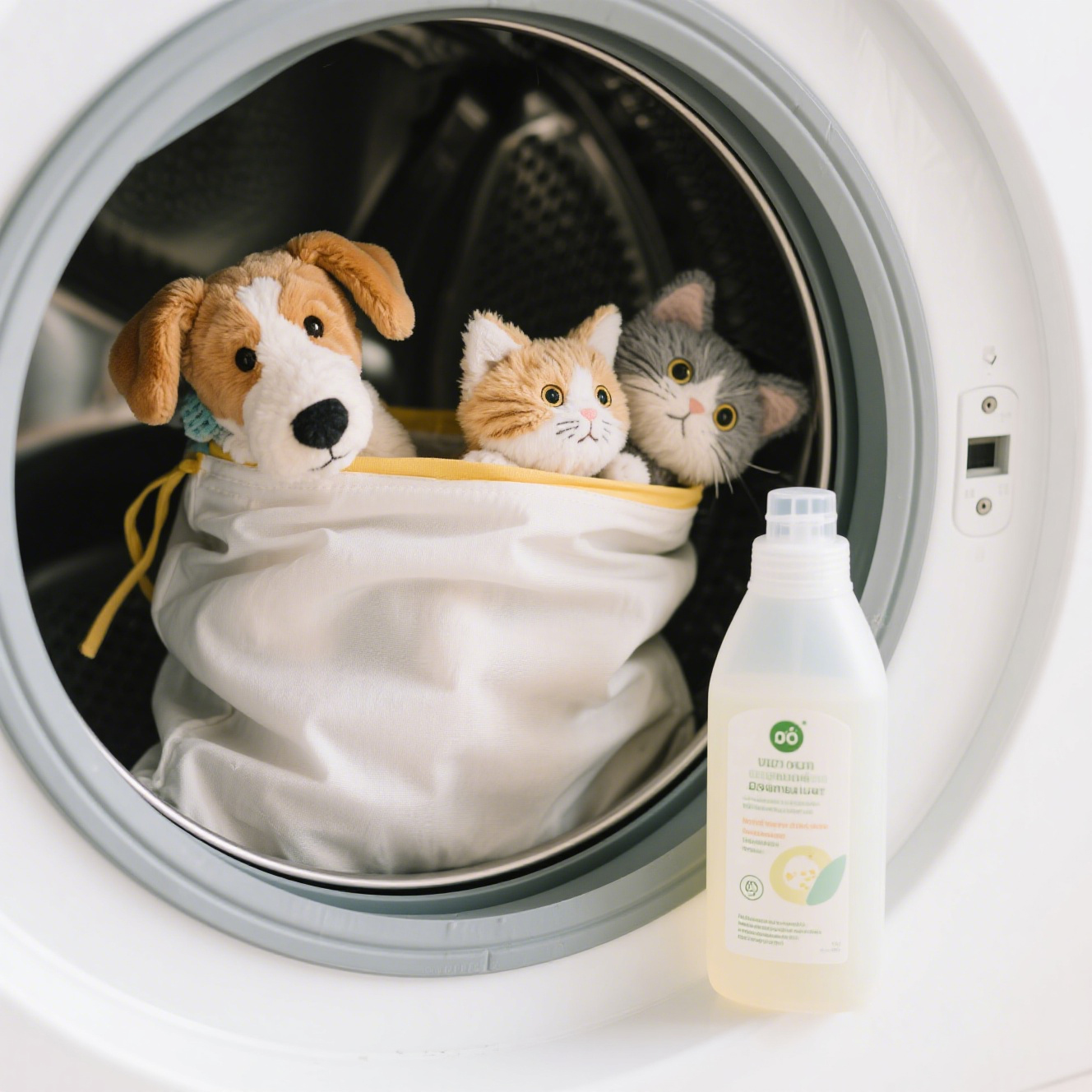
Can smart plush toys be washed?
The plush shell may be washable when the electronic module is fully removable. Products with fixed electronics are usually limited to surface cleaning. The cleaning method must be confirmed during product development.
Are smart plush toys safe for children?
They can be developed for children, but both the plush structure and electronics must be reviewed. Important areas include small parts, seam strength, battery access, wiring, overheating risks, age grading, labeling, materials, and the intended sales market.
Does a Bluetooth plush toy require FCC review in the United States?
Bluetooth products contain radio-frequency functions. The wireless module and finished product should be reviewed against applicable FCC equipment authorization, marketing, and importation requirements before US sales.
Does COPPA apply to every smart plush toy?
No. COPPA mainly becomes relevant when a child-directed online service or connected product collects, uses, or shares personal information from children under 13. An offline sound toy that does not collect data is different from a cloud-connected talking toy. Brands can review the FTC’s Children’s Online Privacy Protection Rule for the applicable requirements.
Why do smart plush toy samples cost more?
The sample may require plush pattern development, electronic sourcing, internal structure design, audio preparation, firmware setup, sensor adjustment, function testing, and repeated integration work. These steps are required even when only one sample is produced.
What should a buyer prepare before requesting a quotation?
Prepare the plush artwork, target size, intended age group, sales country, expected order quantity, required functions, interaction flow, power method, app requirements, audio files, packaging idea, and target launch schedule. Clear requirements make the initial feasibility review more accurate.
Planning a Smart Plush Toy Project?
A smart plush project works best when the plush structure, electronic module, interaction flow, safety requirements, and target quantity are reviewed together.
You can discuss your smart plush toy project by sending us your concept artwork, required functions, product size, intended age group, target market, and estimated order quantity. Our team can help assess whether the idea is suitable for a simple sound module, sensor-based system, app connection, or more advanced electronic development.