
Answer First
Small parts on plush toys—such as eyes, noses, and accessories—directly affect safety, cost, and production stability.
In most custom projects, these details determine whether a design can move efficiently from concept to mass production.
Why Small Parts Matter More Than They Seem
Small components are not decorative details; they define how a plush toy performs in real use.
In our sampling experience, issues with eyes, noses, or accessories account for over 30% of redesign requests. These problems often appear after the visual design looks “complete,” which makes them easy to overlook early on.
The key reason is simple: these parts combine structure, material, and attachment methods, which introduces multiple risks simultaneously.
Attachment Method: Safety Starts Here
Attachment method means how small parts are fixed onto the plush body, and it directly affects product safety and durability.
There are three common approaches:
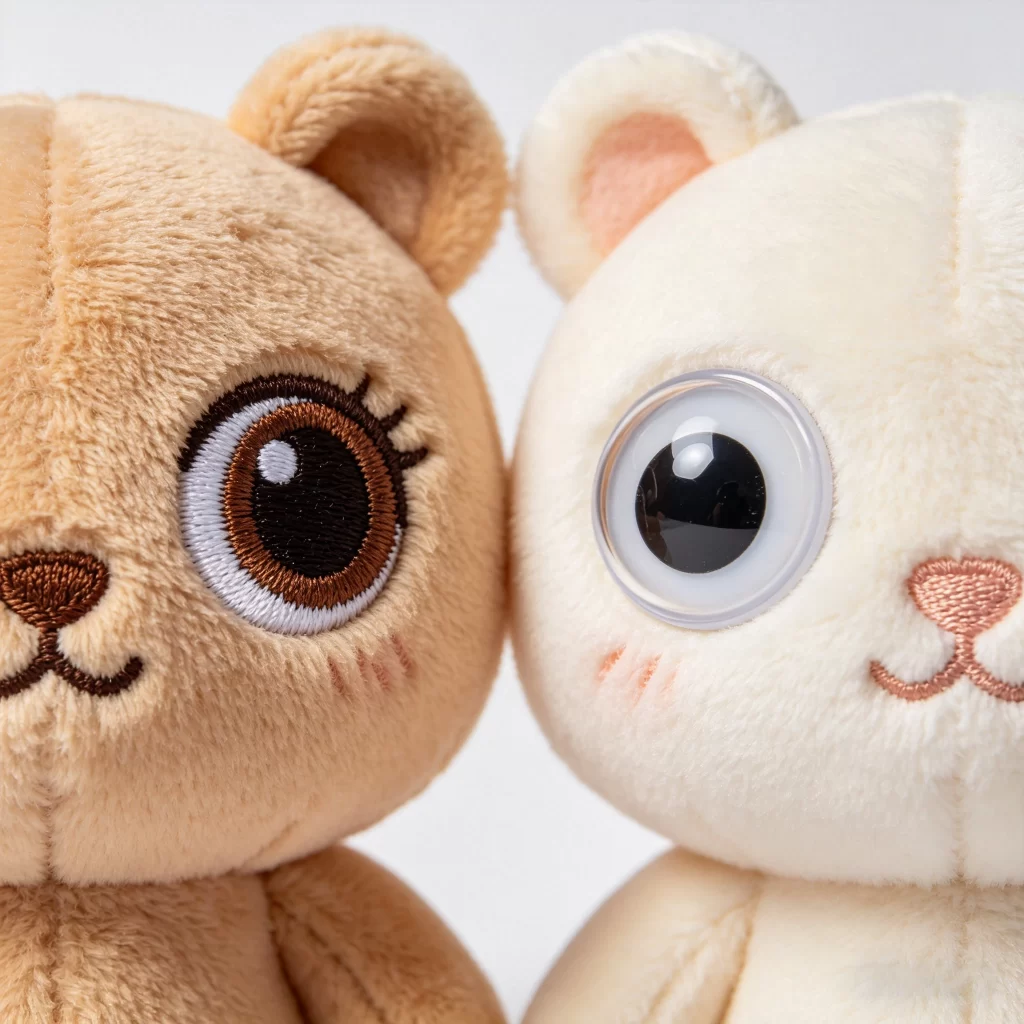
- Plastic safety eyes (locked from inside)
Suitable for toys above 3 years old
Risk: may loosen under strong pulling force - Embroidery (stitched directly)
No detachable parts
Preferred for baby-safe or pet-safe designs - Glued or stitched accessories (external add-ons)
Used for hats, bags, or decorative parts
Risk increases significantly with frequent handling
We typically recommend embroidery when the toy is under 20 cm or intended for children, as it eliminates detachment risk entirely.
Material Choice: Visual vs Functional Trade-off
Material choice for small parts determines both appearance and long-term performance.
For example:
- Plastic (ABS or PP)
Clean and shiny finish
Cost-efficient for large quantities - Embroidery thread
Softer look, better integration
Slightly higher labor cost (+15–25%) - Fabric appliqué or felt pieces
Adds dimension but increases stitching complexity
In one recent project, switching from plastic eyes to embroidery increased unit cost by about 18%, but reduced rejection rate during inspection by over 25%.
Size & Proportion: Small Misalignment, Big Impact
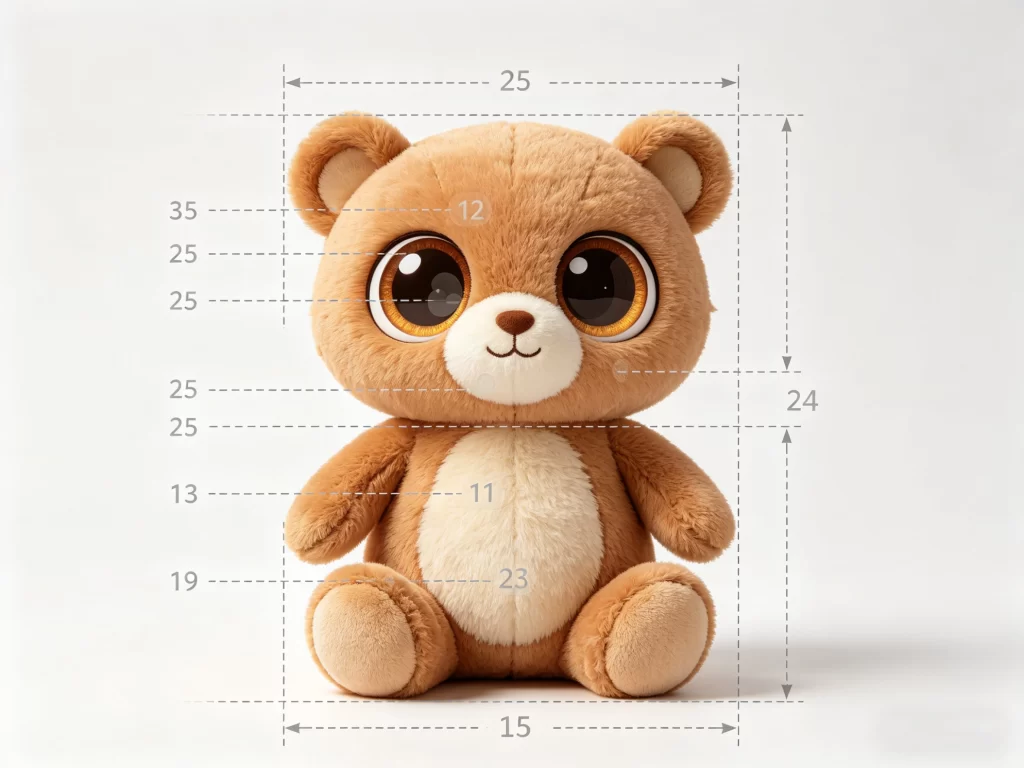
Size matching means aligning small parts proportionally with the overall plush body.
A typical rule we follow:
- For a 20 cm plush toy, eye diameter usually ranges 6–10 mm
- For a 30 cm plush toy, it increases to 10–14 mm
Oversized parts make the toy look cartoonish, while undersized parts reduce expressiveness.
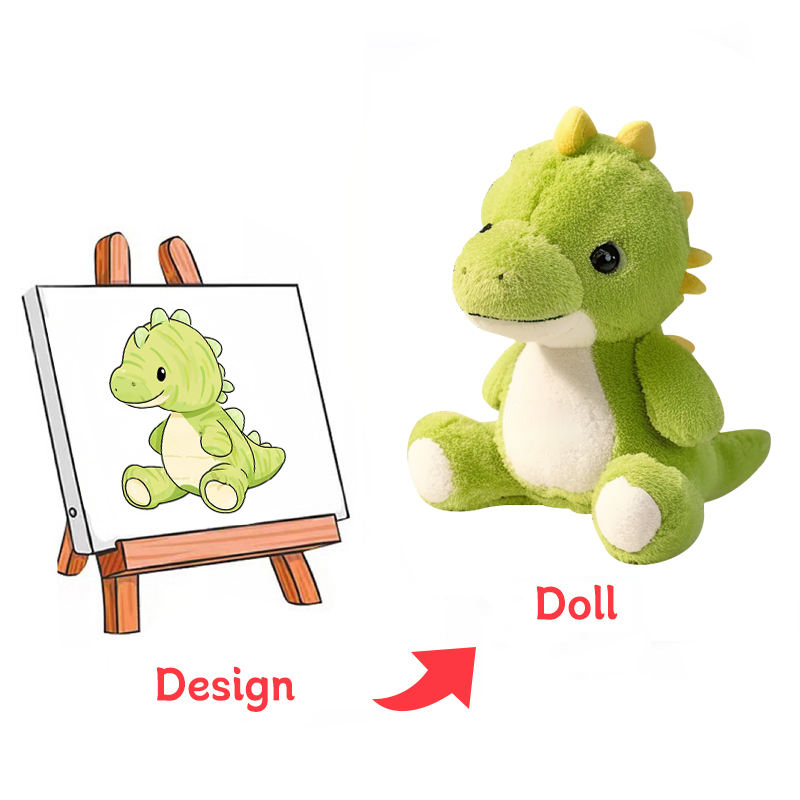
We often adjust proportions during sampling rather than strictly following artwork, because 2D designs rarely translate perfectly into 3D plush forms.
Cost Impact: Small Parts, Large Variation
Small parts can influence total cost more than expected.
Key cost drivers include:
- Number of accessories (each adds handling time)
- Material type (plastic vs embroidery vs mixed)
- Assembly steps (manual vs semi-automated)
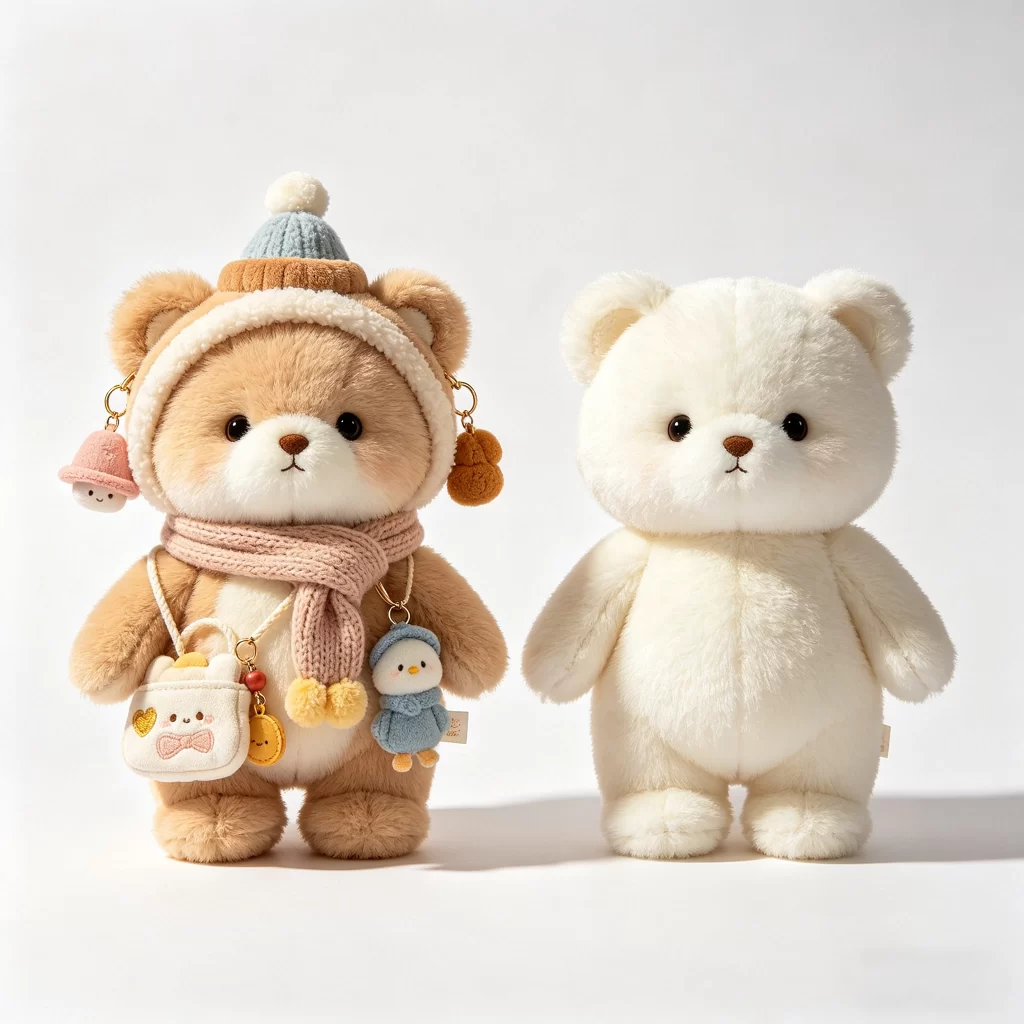
A design with multiple accessories (e.g., glasses + bag + hat) can increase total unit cost by 20–40% compared to a clean design.
This is why we usually review small part complexity before confirming quotation.
Production Complexity: Where Delays Come From
Production complexity refers to how small parts affect sampling and mass production stability.
Common issues include:
- Misalignment during stitching
- Accessories shifting position after stuffing
- Uneven placement across batches
In sampling stages, designs with more than 3 independent accessories often require at least one additional revision round.
Safety Compliance: Critical for the US Market
Small parts are a key factor in passing US safety requirements.
For example:
- Toys for children under 3 years must avoid detachable small components
- Pull force tests require parts to withstand 70–90 N of force
You can refer to for the compliance expectations and positioning strategy.
Because of this, embroidery is often preferred for eyes and facial details in child-focused products.
Durability by Use Case: Gift vs Pet Toys
Durability requirements vary significantly depending on the product use case.
- Gift plush toys
Focus on appearance and softness
Moderate durability requirement - Pet plush toys
Require reinforced stitching
Avoid small detachable parts completely
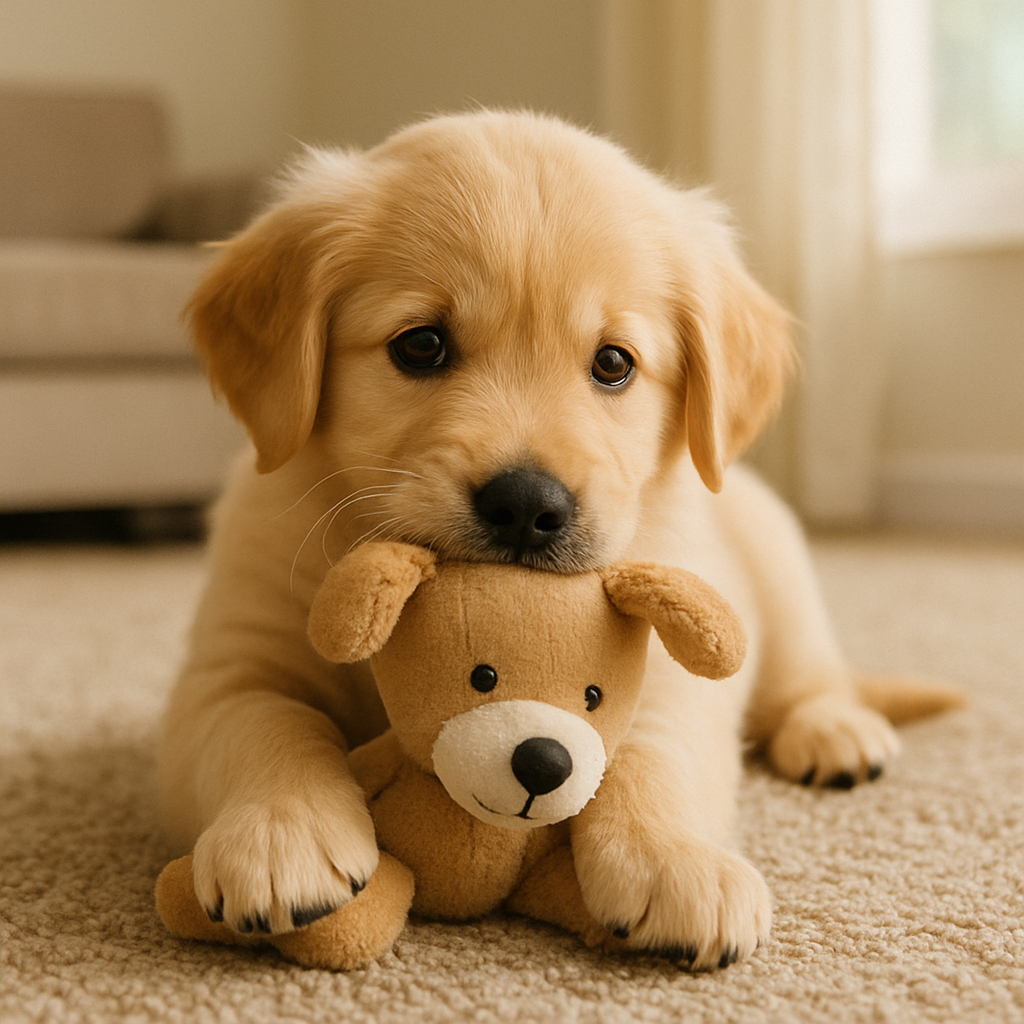
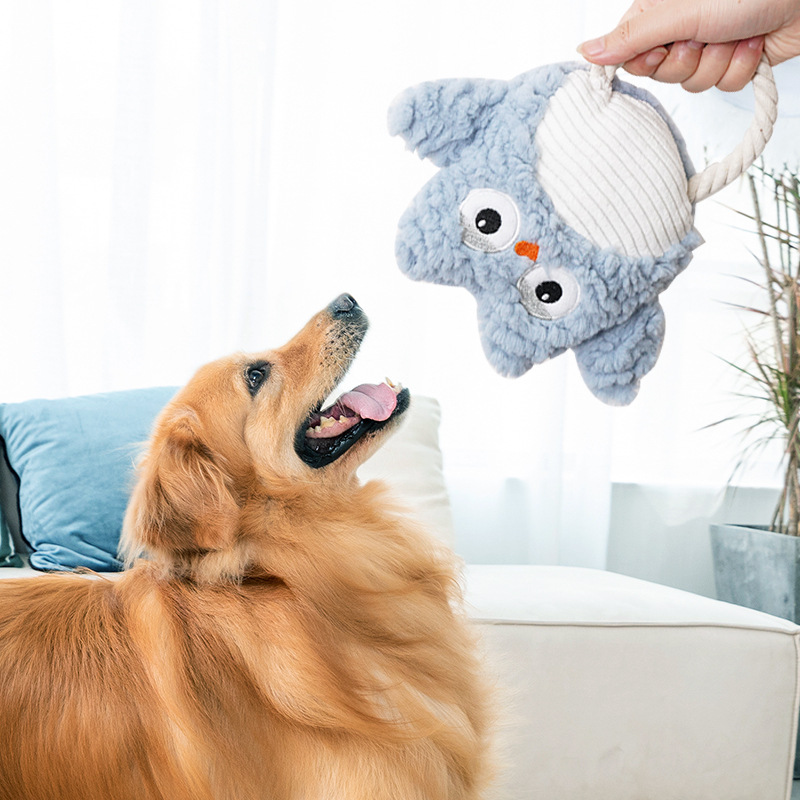
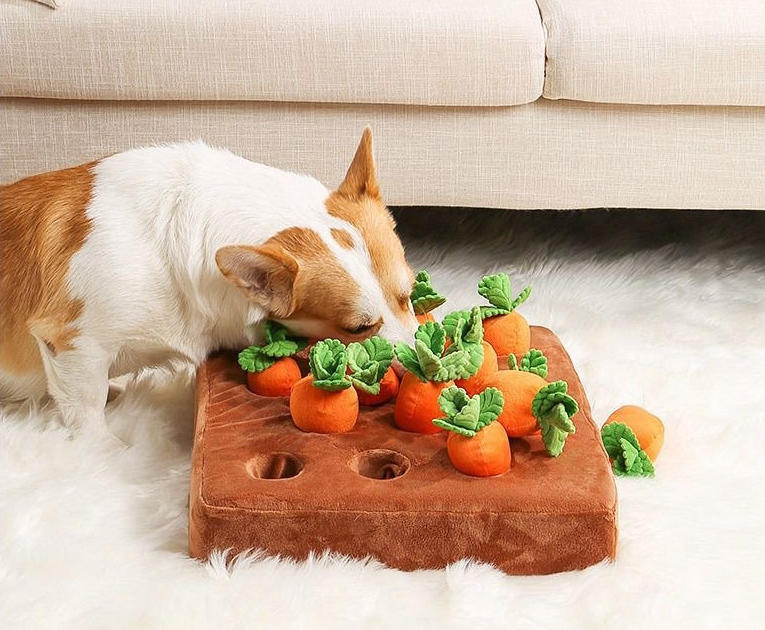
For pet toys, we usually avoid plastic eyes entirely and reinforce stress points with double stitching.
Who This Matters For
This level of detail matters most for:
- Brand owners developing custom plush products
- Buyers working with limited budgets but high quality expectations
- Projects targeting US or EU compliance markets
It is less critical for:
- Simple promotional giveaways
- Low-cost bulk products without strict safety requirements
FAQ: Plush Toy Small Parts
1. Are plastic eyes safe for plush toys?
Plastic safety eyes are widely used, but they are not suitable for all products.
For toys intended for children under 3 years old, plastic eyes are generally avoided due to detachment risk. Even with locking mechanisms, strong pulling can cause failure.
For older age groups, they are acceptable if properly installed and tested.
2. Why is embroidery often recommended?
Embroidery eliminates detachable components completely.
This reduces safety risks and simplifies compliance testing, especially for the US market. It also improves durability in products that are frequently handled.
However, embroidery increases labor cost slightly and may reduce 3D visual depth.
3. How do small parts affect sampling time?
Small parts increase sampling complexity.
Each accessory introduces additional steps such as positioning, stitching, and alignment checks. Projects with multiple accessories typically require one extra sampling round.
This can extend sampling time from 12–15 days to around 15–18 days.
4. Can small parts be adjusted after sampling?
Yes, but changes after sampling can affect both cost and timeline.
For example, switching from plastic eyes to embroidery may require reworking the face structure, not just replacing the part.
We usually recommend confirming small part decisions early in the sampling stage.
5. Do small accessories always increase cost?
Not always, but often.
Simple embroidered details may add only 5–10%, while multiple physical accessories can increase cost by 20–40%.
The impact depends on material, quantity, and assembly complexity.
6. What is the biggest risk with small parts?
The biggest risk is detachment during use.
This affects both safety compliance and product durability. It is especially critical for children’s toys and pet toys.
Proper design and attachment methods are essential to reduce this risk.