Answer-first
Hang tags, sewn labels, and heat transfer each serve different purposes in plush toy labeling. Hang tags are best for retail display, sewn labels provide long-term compliance and durability, and heat transfer offers a clean, low-profile branding solution.
In most B2B projects, we see a combination of sewn labels (for compliance) and hang tags (for presentation), while heat transfer is used selectively for aesthetic-driven designs.
Understanding the Three Labeling Methods
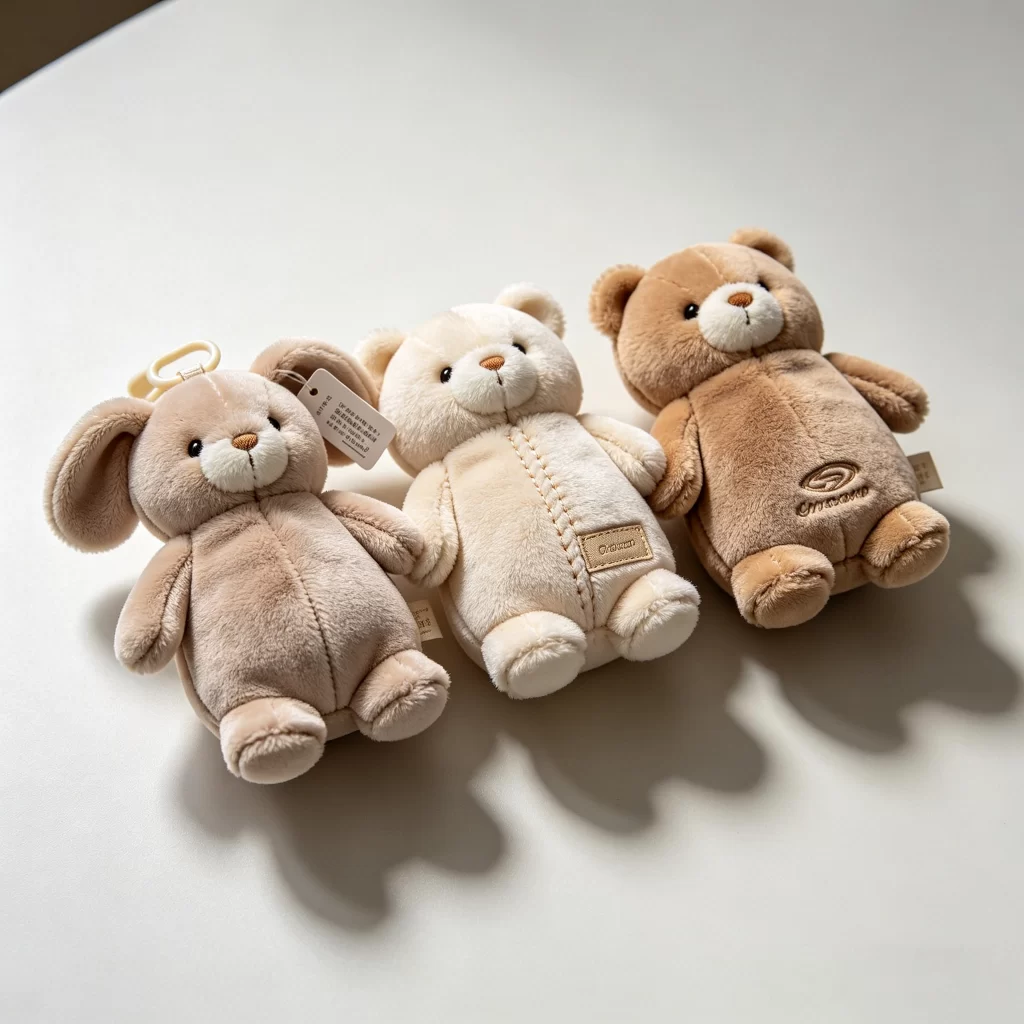
Each labeling option represents a different balance between visibility, cost, and durability.
- Hang tags are external, removable labels
- Sewn labels are permanent fabric attachments
- Heat transfer is printed directly onto fabric
These differences directly affect production and sourcing decisions.
Cost Impact and MOQ Differences
Cost is often the first constraint when selecting labeling.
Hang tags
- Cost: ~$0.05–0.15 per piece
- MOQ: typically 500–1000 pcs
- No sewing cost
Sewn labels
- Cost: ~$0.08–0.25 per piece
- Additional stitching labor
- MOQ depends on woven label supplier
Heat transfer
- Setup cost: $50–150 per design
- Unit cost: lower at scale
- MOQ: often 1000+ pcs
We usually recommend avoiding heat transfer for small test runs under 300 pcs due to setup overhead.
Durability and Washing Performance
Durability defines long-term product usability.
Sewn labels
- Withstand 30–50 wash cycles
- Resistant to friction and pulling
Heat transfer
- May fade after 10–20 washes
- Sensitive to fabric type
Hang tags
- Not designed for durability
- Removed before use
In our sampling experience, sewn labels remain the most reliable option for compliance and longevity.

Branding and Visual Presentation
Brand visibility varies significantly.
Hang tags
- Full-color printing
- High visual impact at retail
Sewn labels
- Limited to woven or printed patterns
- Subtle brand presence
Heat transfer
- Clean, minimal look
- Suitable for modern or premium aesthetics
This is why many clients use hang tags for first impression and sewn labels for permanent branding.
Production Integration and Complexity
Labeling affects production flow.
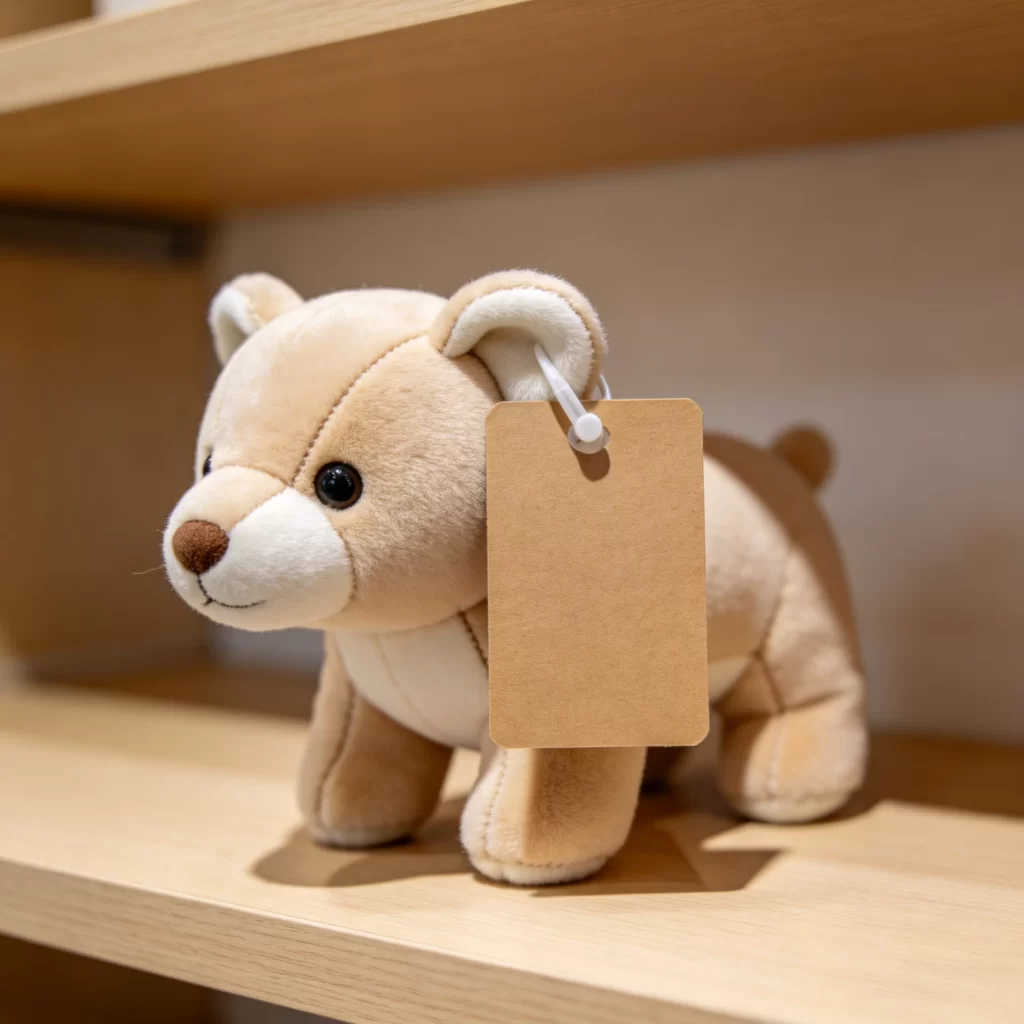
Hang tags are attached after production and do not impact manufacturing.
Sewn labels require integration during assembly, typically adding 5–10 seconds per unit.
Heat transfer requires controlled temperature and pressure, increasing quality control complexity.
Compliance Requirements in the US Market
For the US market, labeling is not optional.
Sewn labels are commonly used to meet CPSIA requirements, including:
- Manufacturer identification
- Batch tracking information
- Country of origin
Hang tags alone are not sufficient for compliance.
Heat transfer can be used, but must meet durability requirements for tracking labels.
When to Choose Each Option
Add Your Heading Text Here
Suitable for:
- Gift items
- Retail-ready plush toys
- Short-term branding
Not suitable for:
- Compliance labeling
- Long-term use
Sewn Labels — Best for Compliance and Durability
Suitable for:
- Mass production
- Children’s products
- Export to regulated markets
Not suitable for:
- Minimalist design requirements
Heat Transfer — Best for Clean Aesthetic
Suitable for:
- Premium plush designs
- Low-profile branding
Not suitable for:
- High-wash or rough-use products
FAQ
What is the most commonly used labeling method?
Sewn labels are the most commonly used because they meet both durability and compliance requirements.
In most US-bound orders, we include at least one sewn label for tracking information.
Hang tags are typically added as a secondary element for presentation.
Can I use only heat transfer labels?
You can, but it depends on the product category.
Heat transfer may not meet durability standards required for compliance labeling.
We usually recommend combining heat transfer with a small sewn label for safety information.
How does labeling affect production time?
The impact is measurable but not significant.
Sewn labels add approximately 5–10 seconds per unit during assembly.
Heat transfer adds setup time and requires inspection for consistency.
Hang tags have almost no impact on production time.
What is the best option for small orders?
For orders under 300 pcs, hang tags and simple printed labels are more cost-efficient.
Heat transfer setup costs are harder to justify at low volumes.
We often suggest starting with sewn labels plus simple tags.
Do all plush toys need sewn labels?
Not all, but most products entering the US market require permanent labeling.
This is especially important for children’s products.
Skipping sewn labels may create compliance risks.
Can labeling be customized for branding?
Yes, all three methods support customization.
Hang tags offer the highest flexibility for design and storytelling.
Sewn labels are more limited but still allow logo and text integration.
Heat transfer supports modern branding styles with minimal visual impact.