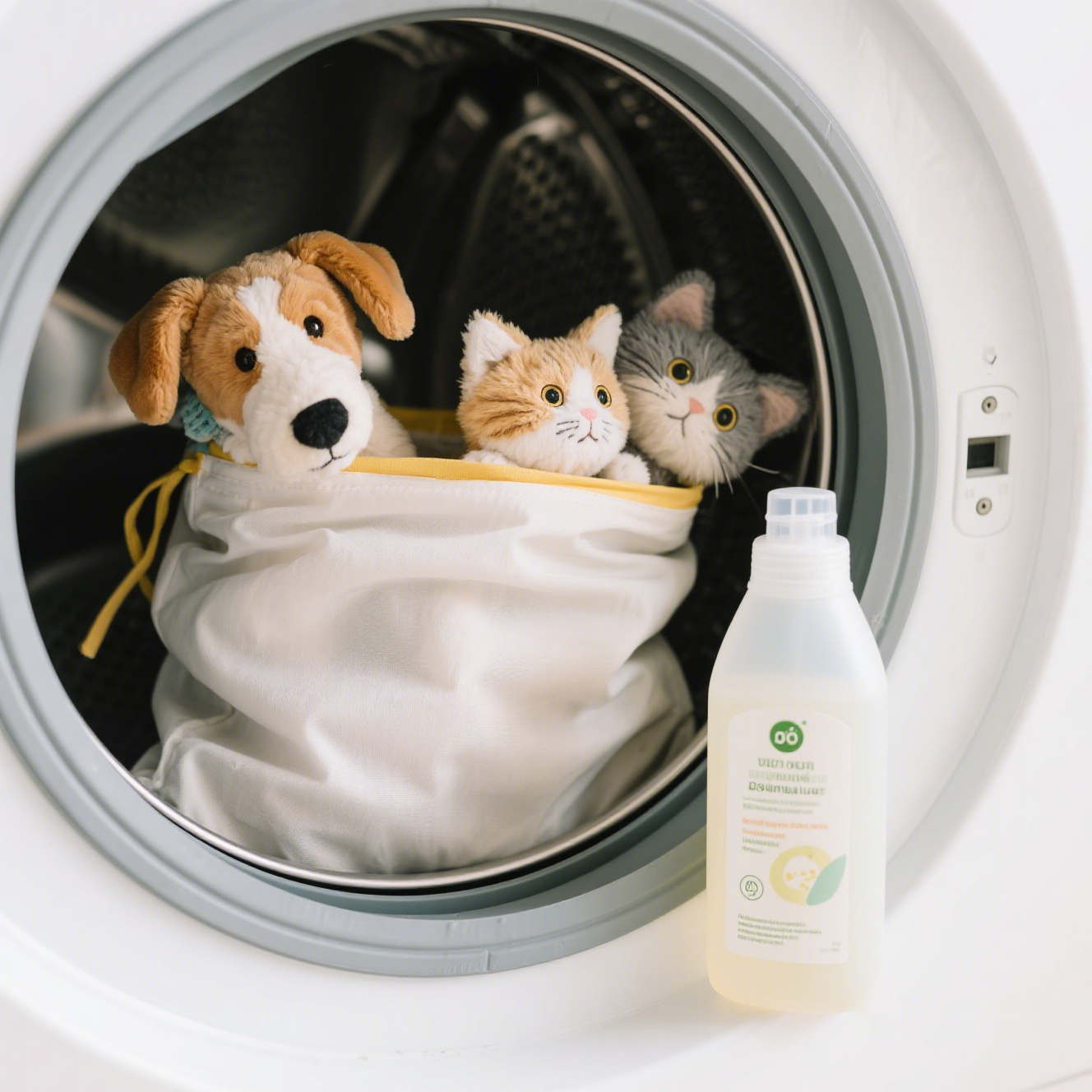

1. Why Removable Electronics Are Essential for Washable & Battery-Serviceable Talking Plush
Integrating voice playback, heartbeat vibrations, lullaby melodies, or interactive sensors into a stuffed animal immediately elevates its retail price point and emotional engagement. However, permanently sewing an electronic sound box inside a sealed plush belly creates two major commercial headaches for lifestyle, nursery, and promotional brands: parents cannot machine-wash the plush shell when it gets dirty, and customers cannot replace exhausted batteries without cutting open the seams.
As explained in our technical overview of smart plush toys functions, technology, and development, an electronic plush product is a marriage of two distinct engineering systems: a soft textile shell and a rigid electro-mechanical housing. Designing a reliable plush toy removable sound module design allows end users to slide the electronic module out in seconds, wash the outer plush shell safely, and reinstall the unit without exposing loose internal fiberfill or creating small-part hazards.
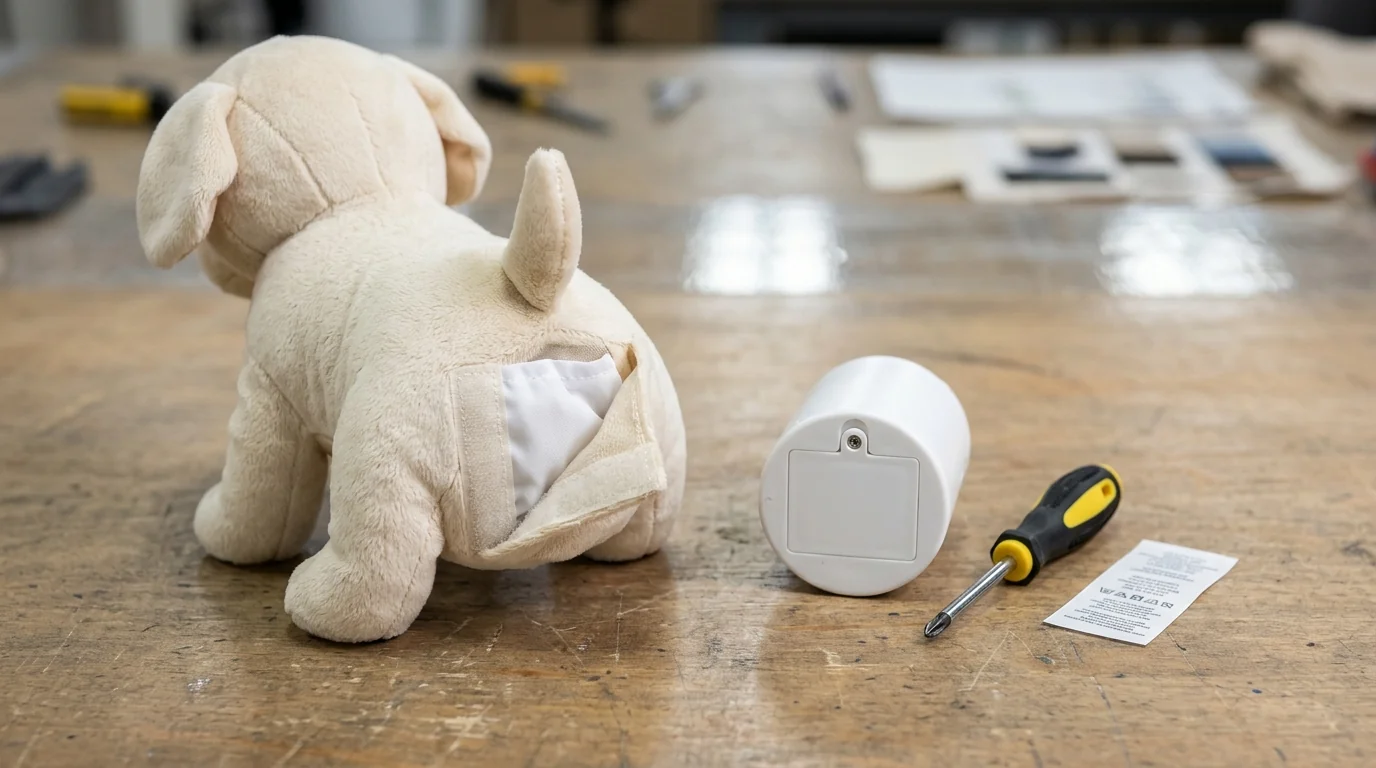
2. Engineering Plush Module Access Design: Inner Pockets, Flaps, and Closures
A common structural mistake in early prototypes is cutting a simple slit in the back of the plush and sticking a sound box directly into the raw polyester stuffing. If a child or parent opens that slit, raw fiberfill pulls out immediately—violating toy safety standards and leaving the sound box free to migrate into the head or legs where the button can no longer be found. Proper plush module access design requires a **closed-pocket architecture**:
- 1. Dedicated Internal Containment Pouch (‘Blind Pocket’): Sew a fully enclosed internal pocket from durable brushed tricot or 210D polyester taffeta inside the belly or back opening. When the outer flap is opened, the user sees only the clean fabric pocket wall—100% isolating the internal PP cotton stuffing from the outside world.
- 2. Snug Acoustic & Tactile Positioning: Size the internal pouch so the sound module sits facing outward with its activation button aligned directly beneath a thin 3–5 mm layer of plush shell (or an embroidered ‘PRESS HERE’ icon), preventing the box from flipping upside down.
- 3. Child-Safe Outer Closure (Overlapping Flap + Baby-Grade Velcro or Concealed Zipper): Use a 15–20 mm overlapping plush storm flap secured with full-length soft baby-grade injection hook-and-loop tape (or a concealed nylon coil zipper with a lockable slider pocket) so the closure lies completely flat when hugged.
- 4. Internal Tether Ribbon (Optional Anti-Loss Strap): For products where the module is only pulled out slightly to flip an ON/OFF switch or change batteries (and the toy is spot-cleaned rather than machine-washed), a bar-tacked grosgrain tether ribbon can anchor the module to the pocket base.
3. What Should a Removable Sound Module Plush Prototype Be Tested For?
One working sample on a conference table does not prove bulk production reliability. When product managers ask what should a removable sound module plush prototype be tested for during custom plush development and electronic integration, validate your pre-production samples across the six engineering criteria below:
| Validation Parameter | Prototype Test Procedure | Target Acceptance Standard | Common Prototype Failure to Fix |
|---|---|---|---|
| 1. Acoustic Clarity & Volume (dB) | Measure sound pressure level at 25 cm & 50 cm WITH module inside closed plush pocket | 60 – 75 dBA clear speech/music (strictly <85 dBA close-to-ear safety ceiling) | Thick fiberfill muffles speaker -> move speaker grille against thin inner tricot wall |
| 2. Button Actuation Force | Press activation spot through outer plush shell 50 times at varied angles | Consistent trigger at 3N – 8N finger pressure without false hair-triggering in carton | Button too stiff or triggers inside shipping box -> add external ‘Try-Me’ pull-tab insulator |
| 3. Removal & Reinstallation Ergonomics | Have 3 testers remove and reinstall the module 20 times without instructions | Smooth <10-second removal/reinsertion; pocket seams pass 90N pull test | Pocket opening too tight -> widen opening by +10 mm and add rounded corner bar-tacks |
| 4. Drop & Impact Durability | Drop bare plastic sound module 5 times onto hardwood/steel from 85–93 cm height | Zero ABS housing cracks, zero loose internal solder joints, battery door stays locked | Thin brittle polystyrene shell cracks -> upgrade housing to 2.2 mm virgin high-impact ABS |
| 5. Battery Compartment Security | Attempt to open battery door without a tool; check captive screw retention | Requires screwdriver to open; captive screw stays attached to lid (cannot fall out) | Loose small screw falls out -> switch to captive washer screw per EN IEC 62115 |
| 6. Standby Current & Pull-Tab Shelf Life | Measure quiescent standby micro-amps + verify PET battery insulator tab alignment | <5 µA sleep current; PET pull-tab cleanly disconnects battery during 6-month sea/storage | Batteries arrive dead at retail -> add removable Mylar insulation pull-tab |
4. How Do Buyers Verify Module Removal, Reinstallation, and Washability Claims?
Many brands market plush with removable electronics under a ‘Machine-Washable Plush Shell’ claim—especially for nursery sleep aids, toddler comforters, and custom interactive AI and voice plush toys. Before printing ‘Machine Washable (Remove Electronics First)’ on your retail box or sewn-in care label, answer what should be checked before making washability claims for talking plush:
First, **verify 100% wire-free detachment**: if the sound box sits in the belly but is wired to a separate squeeze button in the paw, the electronics are NOT removable for washing; for a truly machine-washable shell, the battery, PCB, speaker, and activation switch must all be self-contained inside the single removable ABS module. Second, **run a 3-Cycle Machine Wash & Tumble/Air Dry Test on the Empty Plush Shell**: ensure that closing the empty Velcro pocket flap prevents the hook tape from snagging the plush fur inside a laundry bag, and confirm that the empty inner tricot pocket does not shrink or warp so the sound module still slides back in effortlessly after washing. Third, **enforce permanent Dual-Location Warning Labels**: sew a clear icon and text warning (`REMOVE ELECTRONIC MODULE BEFORE WASHING`) directly onto the pocket flap/tush label AND print `SURFACE CLEAN ONLY / DO NOT IMMERSE` directly onto the plastic sound module housing.
Finally, because any removable sound module can be held directly by a child once taken out of the pocket, the bare plastic module itself must independently pass small-parts, drop, torque, and tension testing under plush toy safety standards and compliance, U.S. CPSC and ASTM F963 battery/acoustics rules, European EN 71 harmonised toy safety standards, and the international electric toy safety standard IEC 62115 / EN IEC 62115 (which strictly prohibits button/coin cell access without a tool or two independent simultaneous movements).
5. Frequently Asked Questions (FAQ)
Q: Are AAA cylindrical batteries safer than button/coin cell batteries (LR44/CR2032) for removable plush sound modules?
A: Yes. Under updated ASTM F963 (Reese’s Law in the U.S.) and EN IEC 62115 regulations, button and coin cell batteries face extremely strict ingestion safety and warning requirements. Designing your sound module around 2× or 3× AAA cylindrical batteries (or a sealed USB-C rechargeable lithium-ion pack with overcharge protection) simplifies global retail compliance and gives consumers longer playback life.
Q: How do you prevent a removable sound module from accidentally turning on inside the shipping carton during ocean transit?
A: OEM factories either include a physical recessed ON/OFF slide switch switched to OFF during packing, or insert a non-conductive clear PET plastic pull-tab between the battery terminal and contact spring so the circuit remains dead until the customer pulls the tab.
Q: What audio file format should brands provide for custom talking plush chips?
A: Provide uncompressed 16-bit WAV files (44.1 kHz mono) mastered with a slight high-frequency boost between 2 kHz and 4 kHz. Boosting mid-high frequencies compensates for the acoustic damping of the plush fabric shell so voice playback sounds crisp rather than muffled.
Q: Can a plush toy with an electronic sound module be vacuum-compressed for shipping?
A: A plush toy with the rigid ABS sound box already installed inside should NOT be heavily vacuum-compressed, as the hard plastic housing can crack or leave permanent indentations in the plush fabric. If vacuum shipping is required for large plush, pack the sound modules in a separate inner master carton for destination insertion, or use light non-vacuum polybag packing.
Q: Does a battery-operated talking plush require FCC and CE EMC testing in addition to toy safety tests?
A: Yes. In addition to ASTM F963 / EN 71 and EN IEC 62115 electrical safety, electronic plush toys require FCC Part 15B (Unintentional Radiator) in the U.S., CE EMC Directive / RoHS 2.0 in Europe, and Bluetooth/Wi-Fi radio certification (FCC ID / CE RED) if wireless modules are used.
6. Engineer Safe, High-Clarity Talking & Interactive Plush With Wehao Toys
Developing a Custom Talking Mascot, Lullaby Nursery Plush, or Interactive Smart Toy? Combining a huggable, washable plush shell with a durable, safety-certified removable sound module requires seamless coordination between textile pattern makers and acoustic electronics engineers. Wehao Toys provides turnkey OEM development covering custom voice chip programming, sealed inner containment pockets, and full EN IEC 62115 / ASTM F963 compliance. Contact Wehao Toys for a Custom Plush Toy Project today to discuss your audio specifications and request a functional talking plush prototype.