
Quick Answer: Why Food Plush Toys Work
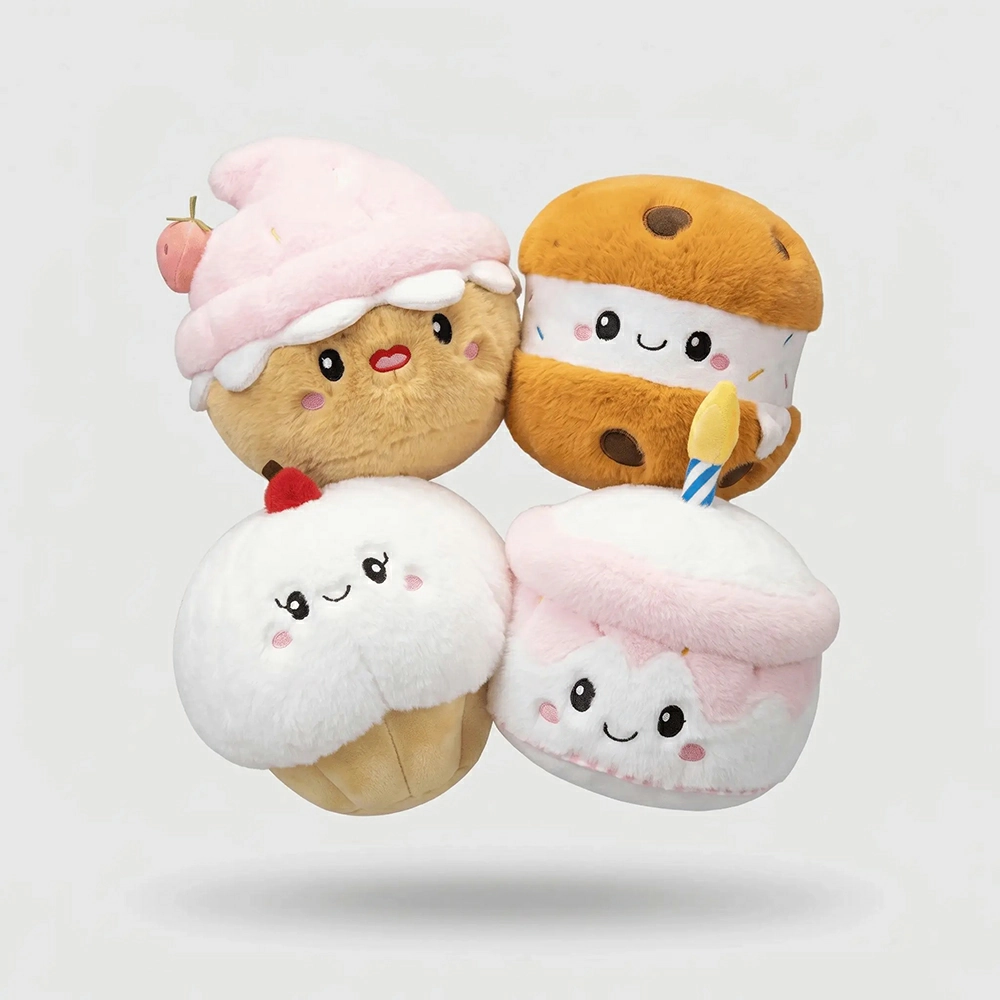
Food plush toys are popular because they turn familiar foods into soft, funny, and emotionally expressive characters. A strawberry, croissant, coffee cup, dumpling, or birthday cake is easy to recognize. Adding a simple face and soft body makes the object feel playful, giftable, and worth collecting.
Their appeal also extends beyond children. Food plush products can be desk décor, bag charms, comfort objects, gifts, promotional items, or plush collectibles for teenagers and adults. They combine several strong product qualities in one category: familiarity, cuteness, humor, softness, and collection potential.
Familiar Food Becomes an Instant Character
Traditional stuffed animals depend on familiar animals or established characters. Food plush toys take a different route. They use objects people already see, eat, celebrate, or associate with daily routines.
A birthday cake already suggests celebration. Coffee suggests a morning routine. Toast can feel warm and comforting. A strawberry feels sweet and cheerful. These meanings exist before the plush toy is designed.
This gives food plush an important commercial advantage: the buyer understands the concept almost immediately.
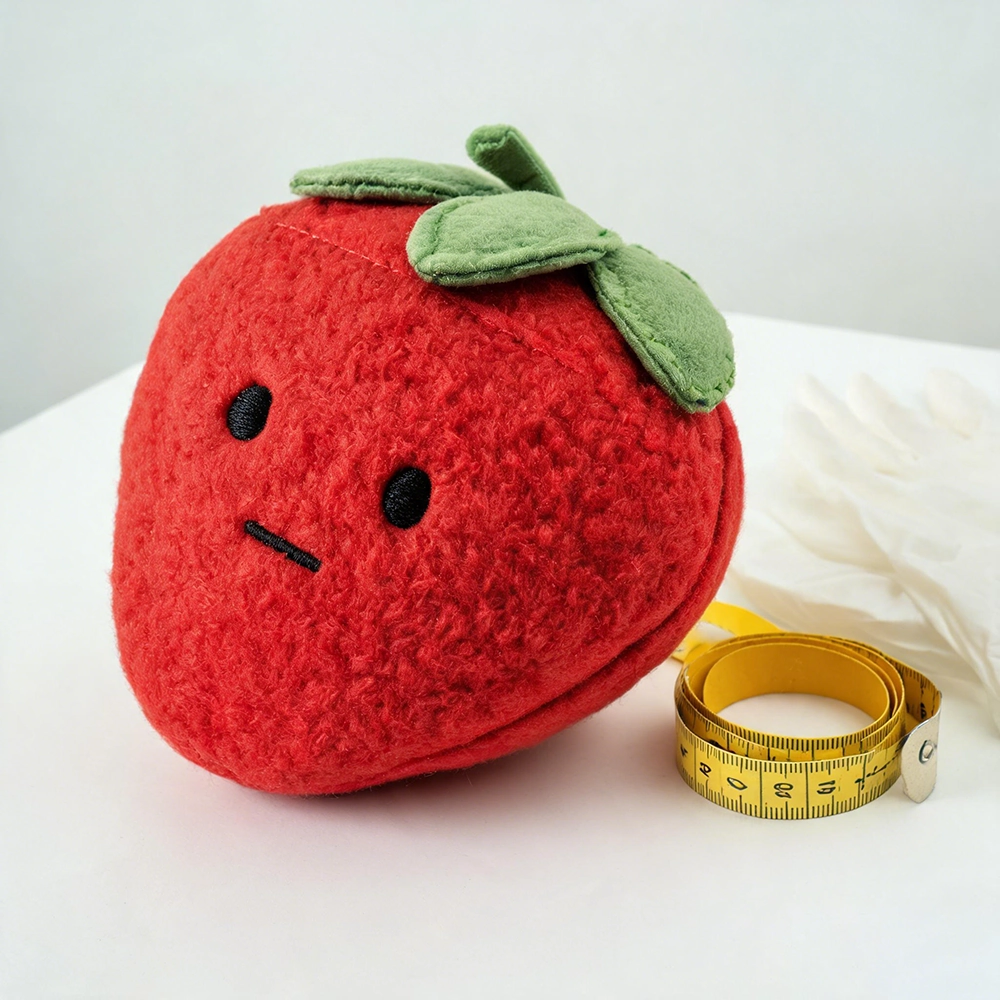
In our sampling experience, a food plush design usually works best when the original food can still be recognized within a few seconds. A clear strawberry shape is stronger than an abstract red form that needs a product name to explain it.
The face should add personality, but it should not hide the food identity.
Kawaii Design Makes Ordinary Objects Feel Lovable
Many cute food plush products use elements associated with kawaii design: rounded shapes, small facial features, soft colors, simple expressions, and childlike proportions.
The cultural meaning of kawaii goes beyond visual cuteness , often including delicacy, friendliness, and qualities that encourage care.
This design language works especially well with food because the contrast is humorous.
A sandwich does not normally have feelings. Once it receives tiny embroidered eyes and short plush legs, it becomes a character. The buyer may see it as shy, cheerful, sleepy, surprised, or calm.
That small emotional shift is one reason kawaii plush toys feel more memorable than realistic fabric food models.
Food Plush Fits the Growth of Collecting and Kidult Buying
Food plush is not popular only because it is cute. It also fits wider changes in the toy market.
The Toy Association’s 2026 Toy and Play Trends describes toys as increasingly collectible, wearable, shareable, and personal. It also reports that adults represent roughly one-quarter of U.S. toy sales and that 52% of surveyed U.S. parents had purchased a blind box toy for themselves or their children during the previous year.
According to Circana’s 2025 global toy industry report , collectible toy sales grew 32% and represented almost 19% of global toy dollar sales.
This does not prove that every plush category is growing. The stronger opportunity is concentrated in products connected to collecting, fandom, identity, gifting, or premium design.
Food plush fits this niche well because one concept can become a complete collectible plush toy series with related characters, sizes, and seasonal variations.
A buyer who likes one smiling pastry may also want the matching coffee, toast, egg, pancake, and jam jar.
Food Themes Are Easy to Expand Into a Series
A strong food plush concept rarely needs to stop at one design.
It can be organized around a clear theme:
| Collection Theme | Possible Food Plush Designs |
|---|---|
| Breakfast | Toast, egg, pancake, waffle, coffee |
| Bakery | Croissant, bread roll, cupcake, cookie, cake |
| Fruit | Strawberry, peach, orange, cherry, watermelon |
| Drinks | Coffee cup, milk carton, soda can, tea cup |
| Fast Food | Burger, fries, pizza, hot dog |
| Asian Food | Dumpling, bao bun, sushi, rice ball, boba tea |
| Celebration | Birthday cake, heart cookie, holiday candy |
| Local Food | Regional snacks, desserts, or souvenir foods |
This collection logic supports repeat purchases. It also makes the range easier to present in retail displays, subscription boxes, gift sets, and seasonal releases.
However, buyers often misunderstand what makes a collection consistent.
Using the same face on six unrelated shapes is not always enough. The designs should also share similar scale, fabric direction, limb style, embroidery language, color intensity, and packaging format.
For a first launch, we usually recommend four to six related designs, especially when developing mini plush toys for a collectible range , rather than ten completely different structures.
A smaller system is easier to sample, cost, control, and improve.
Food Plush Works Across Gifts, Décor, Retail, and Promotions
Food plush toys are flexible because they do not require the buyer to know a complicated story.
They can work in:
- Gift shops
- Bookstores
- Cafés and bakeries
- Museum stores
- Supermarket promotions
- Restaurant merchandise
- Tourist shops
- Lifestyle stores
- Online gift collections
- Blind box programs
- Plush keychain collections
- Seasonal campaigns
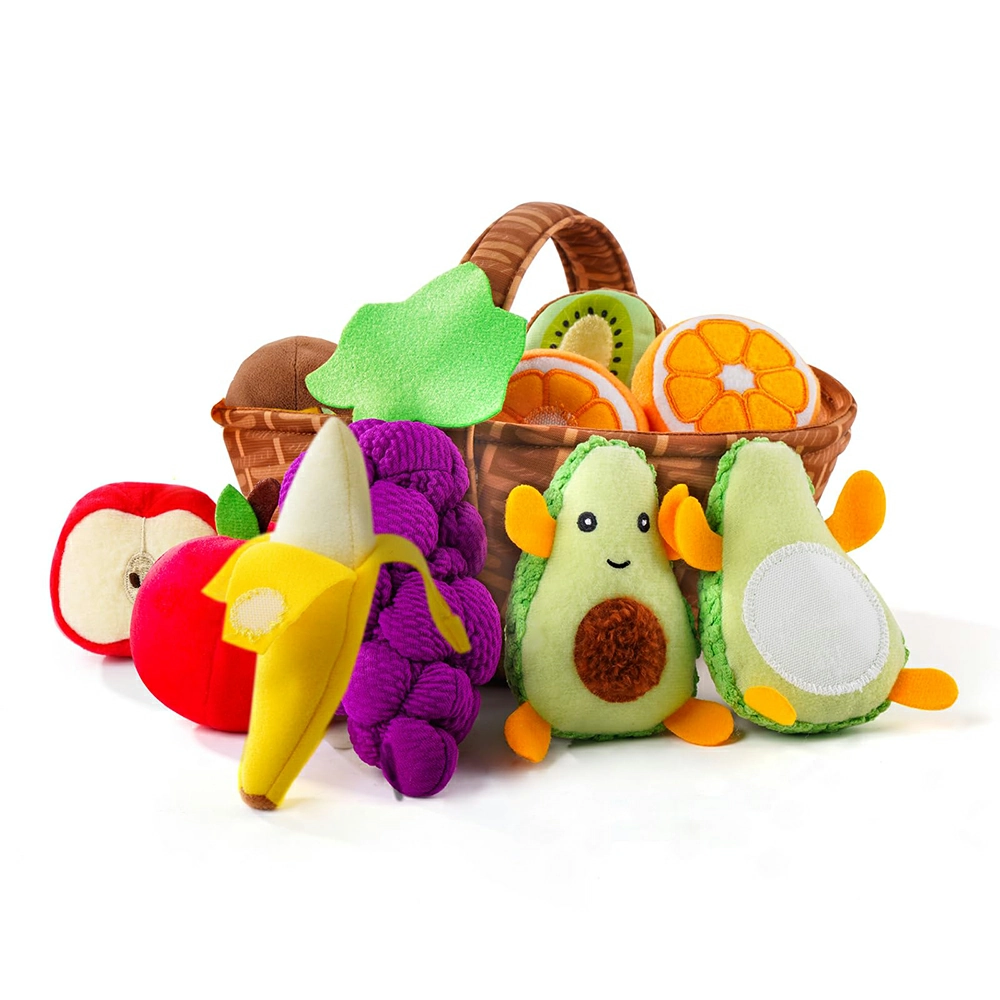
Food plush also works well as a gift, while compact food-shaped plush keychains can extend the same concept into bag charms, souvenirs, and lower-priced retail accessories.
A bakery can turn its signature pastry into a small branded plush. A beverage company can make a soft version of its product mascot. A tourist shop can develop a local snack as a souvenir plush.
A cake can mean celebration. Coffee can represent friendship or a shared routine. A heart-shaped cookie can support a Valentine’s Day collection.
The product does not need a long explanation to create meaning.
Why Some Food Plush Designs Fail
Popularity does not guarantee that every design will work.
| Common Mistake | Likely Result |
|---|---|
| The food shape is too abstract | Buyers cannot recognize the product |
| Too many tiny toppings | Sampling becomes slow and inconsistent |
| Long-pile fabric covers the face | The expression becomes unclear |
| Thin arms, straws, or handles | Parts bend, tear, or lose shape |
| The body is overstuffed | A soft food shape becomes hard and round |
| The body is understuffed | Bread, cake, or fruit looks collapsed |
| Every design uses a different structure | Costs and quality variation increase |
| The design closely copies an existing product | IP and originality concerns appear |
| Packaging is planned too late | The plush may not fit or display correctly |
One common issue we see is excessive decoration.
A designer may add sprinkles, cream layers, fruit slices, labels, arms, legs, accessories, and several facial features to one small cupcake plush. The artwork looks rich, but the physical sample becomes crowded.
Simplification usually produces a stronger product.
What Makes a Food Plush Toy Easy to Manufacture?
Start With a Recognizable Silhouette
The outline should communicate the food before embroidery or printed details are added.
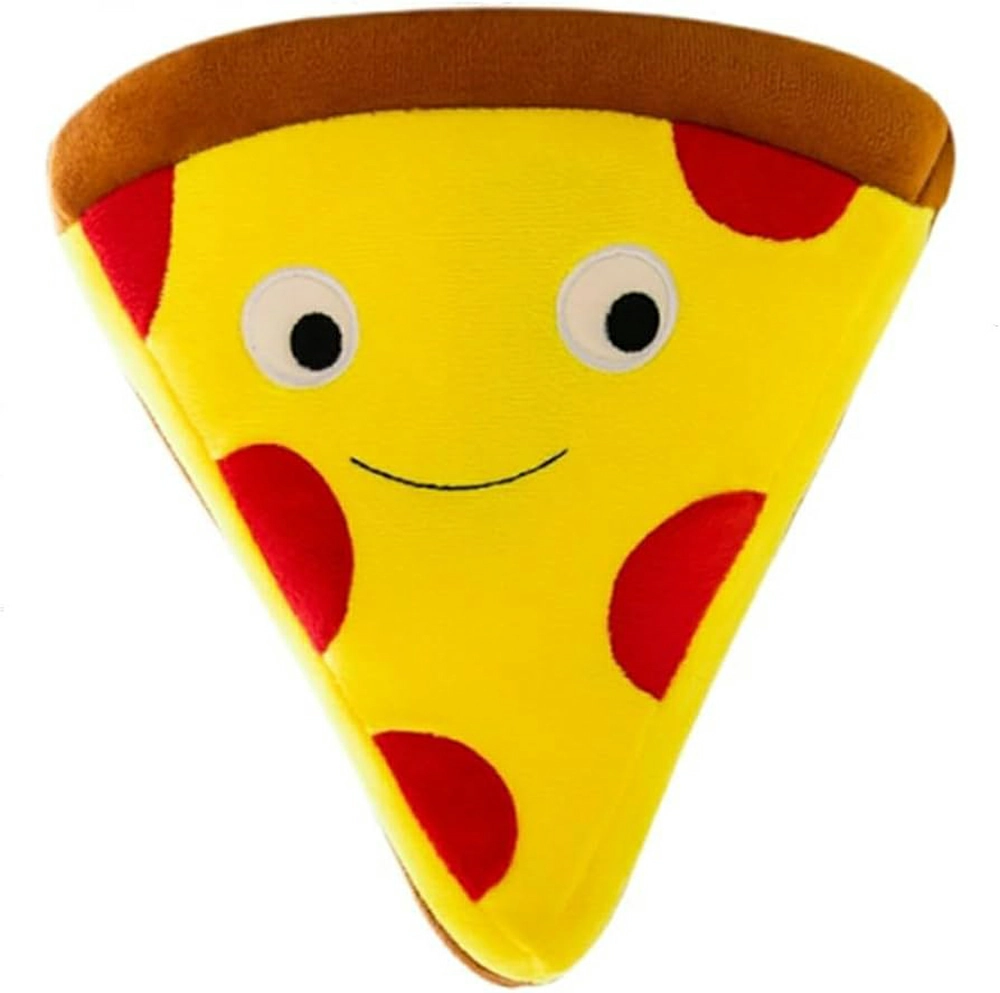
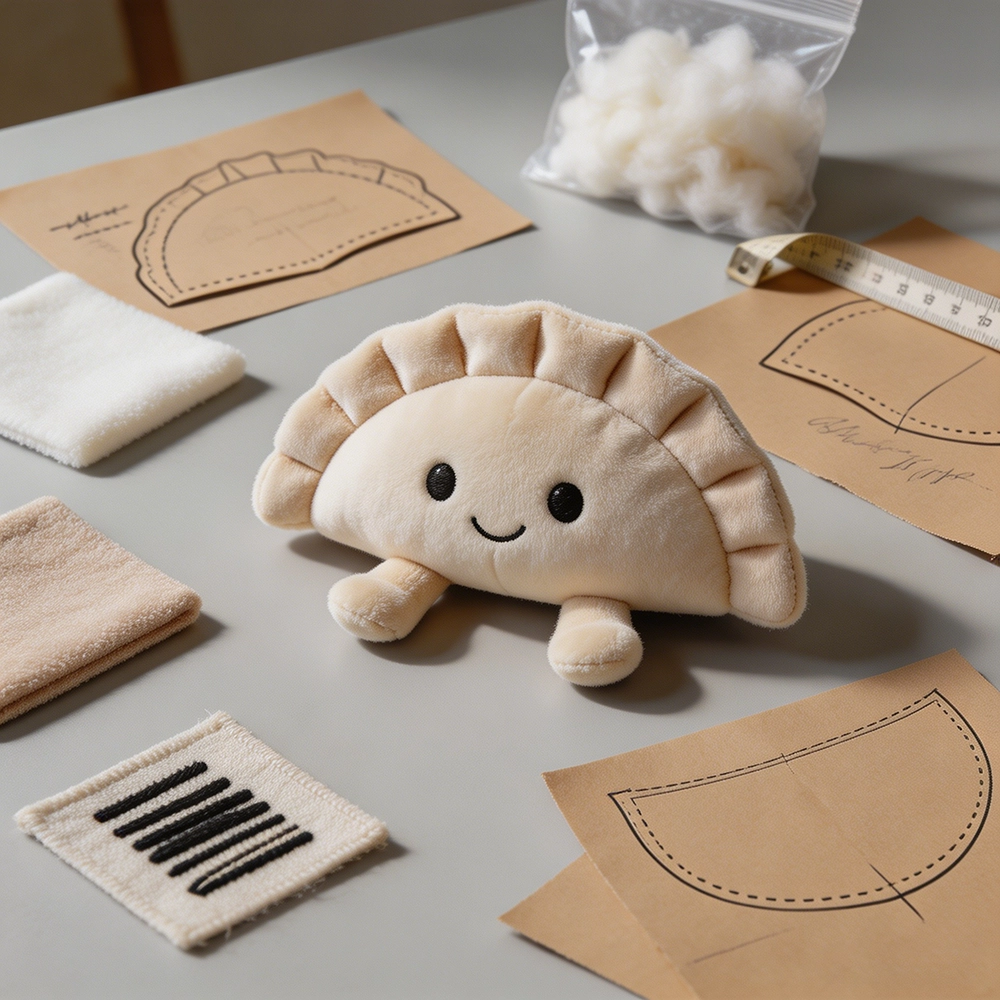
A croissant needs a curved layered form. A milk carton needs a clear folded top. A pizza slice needs a triangular body. A dumpling needs a rounded base with a visible folded edge.
If recognition depends entirely on printed artwork, the product may feel more like a printed cushion than a designed plush character.
Keep Facial Details Clear
Small embroidered eyes and mouths often work better than hard plastic parts for this category.
Embroidery creates a clean expression and can reduce detachable-part concerns. However, the face must be tested at the final size.
A facial design that looks balanced on a 25-centimeter plush may become too dense on an 8-centimeter charm. Long-pile fabric can also cover thin embroidery lines.
For miniature designs, simplifying the face is usually better than reducing every detail proportionally.
Match Stuffing to the Food Shape
Different foods need different stuffing control.
A loaf of bread may need a soft but stable body. A pancake stack needs enough support to keep the layers visible. A drink cup may need a firmer base to stand upright. A dumpling or bao bun may need a softer surface without becoming flat.
Stuffing density should be evaluated through a physical prototype because the custom plush toy sampling process reveals shape, balance, hand feel, and construction issues that fabric swatches cannot show.
The same PP cotton can feel very different depending on the pattern, filling quantity, opening position, and final hand shaping.
Design the Collection Before Sampling
Sampling one isolated character may appear cheaper, but it can create problems later.
The first design should already consider:
- Shared body structures
- Consistent face placement
- Common fabric colors
- Repeated limb patterns
- Packaging dimensions
- Size relationships
- Future seasonal variations
This does not mean every plush must use the same pattern. It means the series should share enough construction logic to remain visually and commercially consistent.
U.S. Safety Considerations for Children’s Food Plush
A food plush designed for adult display is not evaluated in exactly the same way as a product marketed as a children’s toy. The target age and intended use should be confirmed before sampling.
For children’s toys sold in the United States, brands should review the applicable children’s plush toy safety standards , including ASTM F963, CPSIA limits, third-party testing, CPC documentation, tracking labels, small parts, seam strength, and attachment testing.
The CPSC Toy Safety Business Guidance explains that manufacturers must determine which ASTM F963 requirements apply to each specific toy design.
The CPSC also requires permanent tracking information on applicable children’s products and their packaging.
The CPSC’s small-parts guidance for children’s products explains that products intended for children under three cannot present prohibited choking, aspiration, or ingestion hazards.
Food plush designs may need extra attention when they include:
- Plastic eyes
- Loose toppings
- Decorative beads
- Removable accessories
- Metal keychain hardware
- Thin fabric stems
- Felt leaves
- Printed coatings
- Small labels or attachments
Age grading should match the real product structure. Simply printing “14+ collectible” on the packaging does not automatically remove children’s-product obligations if the design, marketing, distribution, and expected users indicate that it is intended for children.
Are Food Plush Toys a Good Product Opportunity?
Yes, especially when the concept can be developed through a structured custom plush toy OEM project with an original visual system and a clear sales channel.
Food plush works particularly well when a brand can connect the design to:
- A collectible theme
- A café or restaurant identity
- A local or regional food
- A celebration
- A humorous character concept
- A seasonal gift
- A mini plush or bag charm format
- A promotional product
- A blind box series
The weak strategy is to copy a popular food plush and compete only on price.
The stronger strategy is to create a recognizable collection with original shapes, a consistent face style, suitable materials, practical packaging, and a reason for buyers to want more than one.
Key Takeaways
Food plush toys are popular because they make familiar objects feel soft, emotional, humorous, and collectible.
Their strongest advantages are:
- Immediate recognition
- Kawaii visual appeal
- Strong gifting potential
- Appeal to children and adults
- Easy collection expansion
- Good social-media visibility
- Flexible retail and promotional use
For brands, the design should remain simple enough to manufacture consistently. Clear silhouettes, controlled embroidery, suitable stuffing, safe construction, and early packaging planning matter more than adding as many details as possible.
The best food plush toy is not simply a fabric copy of food. It is a clear, original character that buyers understand immediately and want to keep.
Frequently Asked Questions About Food Plush Toys
Why are food plush toys popular?
Food plush toys are popular because they combine familiar food shapes with soft materials and expressive faces. They are easy to understand, humorous, giftable, and suitable for collectible product lines.
Are food plush toys only for children?
No. Teenagers and adults often buy food plush as desk décor, gifts, comfort objects, bag charms, or plush collectibles. The product design and packaging should match the intended age group.
What food designs work best as plush toys?
Foods with clear silhouettes usually work best. Examples include strawberries, bread, croissants, cake, dumplings, pizza, coffee cups, milk cartons, burgers, and boba tea.
What materials are suitable for cute food plush?
Short-pile plush, minky, crystal super-soft fabric, velboa, felt details, embroidery thread, and polyester filling are common options. The final choice depends on the product size, surface details, shape, and required hand feel.
Can food plush toys be sold in blind boxes?
Yes. Food themes are well suited to blind boxes because they can be organized into breakfast, bakery, fruit, drink, dessert, or regional-food collections. The designs should have clear differences while maintaining one consistent series style.
What size is suitable for a food plush collection?
Mini designs around 8–15 centimeters can work for keychains and blind boxes. Designs around 15–25 centimeters usually provide more space for shaping and embroidery. The best size depends on the sales channel, detail level, packaging, and target retail price.
Are food plush toys safe for children?
They can be designed for children, but the materials, seams, attachments, age grading, labeling, and testing must match the target market. U.S. children’s toys may need ASTM F963 and CPSIA compliance, third-party testing, tracking labels, and a Children’s Product Certificate.
How can a brand avoid copying an existing food plush?
Start with an original theme, silhouette, expression system, colors, character story, and packaging style. Use popular products only to understand the market direction, not as patterns to reproduce.
Turn Your Food Concept Into a Production-Ready Plush Collection
A successful food plush line needs more than a cute front-view drawing. Size, fabric, embroidery, stuffing, balance, packaging, target age, and collection consistency should be reviewed before production begins. Send your artwork, reference images, target quantity, preferred size, and sales market to Wehao Toys for an initial project review and sampling recommendation.
Contact Wehao Toys for a Custom Plush Toy Project