
Quick Answer: The Safest Way to Clean a Big Plush Toy
The safest way to wash large stuffed animals is to avoid full soaking unless the toy is clearly washable, strongly stitched, and able to dry completely. For most big plush toys, spot cleaning or gentle hand washing works better than machine washing.
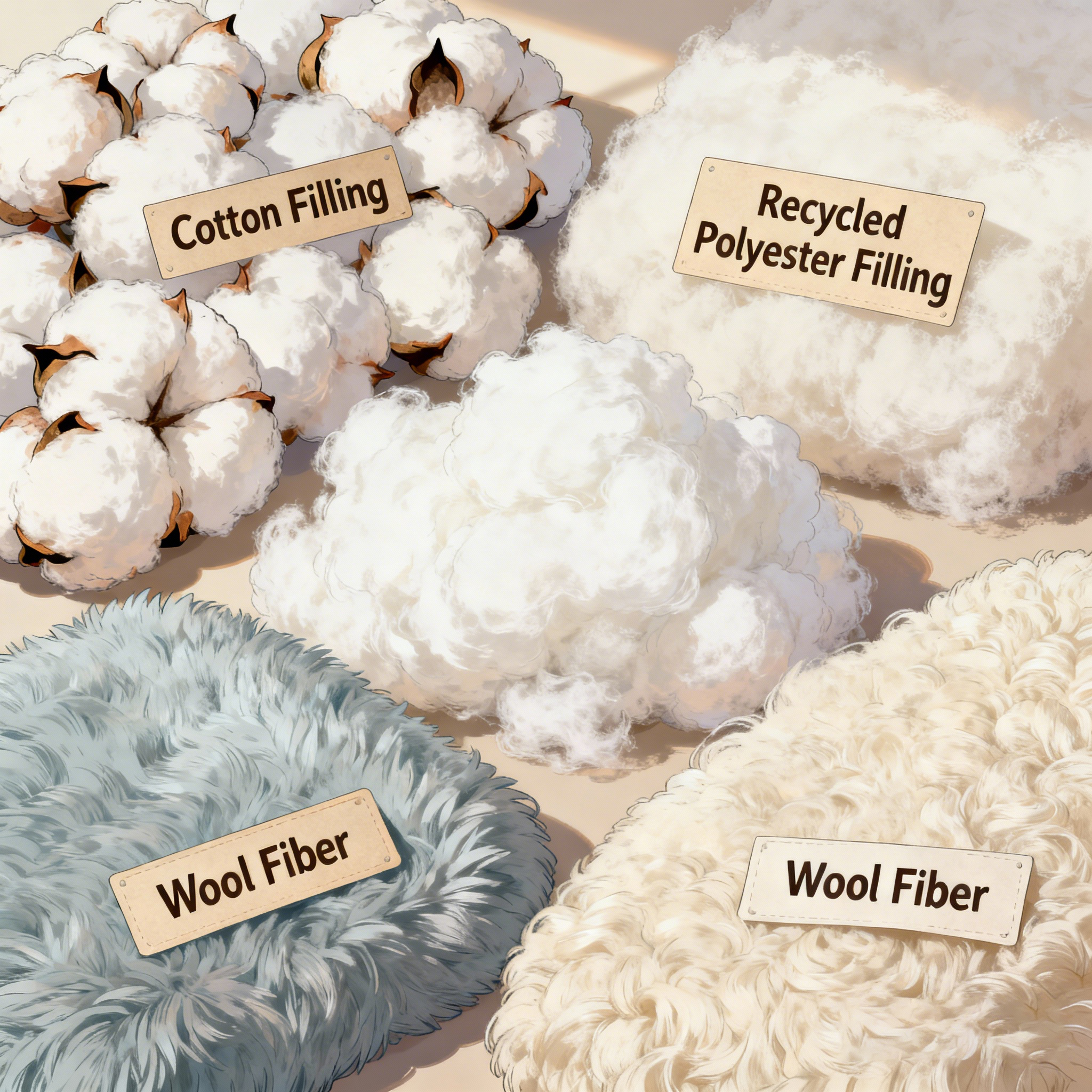
Large stuffed animals hold much more water than small plush toys. This makes them harder to rinse, harder to dry, and easier to deform. The biggest risk is not only dirty fabric. It is trapped moisture inside the stuffing.
Quick Answer: To clean big plush toys safely, first check the care label, seams, fabric, stuffing, and any electronic or hard parts. Vacuum off dust, spot clean stains, use cold water and mild detergent, avoid twisting, and let the plush dry fully in a ventilated area. Only machine wash a large stuffed animal if the label allows it and the toy fits loosely inside the washer.
This plush care guide focuses on realistic home cleaning. It also explains why some large plush toys should not be fully washed at home.
Check These Details Before You Wash Stuffed Animals
Before you wash stuffed animals, check the toy like a product inspector. A few minutes of checking can prevent damaged fur, clumped filling, open seams, or color bleeding.
The American Cleaning Institute recommends checking seams and removing dust before washing plush toys, which is especially important for large stuffed animals because dirt can move deeper into the fabric once the toy becomes wet.
| Check Point | Why It Matters | Recommended Action |
|---|---|---|
| Care label | It tells you whether washing is allowed | Follow the label first |
| Size | Oversized toys absorb more water | Avoid machine washing if it barely fits |
| Seams | Weak seams may open during washing | Repair loose seams before cleaning |
| Fabric pile | Long plush can mat or flatten | Use gentle cleaning and soft brushing |
| Stuffing density | Dense stuffing dries slowly | Avoid soaking if drying may be difficult |
| Hard parts | Eyes, buttons, zippers, or accessories may loosen | Spot clean around them |
| Electronics | Sound boxes and battery units may fail when wet | Do not soak unless removable |
| Color | Dark or printed fabrics may bleed | Test a hidden area first |
One common issue we often see is that buyers treat a large stuffed animal like a normal pillow. It is not the same. Plush toys have seams, shaped panels, embroidery, filling balance, and sometimes inner support. Once these are distorted, the toy may not return to its original shape.
If the plush has batteries, sound modules, lights, or mechanical parts, do not wash it fully. Remove the module if the design allows it. If it cannot be removed, use surface cleaning only.
Machine Wash vs Hand Wash vs Spot Clean
Not every large stuffed animal needs the same cleaning method. The right choice depends on structure, fabric, stuffing, and how dirty the toy is.
| Cleaning Method | Best For | Main Risk | Our Recommendation |
|---|---|---|---|
| Spot cleaning | Light stains, fragile plush, electronic plush, oversized plush | May not remove deep odor | Best first choice |
| Hand washing | Washable but delicate large stuffed animals | Hard to rinse and dry | Good for moderate cleaning |
| Machine washing | Strong, washable, medium-large plush toys | Deformation, seam stress, washer imbalance | Use only when the toy fits easily |
| Professional cleaning | Vintage, very large, valuable, or complex plush | Cost | Better than ruining the toy |
Machine washing is not always wrong. It can work for some stuffed animals. But the plush should fit with room to move. If you force a big plush into a washer, the fabric can rub too hard, the stuffing can shift, and the machine may not rinse evenly.
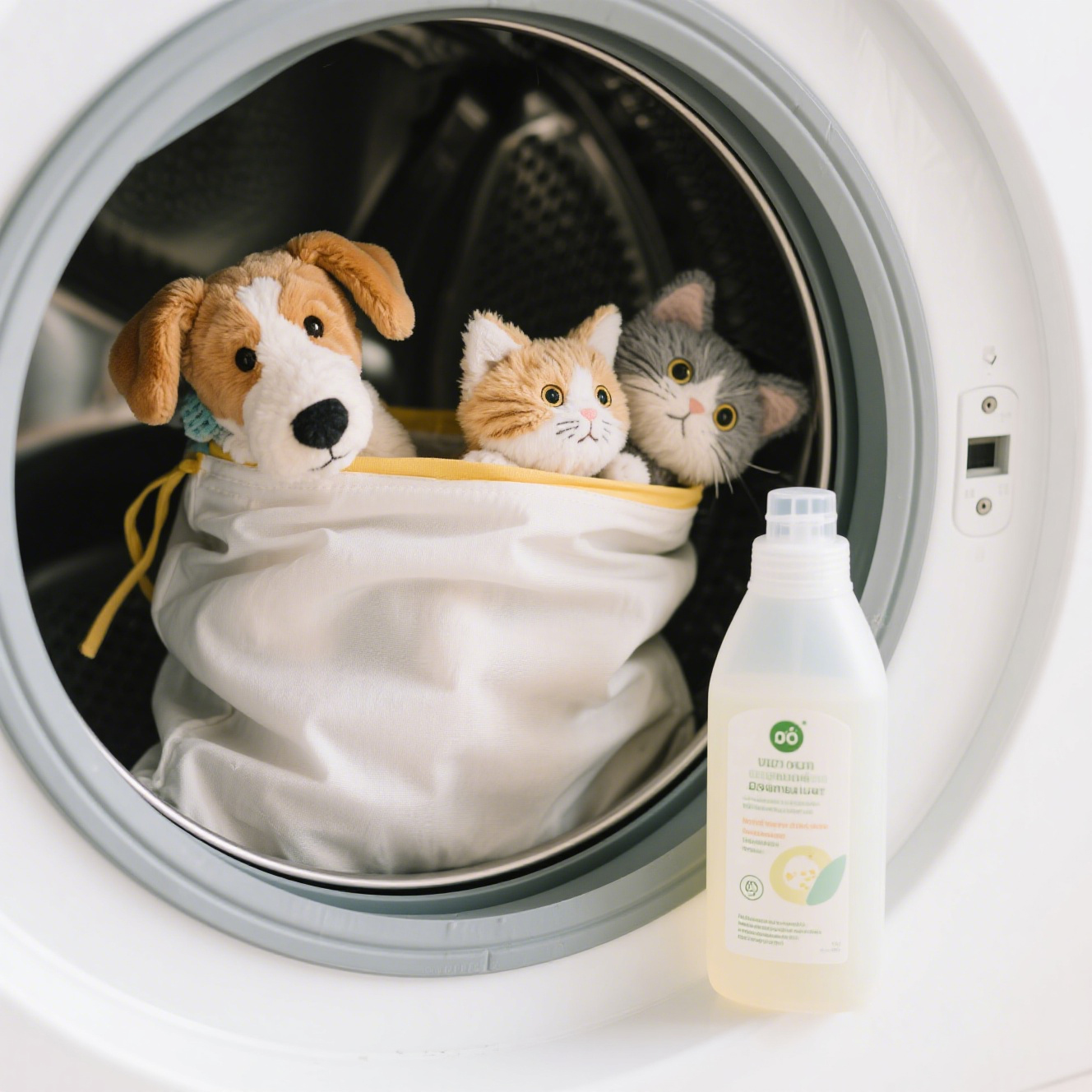
For large plush toys, a front-load washer is usually gentler than a top-load washer with a strong agitator. However, even a gentle cycle may be too rough for an old, handmade, or heavily stuffed toy. Whirlpool also suggests using a laundry bag or pillowcase and a gentle wash cycle when machine washing is suitable.
Warning: Do not machine wash a large stuffed animal if it has electronics, glued parts, weak seams, delicate embroidery, non-removable accessories, or stuffing that feels very dense. Spot clean or hand wash instead.
How to Wash Large Stuffed Animals at Home
If the toy is washable and you want to clean it at home, use a slow and careful process. The goal is to clean the surface and remove dirt without flooding the stuffing.
Step 1: Remove Dust First
Start with dry cleaning. Use a vacuum with a soft brush attachment, or use a lint roller for surface dust.
This step matters more than many people think. If you wet a dusty plush directly, the dust can turn into gray residue. It may move deeper into the fabric.
For long-pile plush, brush gently in the direction of the fur. Do not pull hard. Long fibers can shed or flatten if handled roughly.
Step 2: Treat Stains Before Washing
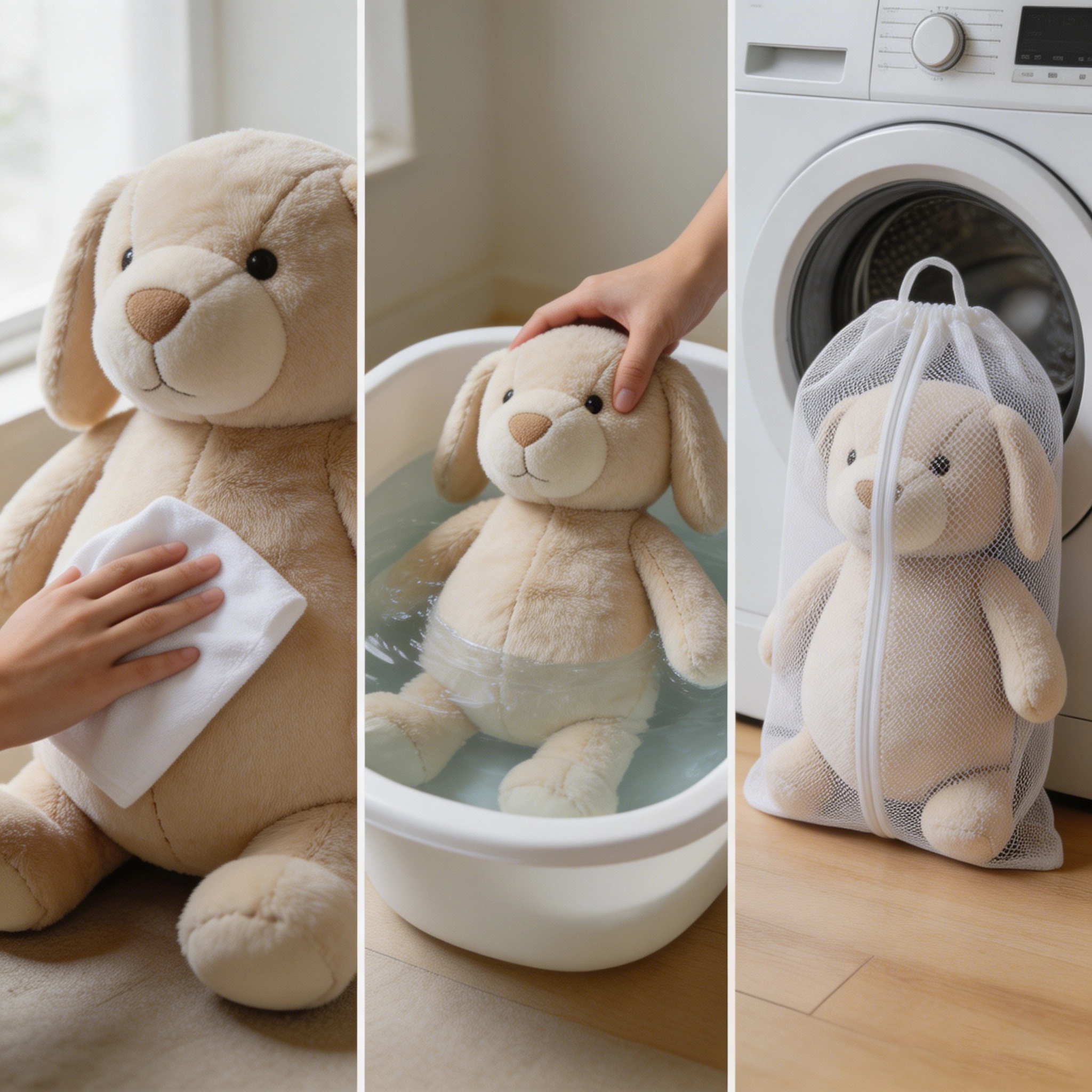
Mix a small amount of mild detergent with cold water. Use a clean white cloth to dab the stained area.
Do not scrub aggressively. Scrubbing can damage the pile surface and make the stain spread. For printed plush, embroidered faces, or delicate fabric, test a hidden area first.
A practical method:
- Dab the stain with diluted detergent.
- Wait several minutes.
- Wipe with a clean damp cloth.
- Repeat only if needed.
- Avoid soaking the inner stuffing.
For food stains, body oil, or dirt marks, pretreating is often enough. A full wash is not always necessary.
Step 3: Use Cold Water and Mild Detergent
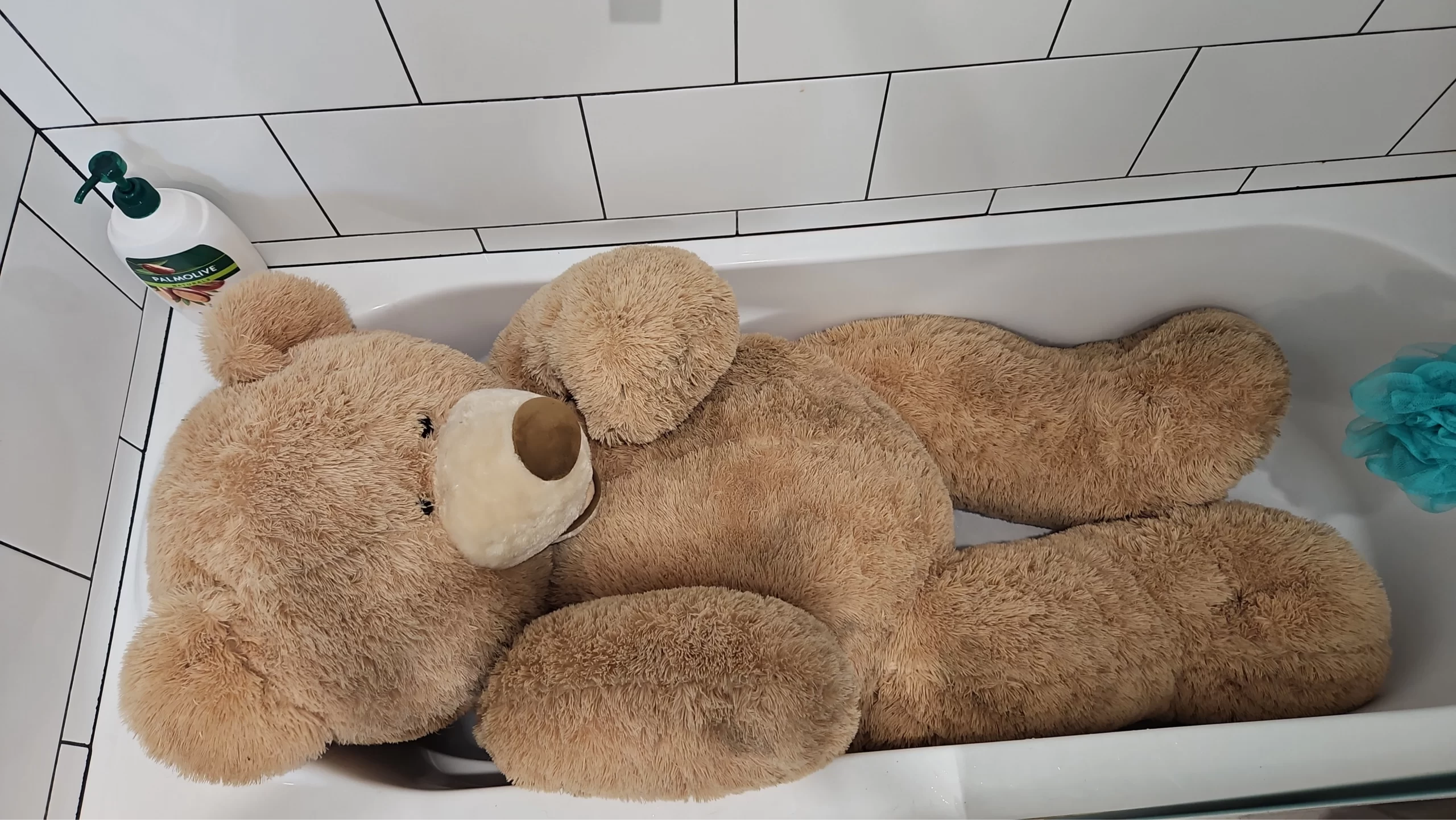
If hand washing is needed, fill a bathtub or large basin with cold water. Add a small amount of mild detergent.
Place the stuffed animal in the water and press gently. Do not twist, wring, or knead it like laundry. Large plush toys need slow compression, not force.
For a very large plush, you can clean section by section instead of soaking the whole toy. This is often safer. Clean the face, belly, paws, and high-touch areas first.
If machine washing is allowed, place the plush in a large laundry bag or pillowcase. Use cold water, gentle cycle, and a small amount of detergent. Avoid bleach, strong stain removers, hot water, and fabric softener unless the care label allows them. The American Cleaning Institute also advises users to read and follow laundry product label instructions before using cleaning products.
At Wehao Toys, we usually recommend planning washable plush construction from the sampling stage. A toy that needs repeated cleaning should use stable fabric, secure seams, controlled stuffing, and a clear care label. For B2B plush projects, this should be reviewed during custom plush development, not after mass production begins.
Step 4: Rinse Without Twisting
Rinsing is where many people damage large stuffed animals. Too much detergent left inside can make the toy feel stiff. Too much force can shift the filling.
Drain the dirty water. Refill with clean cold water. Press the plush gently until the water runs clearer.
Never twist the toy to remove water. Twisting can break seam tension and create uneven filling. Instead, press water out with your hands or roll the plush inside large clean towels.
If the toy is too heavy when wet, do not lift it by one ear, arm, leg, or head. Support the whole body. Wet stuffing adds weight and can pull seams open.
Why Drying Matters More Than Washing
Drying is the most important part of cleaning large stuffed animals. A plush toy may look clean outside but stay damp inside.
That is a problem.
Trapped moisture can cause odor, mildew, clumped stuffing, and shape collapse. Dense plush animals are especially risky because water stays deep in the body, which is why stuffing density and plush weight should be considered during product design.
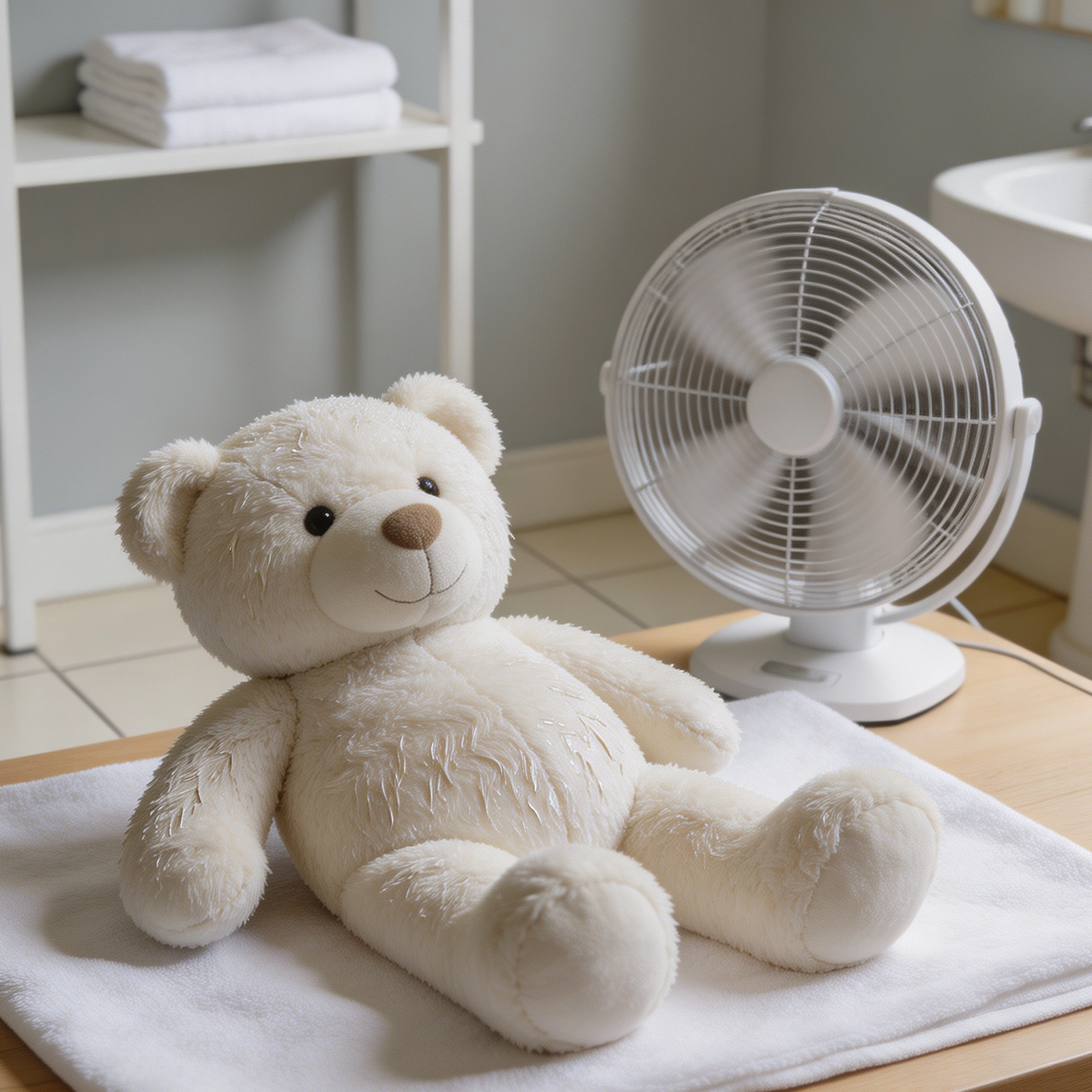
Use this drying process:
- Press out extra water gently.
- Roll the plush in clean dry towels.
- Reshape the body before drying.
- Place it flat in a well-ventilated area.
- Turn it every few hours.
- Use a fan to improve airflow.
- Brush the fur gently after it is fully dry.
Avoid high heat. A hot dryer can damage plastic parts, melt glue, shrink fabric, or flatten plush fibers. If the care label allows tumble drying, use low heat or air-only settings and check often.
For very large stuffed animals, air drying can take more than one day. Do not return the toy to a bed, shelf, package, or storage bag until the inner body is completely dry.
A simple test is to press the thickest area firmly. If it feels cool, heavy, or damp, keep drying.
Common Mistakes That Ruin Large Stuffed Animals
Most damage happens because people try to clean too fast.
| Mistake | What Can Go Wrong | Better Choice |
|---|---|---|
| Using hot water | Color bleeding, fabric shrinkage, glue damage | Use cold water |
| Adding too much detergent | Stiff fabric and hard rinsing | Use a small amount |
| Wringing the plush | Filling shifts and seams stretch | Press with towels |
| Drying with high heat | Fur matting or melted parts | Air dry or low heat only |
| Washing electronics | Rust, corrosion, product failure | Remove module or spot clean |
| Ignoring weak seams | Stuffing leaks during washing | Repair before cleaning |
| Soaking vintage plush | Fabric may tear or collapse | Surface clean only |
| Packing before fully dry | Odor and mildew risk | Dry completely first |
Buyers often misunderstand “washable” as “safe under any washing condition.” That is not true. Washable still has limits. Water temperature, detergent amount, drying method, and toy structure all matter.
In our sampling experience, plush toys with dense stuffing and large round bodies are harder to dry than flat plush toys. A 60 cm stuffed animal may look simple, but the inner filling can hold water for a long time.
What Brands Should Consider When Designing Washable Plush Toys
For B2B plush projects, cleaning should not be treated as an afterthought. If a plush toy is likely to be used by children, placed on beds, sold as a comfort item, or handled daily, washable construction should be discussed early.
A washable plush toy may need short or medium-pile fabric, and brands can compare options in a plush toy materials guide before sampling.
- Short or medium-pile fabric that can recover after brushing
- Stable color performance after light cleaning
- Strong seams in high-stress areas
- Controlled stuffing density
- Removable or washable-safe sound modules if needed
- Embroidered details instead of loose hard parts
- Clear care label instructions
- Packaging that does not trap moisture after cleaning
For the U.S. market, children’s plush toys also need plush toy safety standards planning before production. ASTM F963 and CPSIA discussions may involve small parts, seam strength, stuffing safety, flammability, lead, phthalates, tracking labels, and age grading.
The U.S. Consumer Product Safety Commission explains that CPSIA made ASTM F963 a mandatory safety standard for children’s toys. Its ASTM F963 chart also lists stuffing materials and stuffed or bean bag-type toys as specific toy safety sections. Washing should not weaken the product in a way that creates new safety risks.
One practical example is a large mascot-style plush. The buyer may want a soft body, large head, embroidered face, and dense filling. Visually, that can look great. But if the product is marketed as washable, the team must test whether the head dries evenly and whether the embroidered face keeps its shape.
Another example is a large stuffed animal with plastic eyes. Even if the fabric can be washed, hard accessories may loosen after repeated cleaning. For younger children’s plush toys, embroidered features often reduce detachable part concerns.
A good plush care guide should not only tell customers how to wash stuffed animals. It should also help brands design better products from the beginning.
Key Takeaways
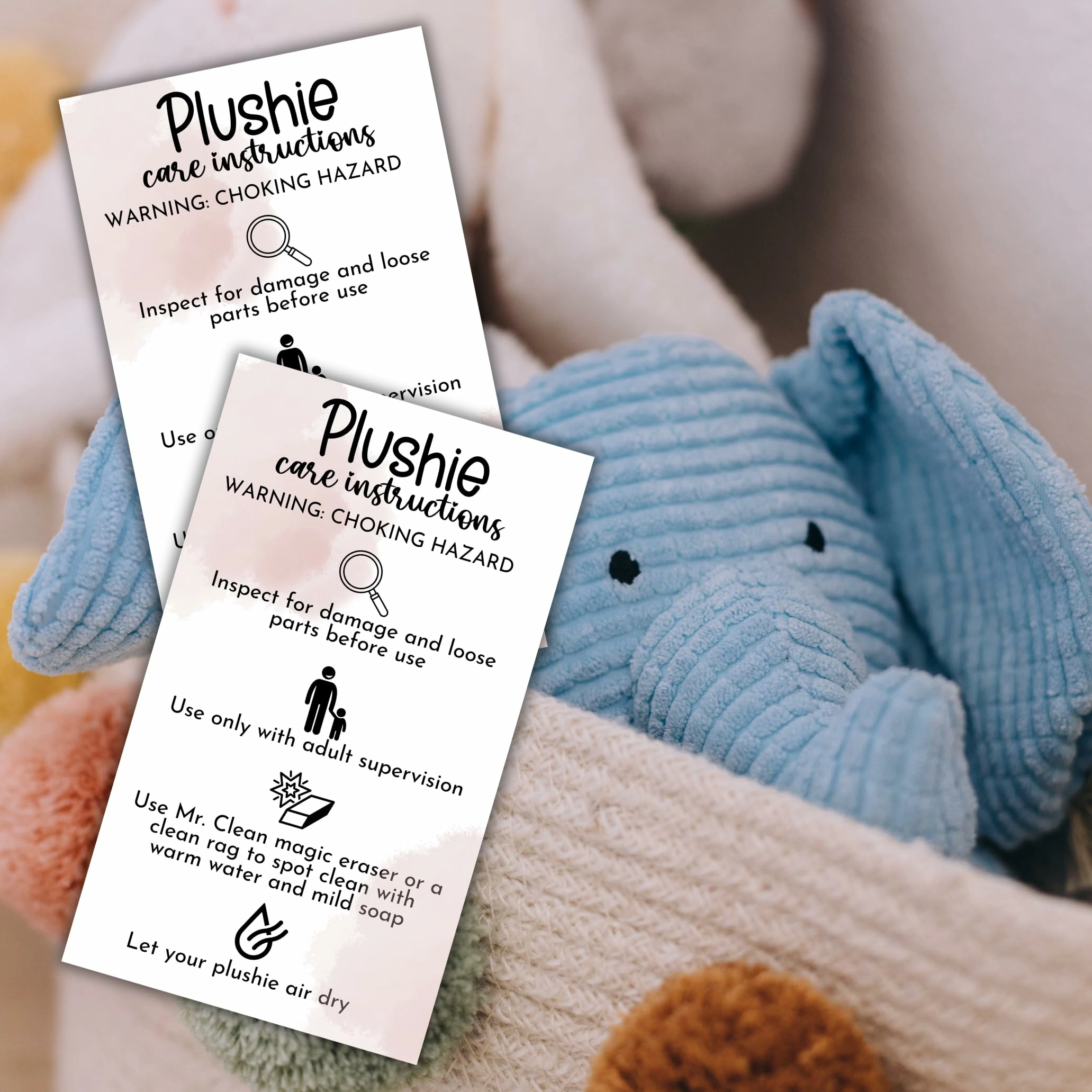
Large stuffed animals should be cleaned gently, slowly, and with drying in mind. Spot cleaning is often the safest method. Hand washing can work when the toy is washable and not too fragile. Machine washing should only be used when the care label allows it and the toy fits comfortably inside the washer.
The main risks are not only surface damage. The bigger problems are trapped moisture, clumped filling, stretched seams, and shape loss.
For brands, washable plush design starts before mass production, and a structured custom plush toy project review can help confirm the right materials and construction. Fabric choice, stuffing density, seam strength, accessories, and care labels all affect whether a plush toy can survive real cleaning at home.
FAQ
Can I wash a very large stuffed animal that does not fit in my washing machine?
Yes, but do not force it into the machine. Clean it section by section with a damp cloth, mild detergent, and cold water. If the plush is valuable, vintage, or heavily soiled, professional cleaning is safer.
How do I remove odor from a large stuffed animal without soaking it?
Start by vacuuming the plush and airing it in a dry, ventilated space. For light odor, surface clean high-contact areas and let the toy dry fully. Avoid spraying strong fragrance because it can leave residue inside the fabric.
Is baking soda safe for cleaning big plush toys?
Baking soda can help absorb surface odor, but it should be fully removed afterward. Test a small hidden area first, especially on dark fabric, long-pile plush, or printed surfaces.
Can I dry a large stuffed animal in direct sunlight?
Short sunlight exposure may help drying, but strong direct sun can fade colors or stiffen some fabrics. A ventilated shaded area with a fan is usually safer.
How often should large stuffed animals be cleaned?
For display plush, occasional dust removal may be enough. For bed plush, children’s plush, or frequently handled toys, spot cleaning should be done when stains appear, with deeper cleaning only when necessary.
Should custom plush brands include washing instructions on the label?
Yes. A clear care label reduces customer misuse and helps protect the product experience. For B2B plush projects, care instructions should match the final fabric, stuffing, accessories, and age grading.
Can weighted stuffed animals be washed the same way?
Usually no. Weighted plush toys may contain plastic pellets, glass beads, or inner weight bags that dry differently from fiberfill. Check the label first and avoid soaking if the inner material is not designed for washing.
Planning a Washable Custom Plush Toy?
If your plush toy needs to be washable, soft, safe, and suitable for real daily use, the structure should be reviewed before sampling. Fabric choice, stuffing density, seam strength, embroidery, accessories, and care label wording all affect the final result. Share your artwork, size, target market, and cleaning expectations with our team so we can help evaluate a practical custom plush solution.
Contact Wehao Toys for a Custom Plush Toy Project