
Quick Answer: Pet Plush Toy Stuffing Safety Is About More Than Filling Material
Pet plush toy stuffing safety is not only about choosing a “non-toxic” filling. For brands, the real safety question is whether the stuffing stays inside the toy during normal chewing, shaking, pulling, and repeated play.
In most pet plush toy projects, we usually recommend clean polyester fiberfill, often called PP cotton in manufacturing, as the standard inner filling. It is soft, lightweight, stable, and easy to control in bulk production. However, even a safe stuffing material can become a risk if the seams are weak, the toy is under-filled, or the internal squeaker chamber is poorly protected.
For dog toys especially, stuffing safety depends on four things:
- The filling material itself
- The seam and stitching strength
- The toy structure around bite zones
- The testing plan before production
This is why brands should treat stuffing as part of the whole product structure, not as a separate material decision.
Why Stuffing Safety Matters More in Pet Plush Toys
Pet plush toys face more aggressive use than ordinary stuffed animals. Dogs may bite, shake, drag, chew, and tear the toy. Puppies may mouth the toy for longer periods because they are teething or exploring. Some dogs also try to remove squeakers, which can expose the inner filling.
This creates a different safety problem from children’s plush toys. A child may cuddle, squeeze, or pull a stuffed animal. A dog may bite the same area repeatedly until a seam opens.
In our sampling experience, stuffing leakage usually happens for one of three reasons:
- The seam allowance is too small
- The toy has a weak stress point near the neck, tail, ear, or leg
- The filling density is wrong for the shape
Many buyers only ask, “Is the stuffing safe?” A better question is, “Can the stuffing stay safely contained during the intended play style?”
That question leads to a more realistic product design.
Which Stuffing Materials Are Usually Safer for Pet Plush Toys?
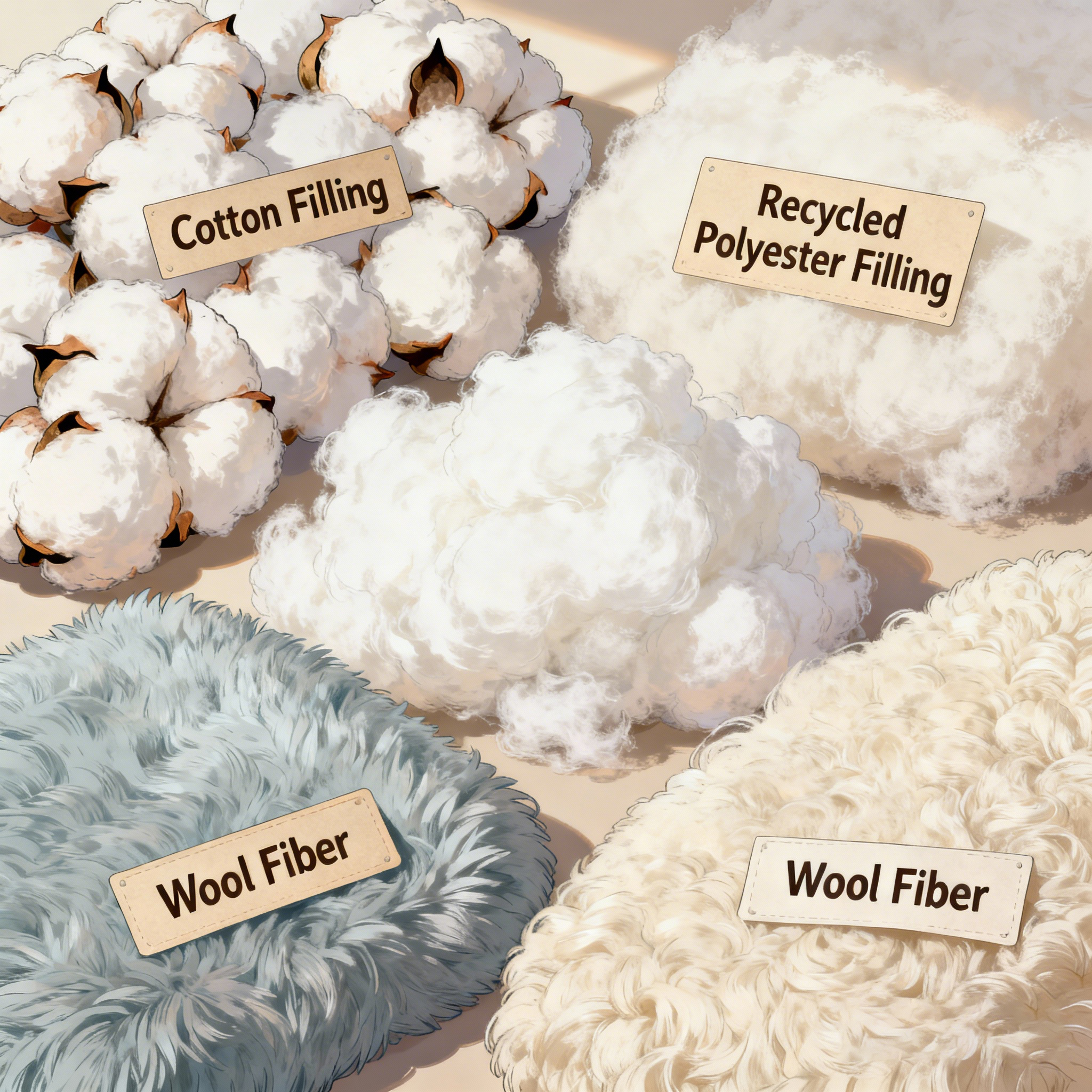
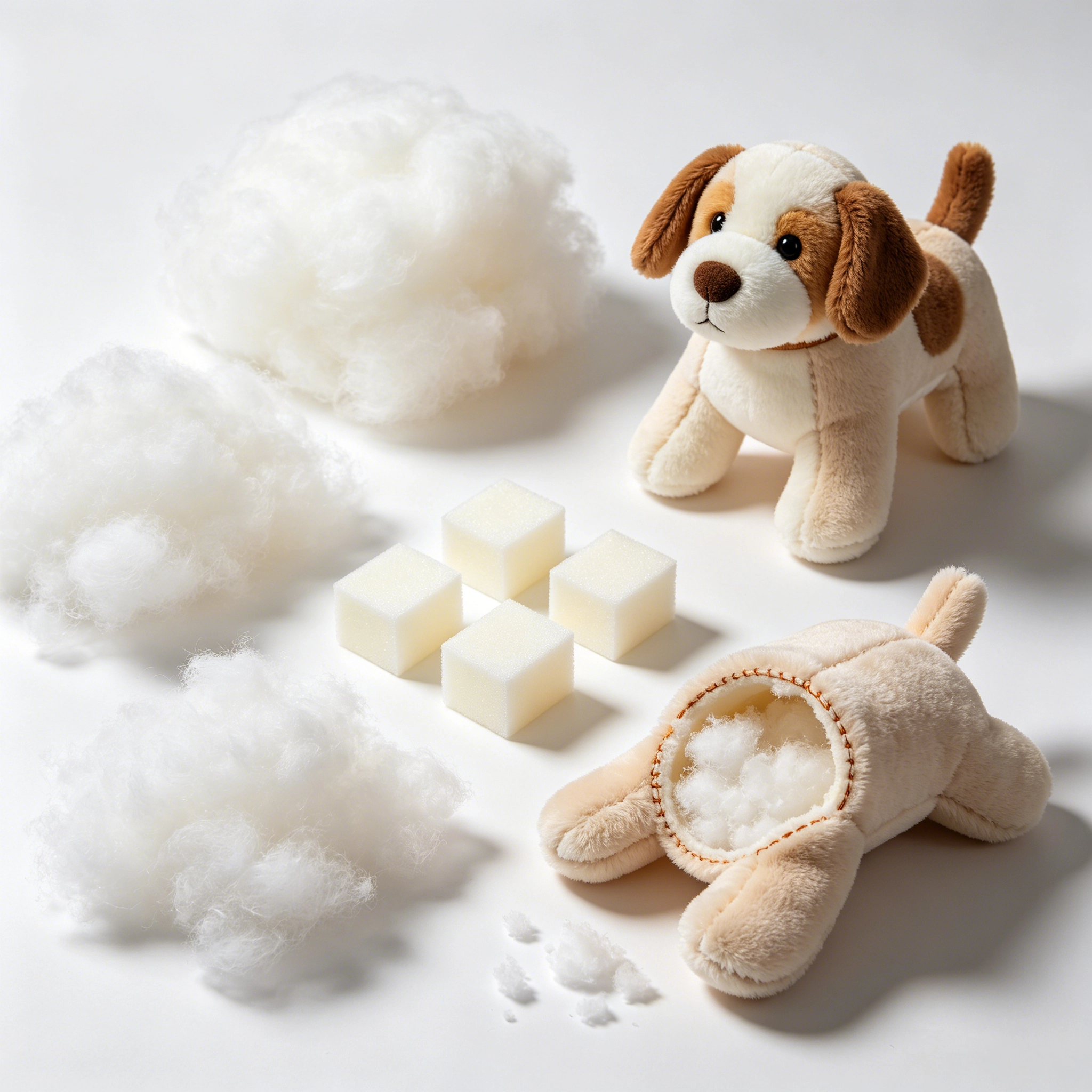
For most custom pet plush toys, the safest and most practical option is clean polyester fiberfill. It gives a good balance of softness, shape, cost, and production stability.
Other stuffing options can also be used, but they need stronger control, especially for cat plush toys with catnip, crinkle paper, or small interactive parts. Some materials feel premium but create new risks. Some are eco-friendly but require better testing. Some improve shape but are not suitable for heavy chewing areas.
Common stuffing material comparison
Stuffing Material | Safety Suitability | Advantages | Risk Points | Best Use |
Polyester fiberfill / PP cotton | High when clean and properly contained | Soft, lightweight, stable, widely used | Can still be swallowed if seams open | Most pet plush toys |
Recycled polyester filling | Good if tested and traceable | Eco-friendly positioning, good brand story | Needs chemical and cleanliness checks | Sustainable pet toy lines |
Foam inserts | Moderate | Helps shape retention | Not ideal if dogs can access it | Structural areas, not chew zones |
Crinkle material | Good when sealed inside | Adds sound and enrichment | Must not have sharp edges or easy access | Ears, leaves, panels |
Plastic pellets / weighted beads | Higher risk | Adds weight and display feel | Small loose pieces may leak if seams fail | Usually not recommended for chew toys |
Natural cotton filling | Moderate | Natural material appeal | Can clump, absorb moisture, dry slowly | Light-use plush, not heavy chew toys |
For safe stuffing for dog toys, we usually recommend avoiding loose pellets unless the product has a strong inner bag and is not designed for chewing. For most commercial pet plush toys, soft fiberfill is easier to control and safer from a production point of view.
Recycled filling can be a good choice, but brands should not use it only for marketing. They should confirm cleanliness, odor, color consistency, and chemical testing before bulk production.
The Bigger Risk: How Stuffing Escapes From the Toy
The main risk is not that the stuffing exists. The main risk is that the stuffing becomes accessible.
Loose stuffing can appear when a seam breaks, a squeaker area opens, or a small detail is pulled away from the body. Once the filling is exposed, some pets may chew or swallow it.
This is why plush toy inner filling should be considered together with the outer shell. A strong filling choice cannot fix a weak toy structure.
Common weak points include:
- Ears and tails
- Thin limbs
- Squeaker pockets
- Rope connection points
- Decorative patches
- Belly seams
- Small raised details
In one pet plush sampling project, a soft animal shape looked good in photos, but the neck area became weak after repeated shaking. The issue was not the stuffing material. The problem was that the head and body were filled as one loose chamber. We adjusted the internal filling zones and reinforced the neck seam. The final sample held its shape much better.
This is a common lesson: stuffing safety often improves through structure, not only through material replacement.
U.S. Standards and Retailer Expectations for Pet Plush Toys
In the United States, pet toys are not regulated in the same way as children’s toys, and APPA notes that there are virtually no federal or state laws that apply only to pet toy manufacturing. The American Pet Products Association notes that there are virtually no federal or state laws that apply only to the manufacture and sale of pet toys.
However, this does not mean brands can ignore safety. Retailers, distributors, and serious buyers often expect pet toys to follow recognized testing logic, especially when brands need clearer guidance on pet plush toy safety standards. Independent testing providers commonly apply standards such as ASTM F963, CPSIA, ISO 8124, EN71, and related physical and chemical checks to pet toy evaluation.
For children’s toys in the U.S., ASTM F963 is mandatory under CPSIA and 16 CFR Part 1250. Pet plush toys are different, but many brands still reference parts of ASTM F963 logic for material quality, small parts, sharp points, sharp edges, pull testing, and structural durability.
For B2B pet plush projects, the practical approach is:
- Use toy-grade material logic where relevant
- Test bite-accessible parts and seams
- Avoid hazardous small components
- Confirm chemical safety for fabrics, dyes, and fillings
- Prepare clear labeling and batch traceability when needed
If a pet plush toy is also marketed to children, used as a family gift item, or sold in a child-accessible retail channel, the compliance discussion becomes more sensitive. In that case, the brand should review children’s toy requirements with a qualified testing lab before launch.
How to Prevent Loose Stuffing in Plush Toys
Preventing loose stuffing starts in the design stage. It is much harder to fix after the sample is approved.
Here are the most useful design controls:
- Use reinforced seams in bite zones
High-stress areas should not rely on weak single stitching. For pet plush toys, we usually recommend stronger stitching in ears, tails, legs, and rope connection areas. - Avoid over-complicated small parts
Small raised details look cute, but they can become pull points. Embroidery is often safer than plastic eyes, glued patches, or loosely attached accessories. - Control stuffing density
Very loose stuffing can move around and create thin areas. Very dense stuffing can increase seam pressure. A medium-firm filling often works better for pet plush toys. - Separate functional chambers
If the toy includes a squeaker, crinkle paper, rope, or treat pocket, these areas should be planned as separate zones. This reduces the chance that one broken part exposes all the filling. - Use internal lining when needed
For more durable designs, an inner fabric layer can help slow down tearing. It adds cost, but it can improve safety and product life. - Avoid loose pellet filling for chew toys
Weighted beads may look premium, but they are not ideal for dogs that chew. If a seam opens, small pellets can spread quickly.
In many projects, buyers want the toy to be very soft and very durable at the same time. This is possible only to a point. Softer toys usually need less dense filling, while durable toys often need tighter structure and stronger seams. The best design depends on the target pet size and play style.
Sampling and QC Checks Brands Should Request
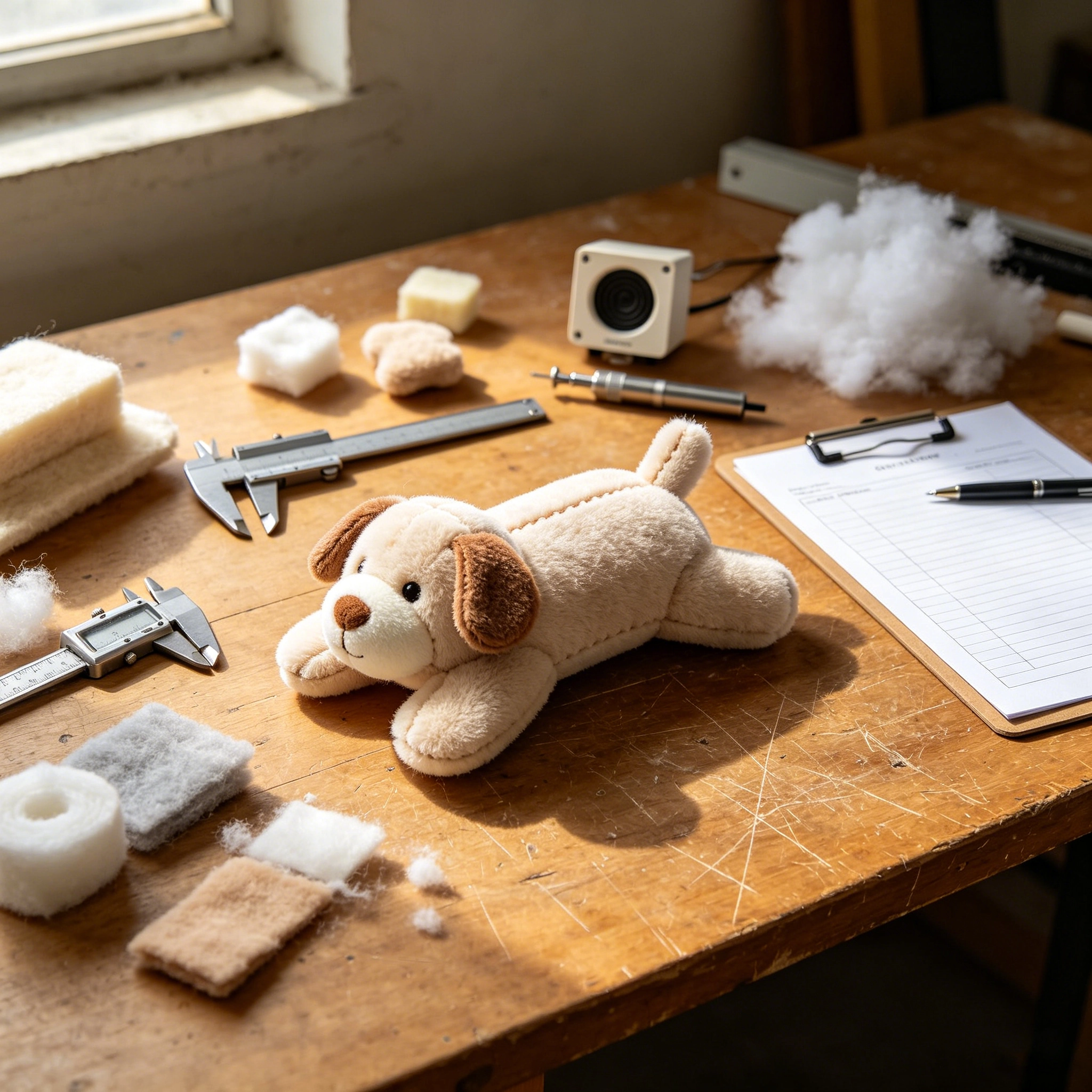
For pet plush toy projects, we usually recommend these checks:
- Visual inspection of stuffing cleanliness
- Seam pull checks on ears, tails, limbs, and labels
- Squeaker pocket inspection
- Compression and recovery check
- Bite-accessible component review
- Shake and tug simulation
- Filling distribution check after handling
- Odor check after packaging
- Metal detection if needles or metal tools are used in production
- Random finished goods inspection before shipping
For U.S. buyers, it is also useful to keep batch records, similar to the traceability logic used in CPSC tracking label guidance for children’s products. Children’s products have formal tracking label requirements that include information such as manufacturer or private labeler name, production location and date, and batch or run number. Pet toys may not always need the same system, but similar traceability helps brands manage quality issues more professionally.
At Wehao Toys, we usually discuss stuffing density, seam strength, and functional parts during the sample stage. This is the best time to adjust the product before cost and production methods are locked.
What Buyers Often Misunderstand About Safe Stuffing
One common misunderstanding is that “non-toxic stuffing” automatically means the toy is safe.
That is not enough.
A dog does not interact with a toy like a lab sample. It bites the toy, pulls it, and may focus on the same weak point again and again. Even a clean, soft, toy-grade filling can become a problem if the pet swallows a large amount.
Another misunderstanding is that more filling means better quality. Sometimes it does. A fuller toy can look better and hold shape. However, overfilling can make seams tighter and easier to burst under pressure.
Buyers also sometimes choose recycled filling without planning testing. Recycled material can be a strong option, but only if the supply is stable and the material is checked for odor, contamination, and chemical safety.
The final misunderstanding is about “indestructible” pet plush toys. Plush toys can be made stronger, but they are still fabric products. A heavy chewer can damage almost any soft toy. The honest goal is not to promise that the toy cannot break. The goal is to reduce avoidable risks through better design, materials, and QC.
Practical Recommendation for Pet Toy Brands
For most pet plush toy brands, the best stuffing plan is simple:
Use clean polyester fiberfill as the default choice. Keep the filling density medium-firm. Reinforce the seams around high-stress areas. Avoid loose beads in chew toys. Use embroidery instead of hard plastic details where possible. Test the sample in a way that matches real pet behavior.
If the toy is for puppies, small dogs, or strong chewers, structure matters even more when developing custom dog toys for retail or private label programs. The design should reduce exposed seams, remove unnecessary small parts, and protect the squeaker area.
If the toy is a premium retail product, brands can consider recycled polyester filling, inner lining, or segmented stuffing zones during custom plush toy development. These upgrades can improve positioning, but they should be confirmed during sampling.
The safest product is not always the most expensive one. It is the one where the material, structure, and use case match each other.
Conclusion
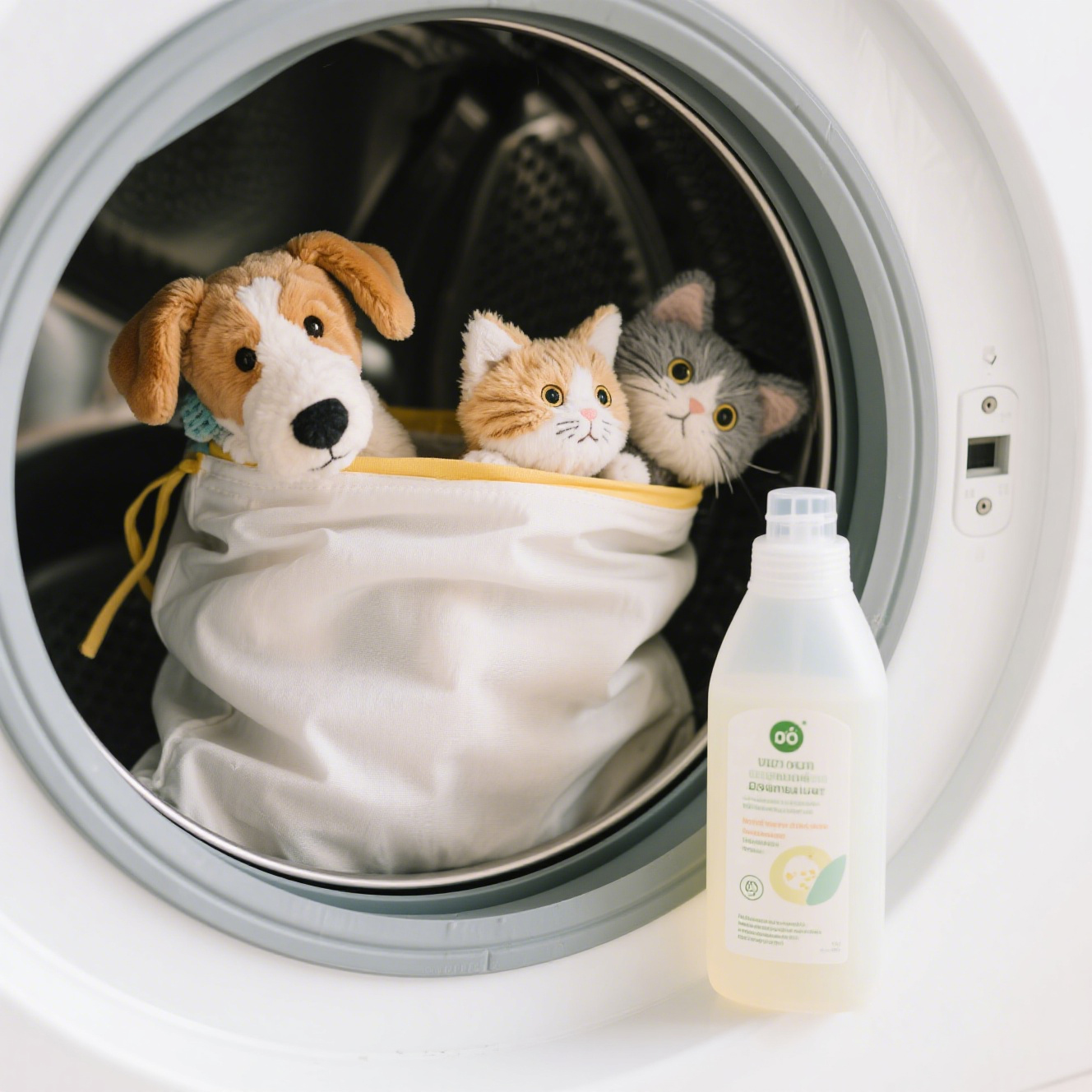
Pet plush toy stuffing safety depends on more than choosing a soft filling. Brands need to think about how the toy will be bitten, pulled, shaken, washed, packed, and used over time.
For most projects, polyester fiberfill is the most practical stuffing choice. But the real safety control comes from seam strength, filling density, internal structure, and sample testing.
A good pet plush toy should not only feel soft. It should keep its filling contained under realistic play conditions. That is where better sourcing decisions protect both pets and brands.
FAQ
1. What stuffing is safe for dog toys?
Clean polyester fiberfill, often called PP cotton in plush toy manufacturing, is the most common safe stuffing for dog toys. It is soft, lightweight, and stable in bulk production. However, the stuffing must stay inside the toy. Seam strength and structure are just as important as the filling material.
2. Can dogs swallow plush stuffing?
Yes. Dogs can swallow plush stuffing if the toy breaks open and the filling becomes accessible. This is why brands should focus on reinforced seams, controlled stuffing density, and strong construction around bite zones.
3. How do you prevent loose stuffing in plush toys?
Use stronger seams, avoid weak small parts, separate squeaker chambers, control stuffing density, and test high-stress areas during sampling. For dog toys, ears, tails, limbs, and rope connection points need extra attention.
4. Are plush toys safe for puppies?
Plush toys can be safe for puppies when they are designed with soft materials, secure stitching, no loose small parts, and suitable size. For puppies that chew heavily, brands should use reinforced structures and avoid easy-to-tear details.
5. Is recycled stuffing safe for pet plush toys?
Recycled stuffing can be safe if it is clean, stable, and properly tested. Brands should check odor, contamination risk, color consistency, and chemical safety before using recycled filling in bulk production.
6. Are stuffing beads safe for dog toys?
Loose stuffing beads are usually not recommended for chew-focused dog toys. If the seam breaks, small beads can escape quickly. If weight is needed, the beads should be sealed inside a strong inner pouch and used only in suitable designs.
7. Do pet plush toys need ASTM F963 testing?
Pet plush toys are not children’s toys by default. However, many brands and retailers use ASTM F963 testing logic as a reference for material safety, small parts, seam strength, pull tests, and sharp point checks. This is especially useful for export and retail programs.