
1. Factory Price vs. True Plush Toy Landed Cost: Understanding the Gap
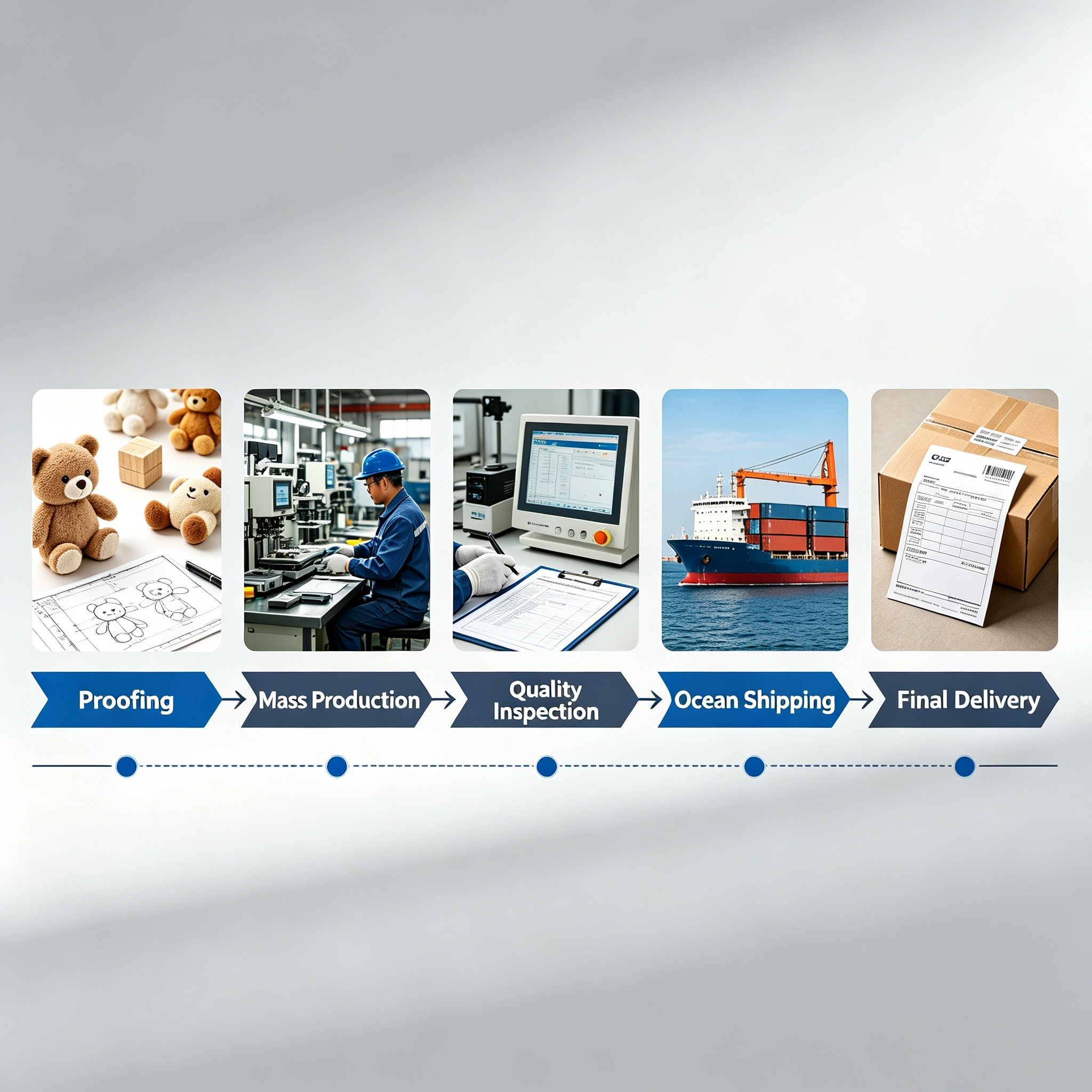
For retail buyers, e-commerce sellers, and promotional distributors, a factory’s Free on Board (FOB) unit price is only the starting line of your unit economics. Calculating your true plush toy landed cost means capturing every expense required to manufacture, test, pack, ship, clear customs, and deliver the finished stuffed animal to your domestic warehouse door. Depending on toy size and shipping method, post-factory logistics and compliance expenses can represent 20% to 50% of total landed unit cost.
Why is freight budgeting uniquely challenging for plush toys compared to hard goods like electronics or stationery? Stuffed animals are classic ‘high-volume, low-weight’ cargo—often referred to in logistics as ‘shipping air.’ Because international air couriers and Less-than-Container-Load (LCL) ocean carriers bill based on dimensional volume (CBM) or volumetric weight rather than actual scale weight, an unoptimized packing plan can double your custom plush shipping costs overnight.
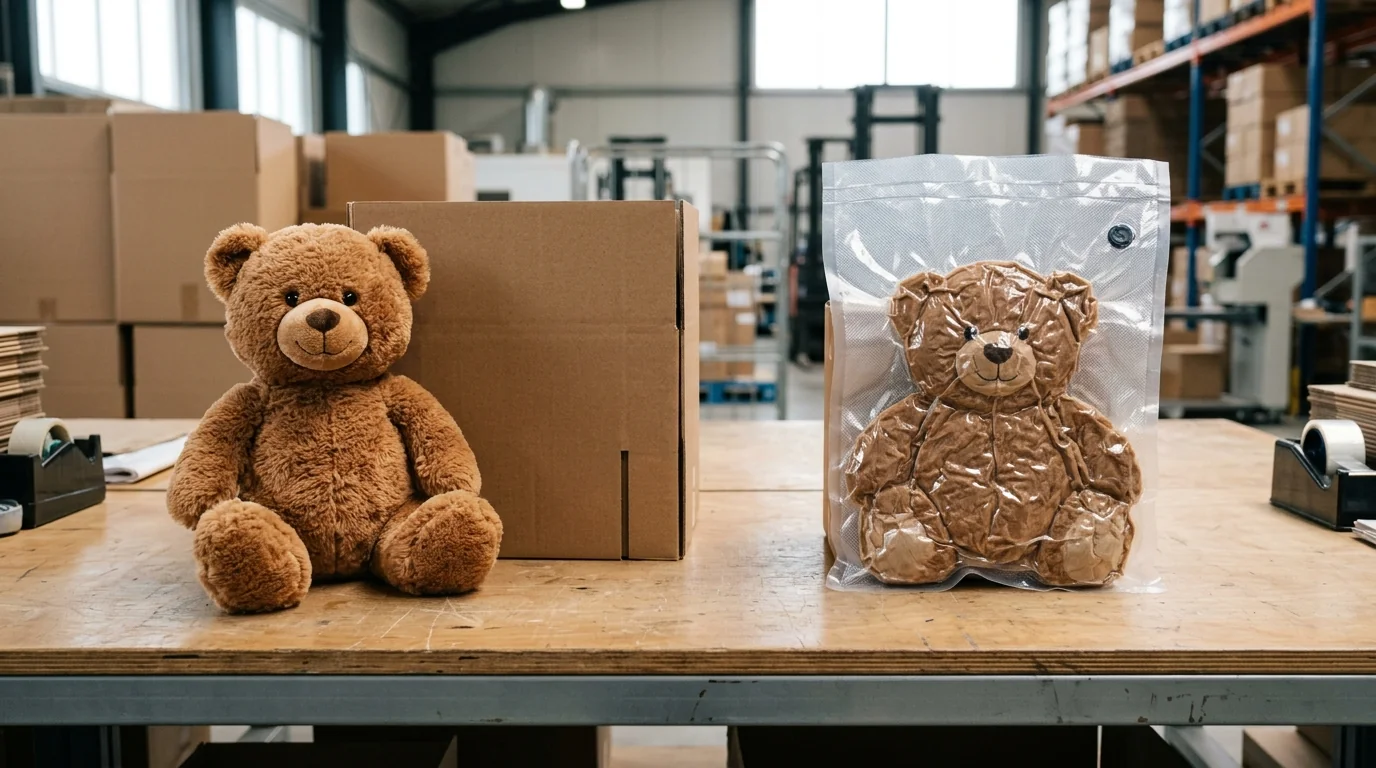
When building a comprehensive plush toy freight budget, procurement teams follow the international cost-accounting framework outlined in the U.S. International Trade Administration total landed cost guide, combining FOB manufacturing price, third-party lab testing amortization, master carton packing, international freight, marine insurance, customs brokerage, import tariffs, and final-mile drayage.
2. Which Costs Are Excluded From a Plush Toy Factory Quotation?
Unless you specifically request a Delivered Duty Paid (DDP) door-to-door quotation, standard OEM factory proposals are issued on EXW or FOB terms. For buyers asking which costs are excluded from a plush toy factory quotation, the following downstream expenses must be budgeted separately:
- Accredited Third-Party Lab Testing (SGS / Intertek / TÜV): Mandatory chemical and mechanical safety testing for ASTM F963, CPSIA, or EN 71 typically costs $350 to $900 per SKU/material group. On a 1,000-unit order, a $500 lab report adds $0.50 per unit; on a 5,000-unit order, it amortizes down to just $0.10 per unit.
- International Ocean or Air Freight Charges: Main-leg transit from the origin port in China to destination ports in North America, Europe, or Australia, plus bunker fuel adjustments and peak-season surcharges.
- Destination Port Fees, Customs Brokerage & Duties: Importer Security Filing (ISF), customs entry bond, harbor maintenance fees, Merchandise Processing Fees (MPF), and applicable Harmonized System (HS Code 9503.00) tariff rates.
- Domestic Final-Mile Trucking (Drayage / LTL): Inland pallet delivery from the arrival seaport or airport terminal to your 3PL fulfillment center or Amazon FBA warehouse.
Working with an experienced custom plush development and logistics partner allows you to obtain pre-production master carton estimates (exact carton dimensions, gross weight, and units per carton) during the sampling phase so your freight forwarder can quote binding shipping rates before bulk production begins.
3. How Do Carton Dimensions Affect Plush Toy Delivery Costs?
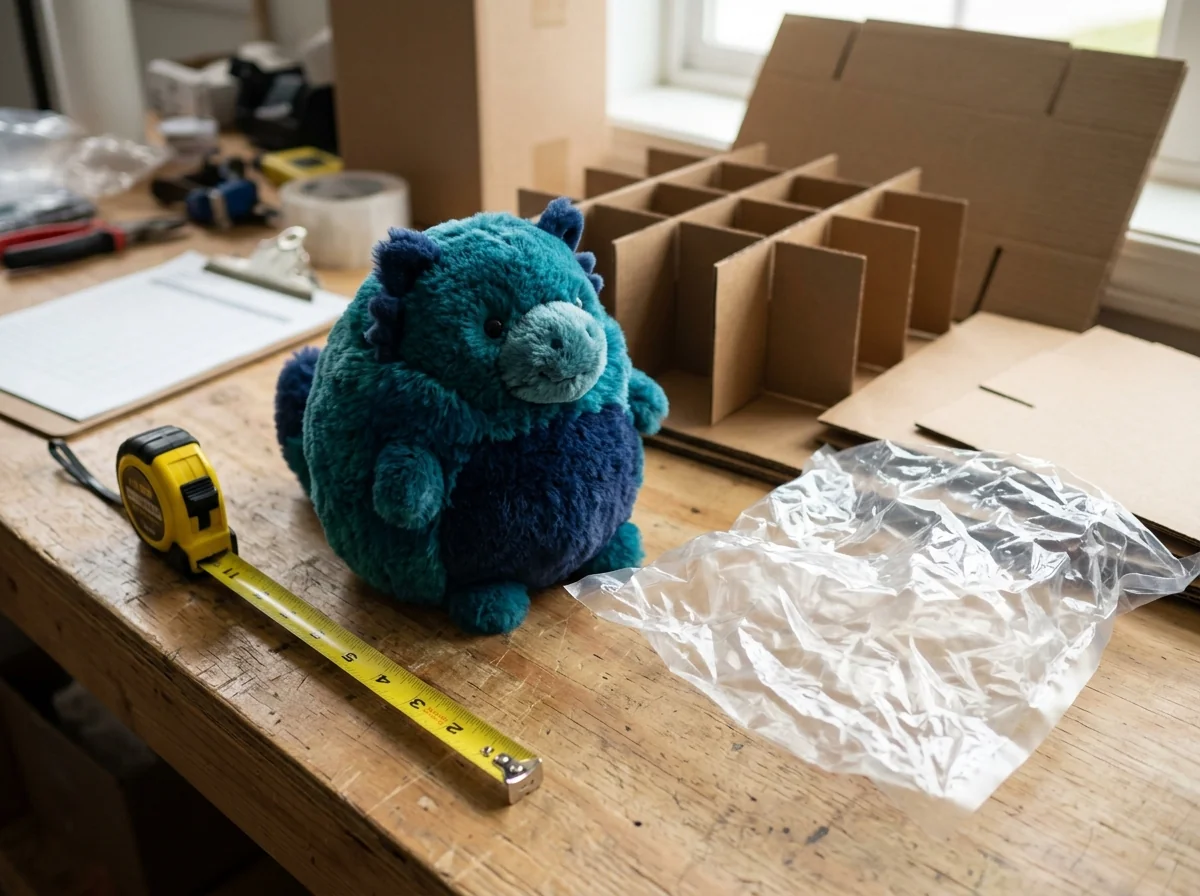
To understand how do carton dimensions affect plush toy delivery costs, buyers must distinguish between actual gross weight and volumetric (dimensional) weight. A standard export master carton measuring 60 × 40 × 50 cm occupies 0.12 cubic meters (CBM). When filled with 40 uncompressed 25 cm plush bears, the entire carton may weigh only 6.5 kg on a scale—yet under international air freight formulas (`Length × Width × Height in cm ÷ 5000`), carriers bill that carton at 24.0 kg of chargeable volumetric weight!
| Packing & Shipping Method | Units per 0.12 CBM Carton (25cm Plush) | Total CBM for 2,000 Units | Estimated Freight Cost Per Unit |
|---|---|---|---|
| Uncompressed Polybag via Air Express | 35 – 40 pcs (billed at 24 kg dim weight) | 7.2 CBM (~1,440 kg chargeable) | $3.20 – $4.80 / unit (Emergency only) |
| Vacuum-Compressed via Air Freight | 100 – 120 pcs (volume cut by 65%) | 2.4 CBM (~480 kg chargeable) | $1.10 – $1.65 / unit (Fast launch) |
| Uncompressed Polybag via LCL Ocean | 35 – 40 pcs (billed per CBM) | 7.2 CBM ocean consolidation | $0.45 – $0.75 / unit (Standard retail) |
| Vacuum-Compressed via LCL/FCL Ocean | 100 – 120 pcs (high container density) | 2.4 CBM ocean consolidation | $0.16 – $0.28 / unit (Lowest landed cost) |
As the table illustrates, reducing plush packaging shipping volume through heat-sealed vacuum compression is the single most powerful lever for lowering stuffed animal import costs. Provided the plush is stuffed with high-elasticity virgin 7D/15D hollow siliconized polyester fiber and contains no rigid internal cardboard or brittle plastic armatures, vacuum packing cuts total CBM by 60% to 70%, slashing ocean and air freight bills by nearly two-thirds.
4. Step-by-Step Formula: How Do I Calculate the Landed Cost of a Custom Plush Order?
When building your spreadsheet model, use the standard per-unit landed cost formula:
Unit Landed Cost = FOB Unit Price + (Total Sampling & Lab Testing ÷ Order Qty) + (Total Freight, Insurance & Port Fees ÷ Order Qty) + (Customs Duty % × FOB Unit Price)
Consider a realistic 2,000-unit order of custom 25 cm plush mascots priced at $3.50 FOB ($7,000 merchandise value). Adding $500 for accredited third-party testing under plush toy safety standards and compliance ($0.25/unit) and $640 for vacuum-packed LCL ocean freight plus local port drayage ($0.32/unit) brings your total delivered warehouse cost to $4.07 per unit (plus applicable national tariff duties). By contrast, shipping those same 2,000 units uncompressed via air express would push landed cost past $7.50 per unit, eroding retail gross margins.
Finally, ensure your customs broker has complete regulatory paperwork—including your Children’s Product Certificate (CPC) backed by U.S. CPSC and ASTM F963 lab reports or your EU Declaration of Conformity under European EN 71 harmonised toy safety standards—before the vessel docks. Missing safety certificates trigger customs holds and daily port demurrage storage fees that can quickly wipe out freight savings.
5. Frequently Asked Questions (FAQ)
Q: How do I calculate the landed cost of a custom plush order before prototypes are finished?
A: Ask your OEM supplier to estimate the packed CBM based on a comparable existing plush size and specify whether the design is suitable for vacuum compression. Using that estimated CBM and unit count, your freight forwarder or the factory’s DDP logistics desk can calculate door-to-door shipping within 5% to 10% accuracy.
Q: Which plush toy designs should NOT be vacuum-compressed for shipping?
A: Plush toys containing internal sound boxes, rigid plastic skeletons, foam-board flat feet, or delicate 3D structured hats should not be vacuum-compressed, nor should toys already packed inside rigid retail window boxes. For boxed gifts, ship the boxes flat-packed and vacuum-seal the plush separately.
Q: What is the difference between FOB and DDP shipping quotes for plush toys?
A: Under FOB (Free on Board), the factory delivers the goods cleared for export onto your vessel at the origin port, and your own freight forwarder handles ocean transit and import customs. Under DDP (Delivered Duty Paid), the manufacturer manages the entire logistics chain—including freight, customs clearance, and import taxes—delivering straight to your warehouse door.
Q: How does order quantity affect per-unit lab testing and freight costs?
A: Lab testing and customs brokerage are fixed per-shipment or per-SKU fees rather than per-piece costs. Doubling an order from 500 pieces to 1,500 pieces cuts the per-unit burden of lab testing, bill-of-lading fees, and LCL minimum cubic meter charges by two-thirds.
Q: What master carton strength is recommended for international ocean freight?
A: Specify 5-ply double-wall corrugated export cartons (BC flute, burst strength ≥200 lbs/sq inch) with waterproof inner poly liners to prevent humidity absorption and carton crushing during multi-week sea transit.
6. Optimize Your Plush Toy Landed Cost and Packaging With Wehao Toys
Need a Complete FOB or Door-to-Door DDP Landed Cost Estimate? Controlling total landed cost starts with smart packaging engineering, high-rebound vacuum compression, and consolidated multi-modal logistics. Wehao Toys helps global brands and retail buyers model exact carton CBM, coordinate accredited ASTM/EN 71 testing, and compare LCL, FCL, and DDP shipping options upfront. Contact Wehao Toys for a Custom Plush Toy Project today to receive a complete manufacturing and freight budget tailored to your target delivery destination.