
Quick Answer
A strong wholesale stuffed animal assortment is not built by choosing the largest number of cute designs. It is built by giving different products different jobs.
A practical range usually needs dependable core styles, accessible smaller products, a few higher-impact pieces, and limited space for seasonal or trend-led designs. The goal is to create enough choice without spreading inventory across too many weak SKUs.
For retailers, the important question is therefore not simply “Which stuffed animals should we buy?” It is “Why does each SKU deserve space in the assortment?”
That distinction matters even more today. The U.S. toy market returned to growth in 2025, yet plush was among the weaker-performing supercategories. At the same time, demand has increasingly shifted toward collectible, fandom-driven, adult-oriented and higher-value products, according to U.S. toy industry market data reported by The Toy Association.
A shelf full of plush can therefore look attractive and still sell poorly.
1. Start With Product Roles, Not a List of Cute Animals
One of the most common assortment mistakes is choosing products individually.
A buyer may select a bear, rabbit, capybara, dinosaur, frog, cow and several other designs simply because each looks appealing.
The problem appears later: many of them may serve exactly the same customer, price point and purchase occasion.
We prefer to give each design a commercial role first.
Core Sellers
These are the safest products in the range.
They normally use familiar shapes, easy colours and broadly giftable designs. Bears, rabbits, dogs, cats and other custom stuffed animal styles often work well as dependable core products.
They do not need to be boring. They need to be easy to understand.
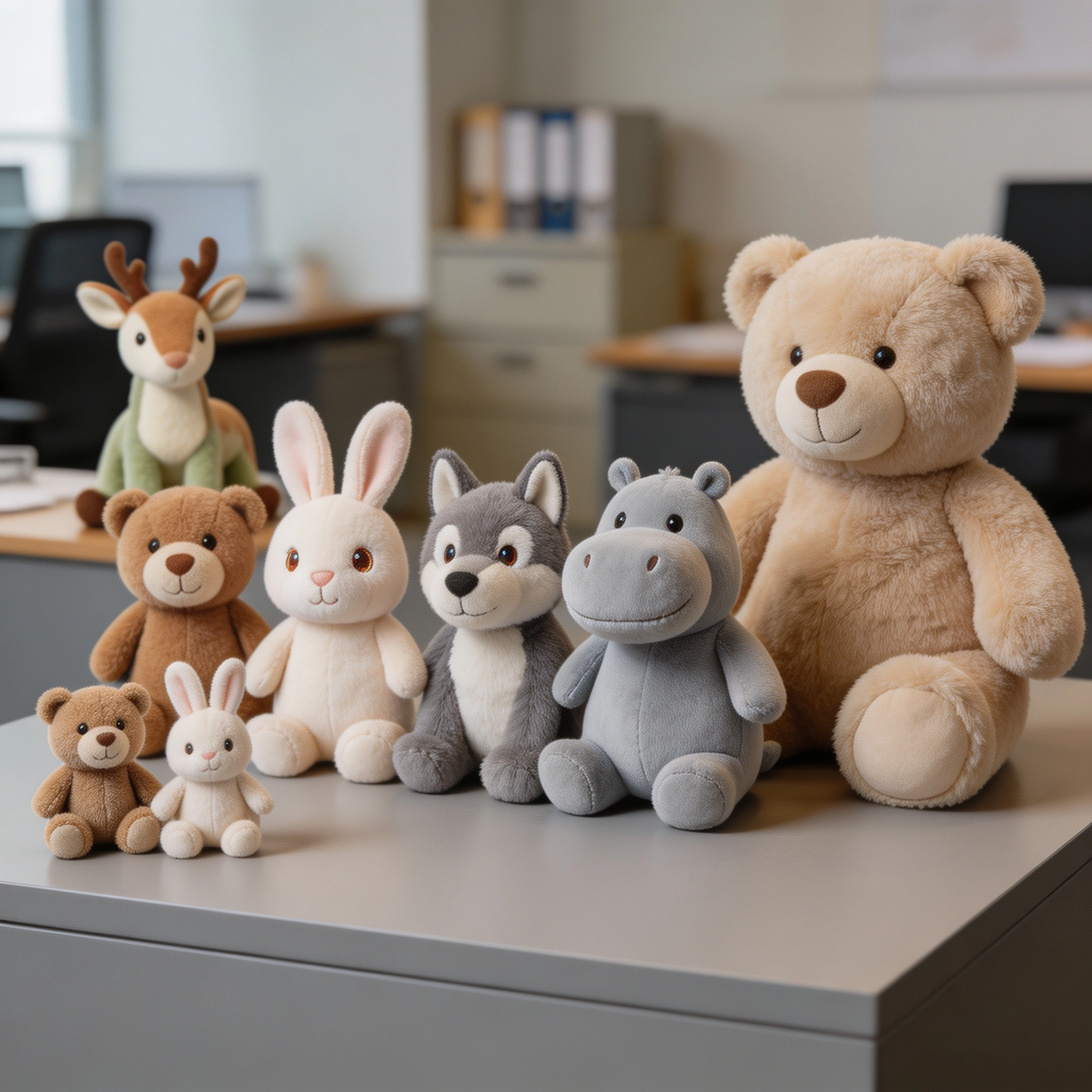
Entry Products
These give customers a lower-commitment way into the collection.
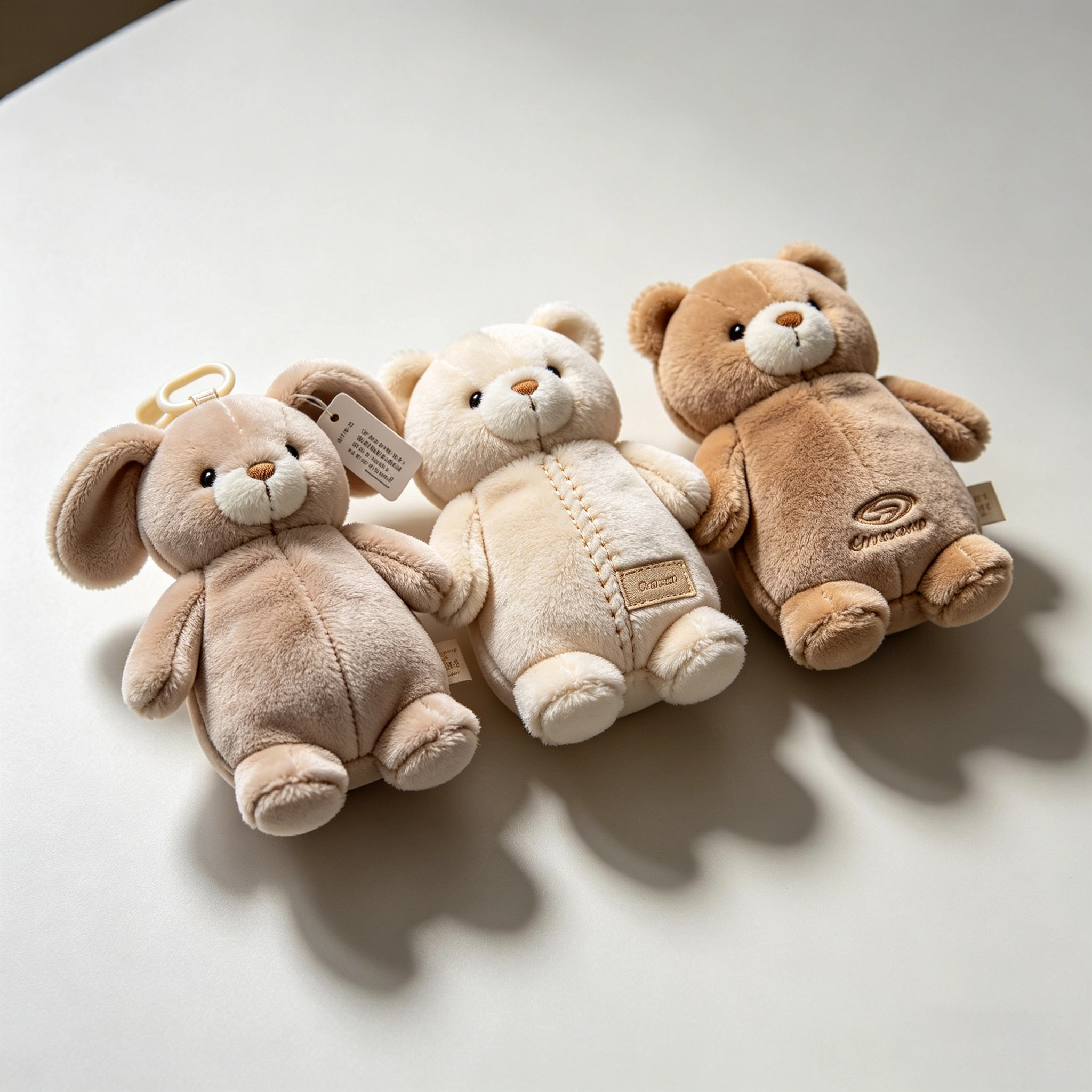
Custom mini plush toys can fill this entry role while giving retailers a smaller product for gifts, collections or impulse purchases.
Plush keychains and other small giftable pieces can serve a similar function. They also help retailers create add-on purchases without reducing the perceived value of larger plush.
The current rise of bag charms, clip-on minis and products used for personal expression makes this role especially relevant. The Toy Association includes wearable, shareable and collectible miniature products within its 2026 Toy & Play Trends.
Statement Products
A statement item gives the display visual impact.
It may be larger, more detailed, unusually shaped or more premium than the rest of the range.
It does not necessarily need the highest unit sales. Its role can be to make shoppers notice the collection and support a higher price ceiling.
Seasonal or Test Products
These should usually occupy a smaller part of the initial purchase.
Trending animals, Valentine’s designs, Christmas plush and novelty themes can create freshness. However, demand can disappear faster than evergreen products.
That makes them useful as a layer, not necessarily as the foundation.
2. Build a Size and Price Ladder Across the Shelf
A good stuffed animal wholesale assortment should not force every shopper into roughly the same purchasing decision.
If every toy is 25 cm and sits within a narrow price band, the customer is mostly choosing between characters.
A stronger assortment gives them different levels of commitment.
| Assortment Level | Typical Product Role | Possible Format |
|---|---|---|
| Entry | Small gift / impulse purchase | Mini plush or plush keychain |
| Core | Main everyday seller | Medium stuffed animal |
| Premium | Higher-value gift | Larger or more detailed plush |
| Feature | Visual display product | Oversized or distinctive design |
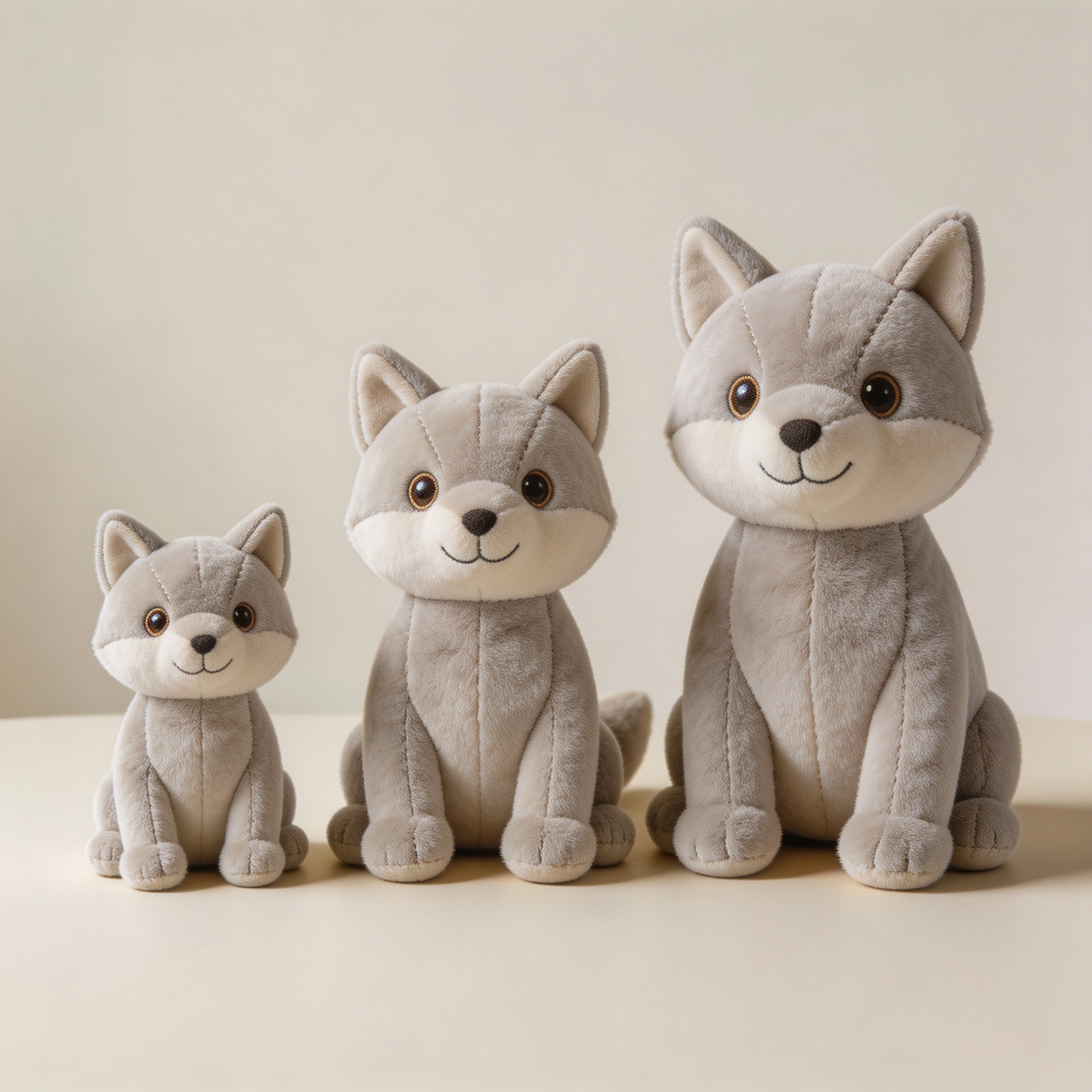
These are assortment roles, not fixed industry price bands.
The actual retail price depends on your market, margin, freight, product complexity and store positioning.
What matters is creating visible separation.
In many sourcing projects, buyers try to reduce cost by making every design slightly smaller. The result can be ten products that all occupy almost the same commercial position.
That saves money on individual items but does not necessarily improve the assortment.
3. More Designs Do Not Always Create a Better Assortment
Retail buyers often worry that a small range will look incomplete.
The natural response is to increase the number of SKUs.
However, twelve designs ordered shallowly can sometimes create more risk than six stronger designs ordered with enough depth to replenish.
Every additional design may introduce:
- another material combination;
- another embroidery program;
- separate colour matching;
- another label or packaging variation;
- additional sample approvals;
- separate MOQ considerations;
- more inventory to monitor.
Colourways can create the same problem.
From a production perspective, a brown bear and a pink bear may look like one product family. But if the fabric colour, embroidery or accessories change, they may behave like separate production variants.
At Wehao Toys, we usually recommend deciding which differences customers will actually notice before multiplying versions.
A second colour should have a reason to exist.
4. Keep Most of the Range Evergreen, Then Add a Trend Layer
Trends matter, but retailers should separate traffic-generating novelty from reliable assortment structure.
The Toy Association’s 2026 Toy & Play Trends highlight growing interest in adult buyers, self-expression, comfort-focused toys, collectible products and fandom-led merchandise.
Those signals can influence plush selection.
They do not mean every wholesale buyer should suddenly replace classic animals with viral characters.
A practical structure might look like this:
- 50–60% evergreen core
- 15–20% smaller or accessible products
- 15–20% premium or display-led products
- 10–15% seasonal or trend testing
This is a planning example, not an industry benchmark.
A tourist gift shop, museum, lifestyle boutique and children’s retailer may use very different proportions.
The principle is more important than the exact percentage: do not make your whole inventory depend on one trend continuing.
5. Make the Collection Look Related Without Making Every SKU Look the Same
A sellable assortment needs variety.
It also needs recognition.
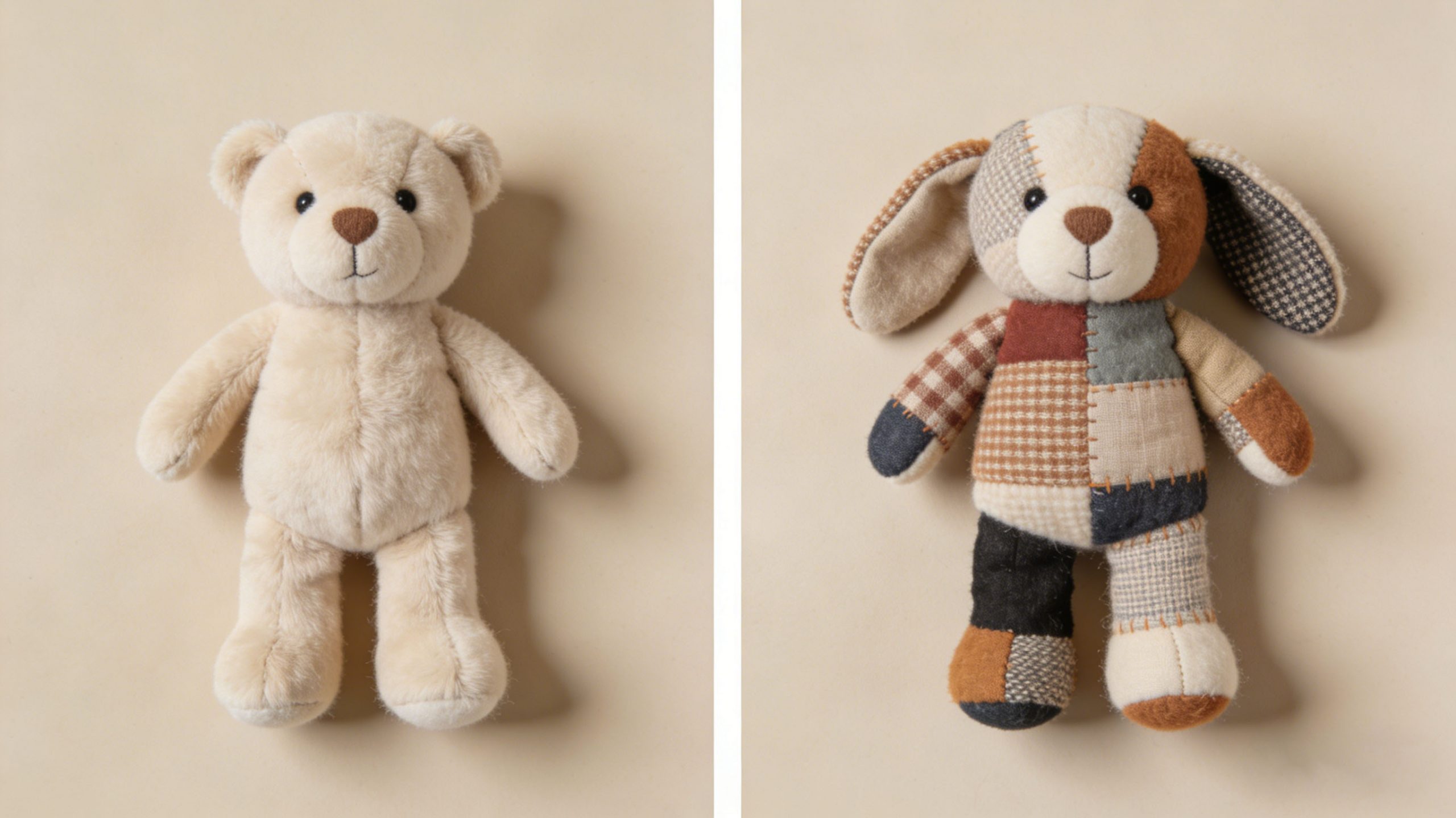
If every SKU uses different eyes, proportions, fabric styles, colour intensity and packaging, the shelf can feel like products from unrelated suppliers.
A collection becomes stronger when several visual rules repeat.
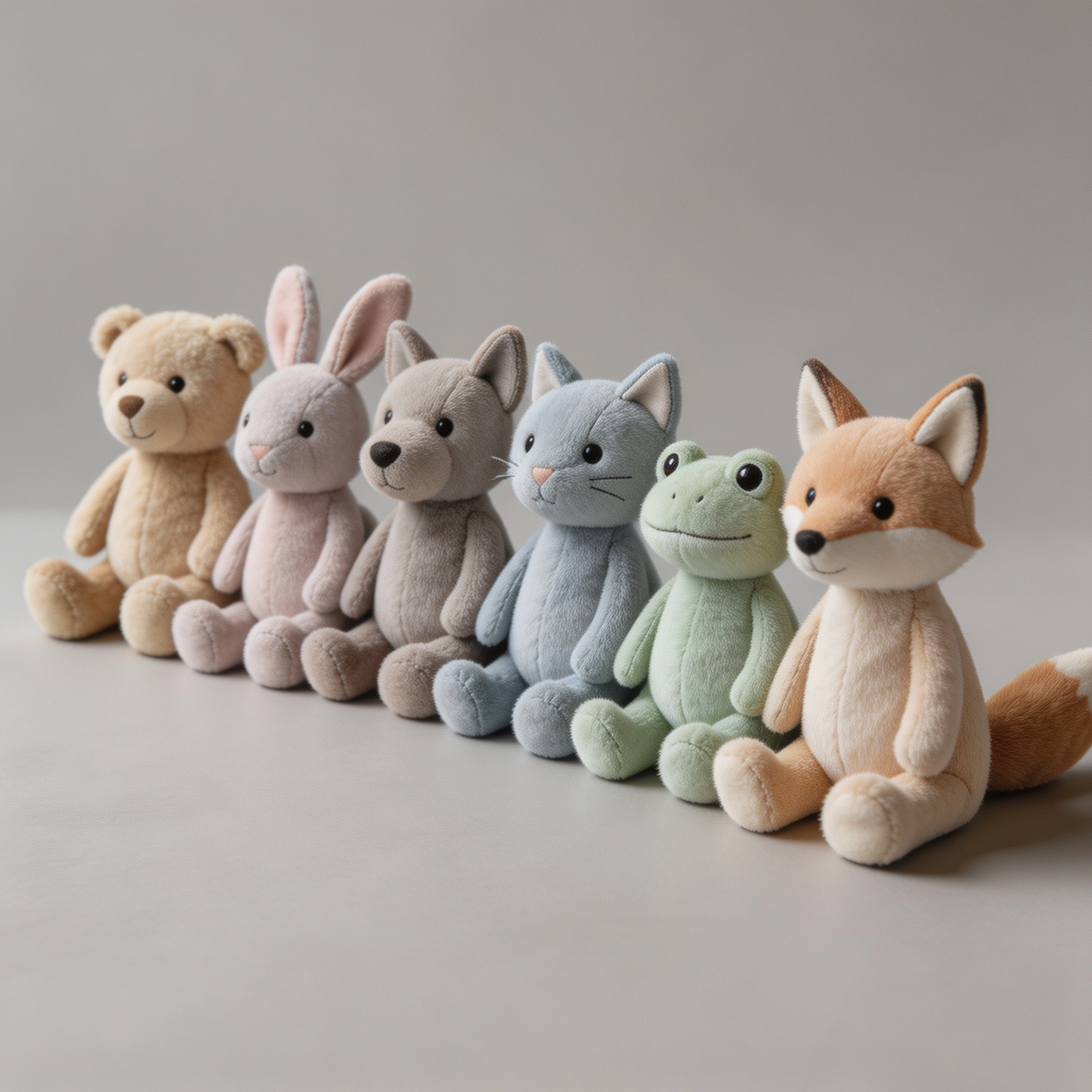
These might include:
- similar facial expression;
- related fabric textures;
- a controlled colour palette;
- consistent embroidery style;
- repeated body proportions;
- shared hangtags or packaging;
- a recognizable brand label.
You can then change the animal, size or theme without losing the family identity.
This is especially useful for wholesale plush gifts, where the retailer may want multiple choices but still wants the display to look curated.
6. Shelf Space and Packaging Should Influence Product Development
Large plush creates visual impact, but volume affects more than production cost.
It also affects:
- carton quantity;
- freight;
- storage space;
- shelf capacity;
- replenishment;
- display density.
This is why a product can have a good factory price and still be inefficient for a retailer.
Ten large plush toys may require more shelf and warehouse space than several dozen mini products.
Packaging creates another tradeoff.
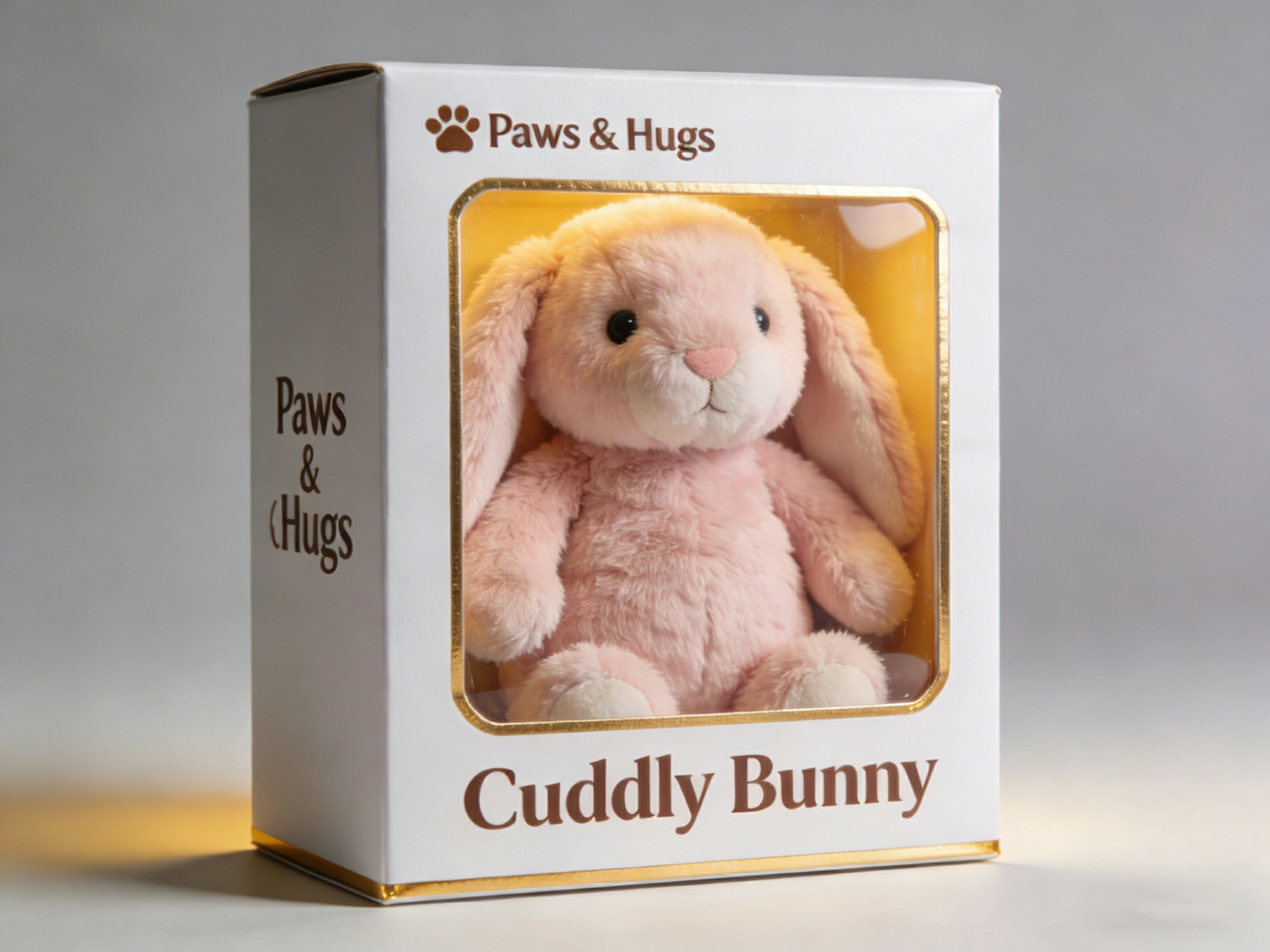
Gift boxes can raise presentation value, but they also increase dimensional volume. Polybags are efficient for transportation but may not provide enough retail presentation on their own.
We usually recommend deciding how the product will physically appear in the shop before finalizing packaging.
The shelf is part of the product specification.
7. Treat Compliance as an Assortment Decision, Not a Final Test
If the stuffed animals are marketed as children’s toys, review the relevant children’s plush toy safety standards before the final assortment is approved.
In the United States, the CPSC Toy Safety Business Guidance explains the mandatory ASTM F963 framework and requirements that may apply to stuffed and beanbag-type toys.
For Europe, EN 71 remains central to toy compliance. The European Commission’s EU toy safety guidance confirms that the new Toy Safety Regulation entered into force on January 1, 2026 and begins applying on August 1, 2030 after the transition period.
This becomes an assortment issue because one complicated SKU can introduce risks that the rest of the range does not have.
Examples include:
- detachable plastic eyes;
- buttons;
- ribbons;
- metal charms;
- removable clothing;
- magnets;
- sound modules;
- long cords.
A simple embroidered animal and a heavily accessorized collectible plush may sit beside each other on the shelf, but they should not automatically be treated as the same development project.
8. Sample the Range as a Collection
Another common mistake is approving every sample separately.
Sample A looks good.
Sample B looks good.
Sample C looks good.
But when all three are placed together, one head may look too large, one colour may be much brighter, and one toy may feel much less filled.
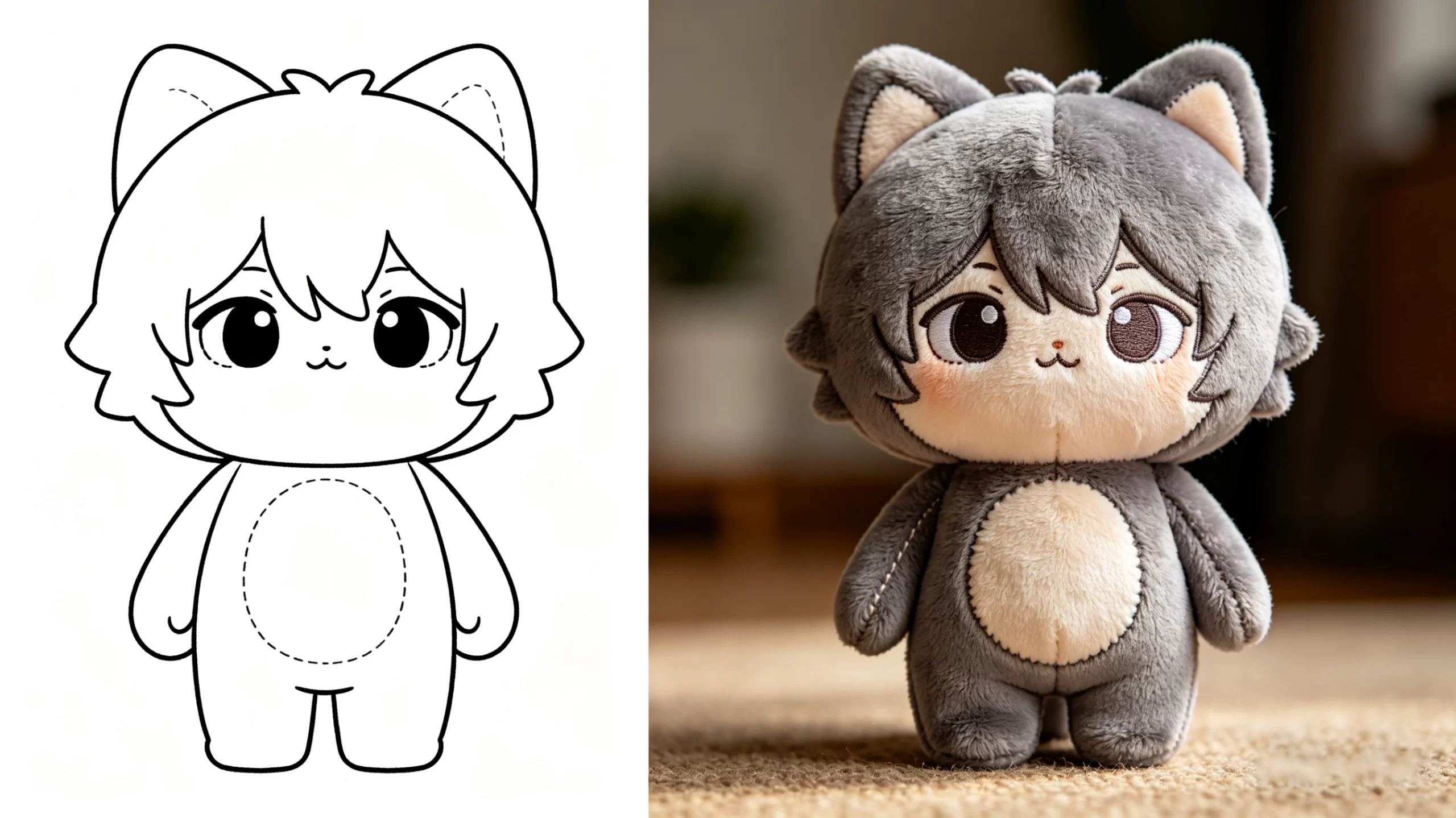
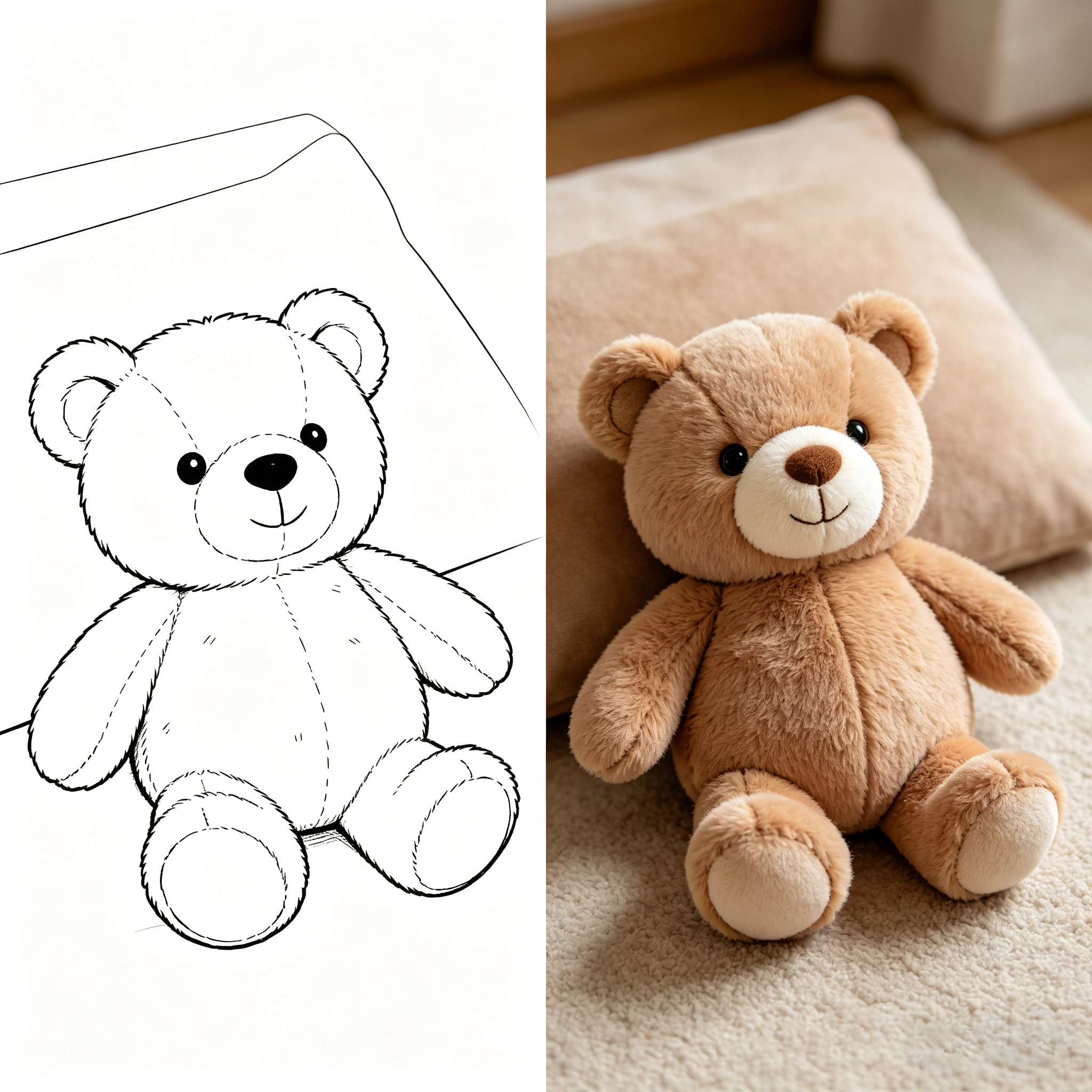
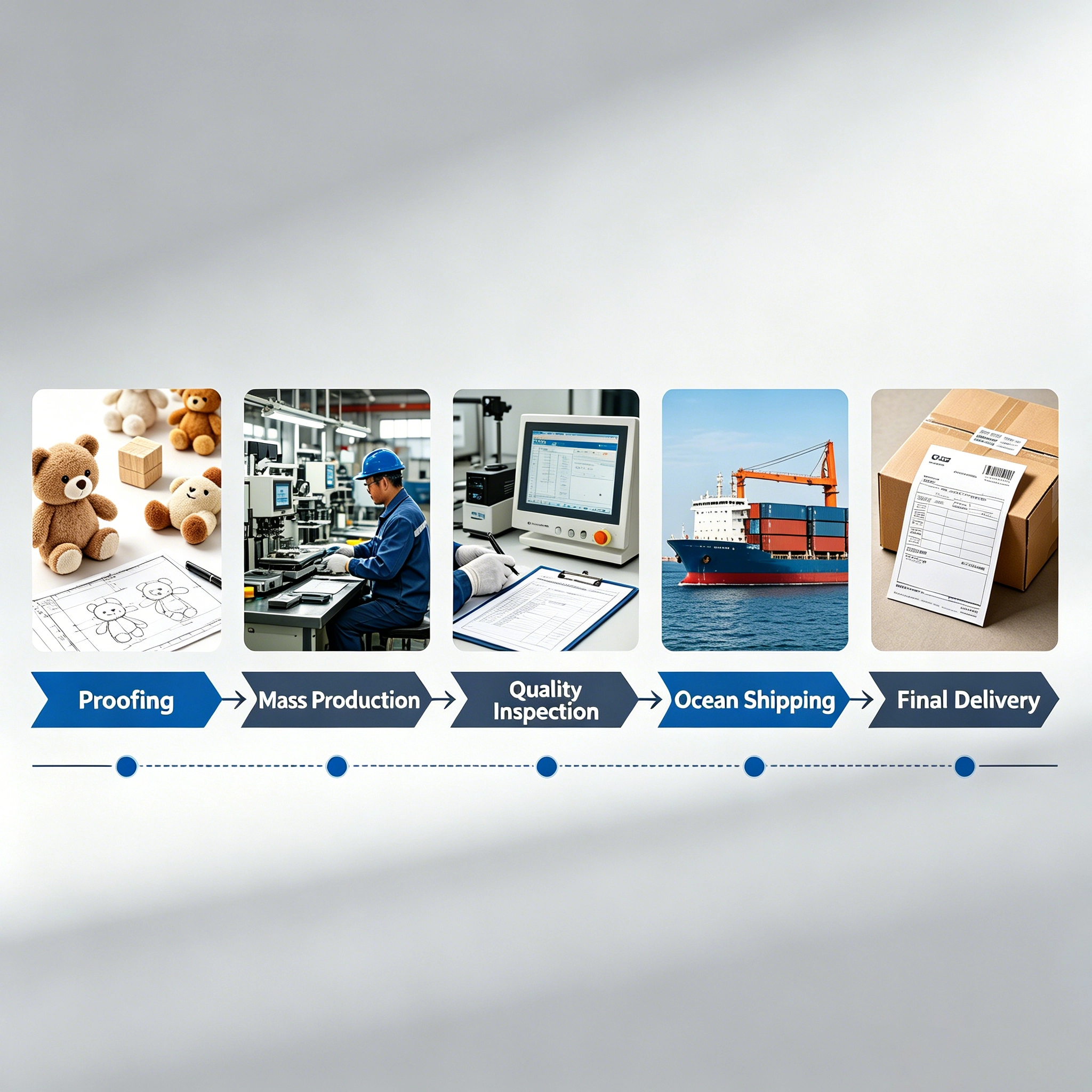
That is why we recommend reviewing the full collection during the plush toy design and sampling process before production whenever possible.
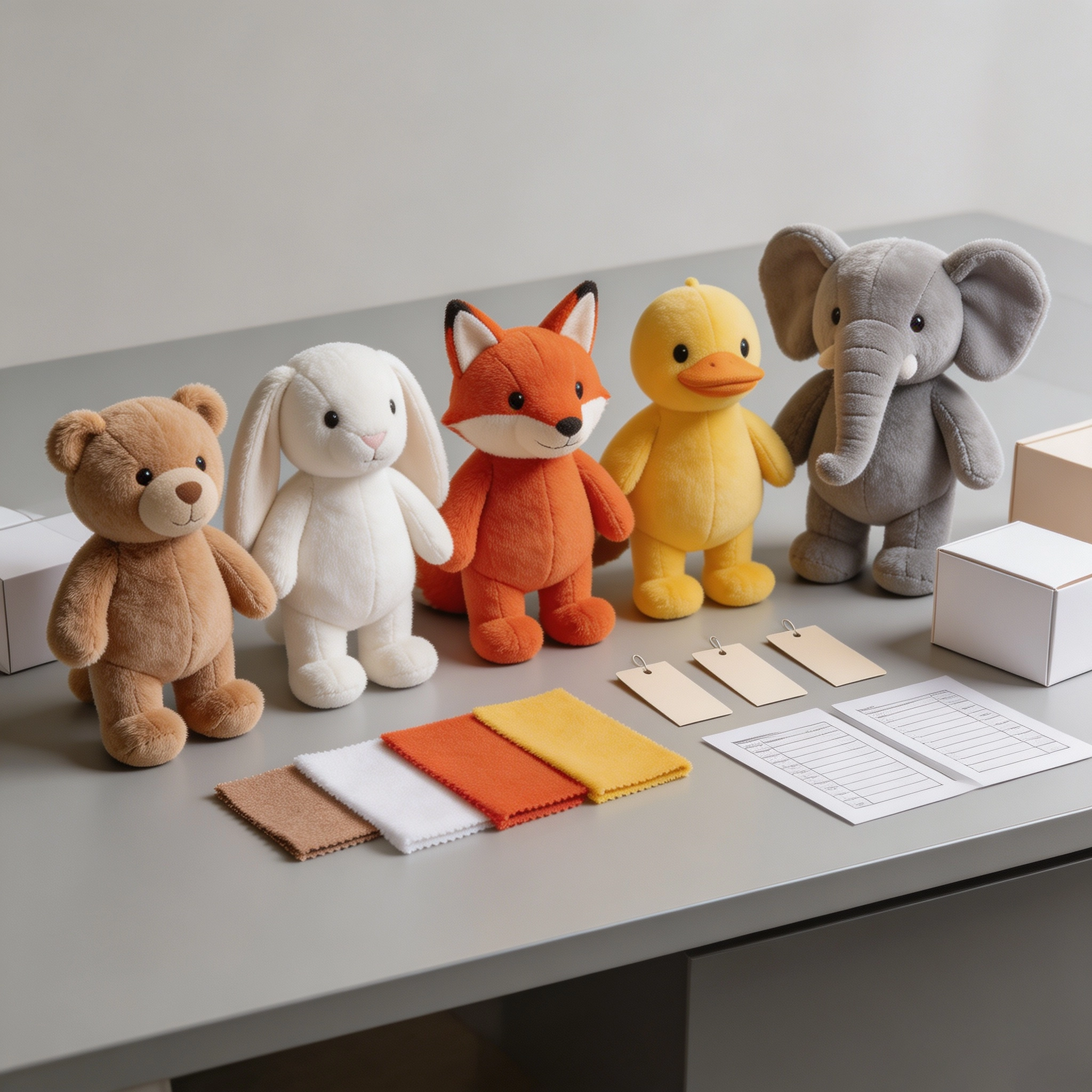
Look at:
- relative height;
- head-to-body proportion;
- stuffing firmness;
- fabric pile;
- colour relationship;
- embroidery scale;
- label placement;
- packaging consistency.
An approved prototype should also become the reference for production specifications and quality checks.
A good individual sample is not always a good assortment member.
9. A Practical 10-SKU Starter Assortment
For buyers sourcing wholesale stuffed animals for retail stores and gift shops, a ten-SKU starter range might be organized like this:
| SKU | Role | Example |
|---|---|---|
| 1 | Core | Medium bear |
| 2 | Core | Medium rabbit |
| 3 | Core | Medium dog or cat |
| 4 | Core | Recognizable wildlife animal |
| 5 | Entry | Mini version of a core animal |
| 6 | Entry | Plush keychain or bag charm |
| 7 | Premium | Larger version of strongest core style |
| 8 | Premium | More detailed gift plush |
| 9 | Trend Test | Emerging animal or aesthetic |
| 10 | Seasonal Test | Holiday or event-specific design |
The exact animals are less important than the structure.
After launch, the retailer can track which roles are working.
If mini plush repeatedly sells out, expand the entry category.
If statement products attract attention but move slowly, keep fewer units instead of deleting them completely.
If one animal clearly outperforms the rest, build depth around that winner before adding five unrelated designs.
That creates an assortment that learns from sales rather than simply becoming larger.
Key Takeaways
A strong wholesale stuffed animal range should:
- give every SKU a clear commercial role;
- cover more than one size and purchasing level;
- concentrate inventory behind stronger core products;
- use trends as controlled experiments;
- maintain visual consistency across the collection;
- consider shelf footprint and shipping volume;
- separate simple and higher-risk compliance designs;
- approve samples both individually and as a group;
- use early sales data to decide what deserves expansion.
The objective is not maximum variety.
It is useful variety with enough depth behind the products that have the best chance of earning their shelf space.
FAQ About Wholesale Stuffed Animals for Retailers
Should a small retailer buy all stuffed animals from one collection?
Not necessarily. A retailer can mix suppliers or collections, but the finished shelf should still have a clear visual or customer logic. Too many unrelated styles can make the range feel random rather than intentionally selected.
Is it better to order one stuffed animal design in many colours?
Only when the colour choice adds meaningful customer choice. Each colour may create additional material, sample or MOQ requirements, so five colourways are not always cheaper or safer than introducing a second strong design.
What information should I send when requesting a wholesale plush quotation?
Provide the preferred sizes, estimated quantity per design, target market, reference style, branding requirements and packaging plan. If you already have a target retail or landed-cost range, sharing it can also help determine which structures are realistic.
Can the same stuffed animal be sold in the US and Europe?
Potentially, but the compliance plan should be reviewed for both markets before production. Testing, documentation, labeling and importer requirements are not identical, so one design does not automatically mean one compliance process.
Should retailers request custom packaging for every SKU?
Not always. A shared hangtag, woven label or packaging system may create enough brand consistency while keeping the assortment simpler. More elaborate boxes are usually better reserved for products where the presentation supports a higher retail value.
How should a retailer plan repeat orders?
Keep approved samples, colour references, material specifications and packaging files for the strongest SKUs. Before reordering, reconfirm material availability, colour batches, pricing and lead time rather than assuming every production condition remains unchanged.
Can a gift shop start with mini plush before adding larger stuffed animals?
Yes. Mini plush can be a useful way to test themes or characters at a smaller shelf footprint. However, the minimum production quantity and setup cost still need to be checked because smaller size does not automatically mean a lower MOQ.
Planning a Retail Plush Collection?
If you are building a new stuffed animal assortment, it helps to review the range as one commercial system rather than quoting every design separately. Share your reference designs, preferred sizes, estimated quantities, target market and packaging direction with Wehao Toys, and we can review which products make sense as core, mini, premium or seasonal items before sampling begins.
Contact Wehao Toys for a Custom Plush Toy Project