If you are sourcing custom plush toys, MOQ means Minimum Order Quantity — the smallest production quantity a supplier can practically accept for an order. In procurement terminology, minimum order quantity (MOQ) means the smallest amount of product a buyer can order from a supplier.
But there is an important detail many first-time buyers miss: in plush manufacturing, MOQ is rarely just a number chosen by the supplier.
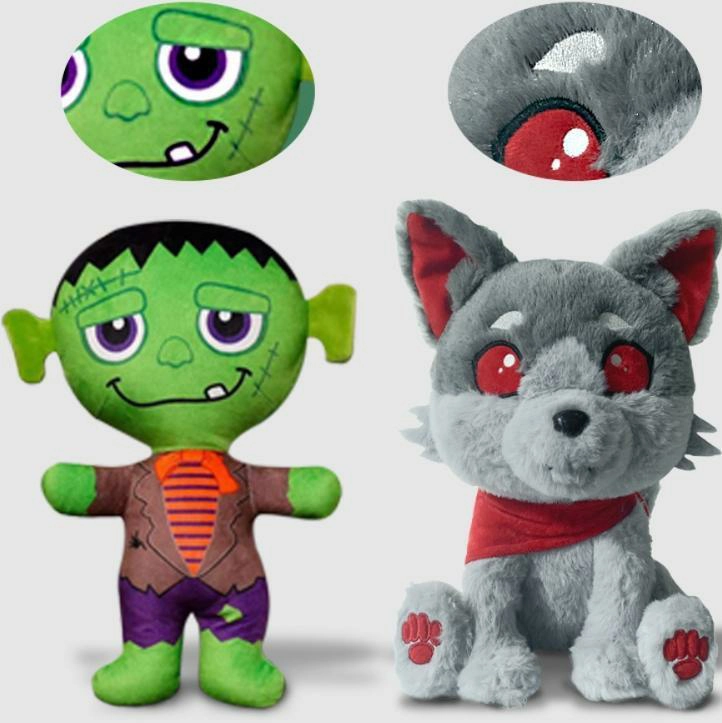
A 300-piece MOQ order may be practical for one design but difficult for another. Fabric color, embroidery, accessories, packaging, the number of designs, and how materials are shared can all change the real production minimum.
That is why the better question is not only:
“What is your MOQ?”
It is:
“What part of my design is determining the MOQ?”
MOQ Meaning in Plush Toy Manufacturing: It Is Not Just One Number
For a stock product, minimum order quantity can be simple. The product already exists, materials may already be available, and no new development is required.
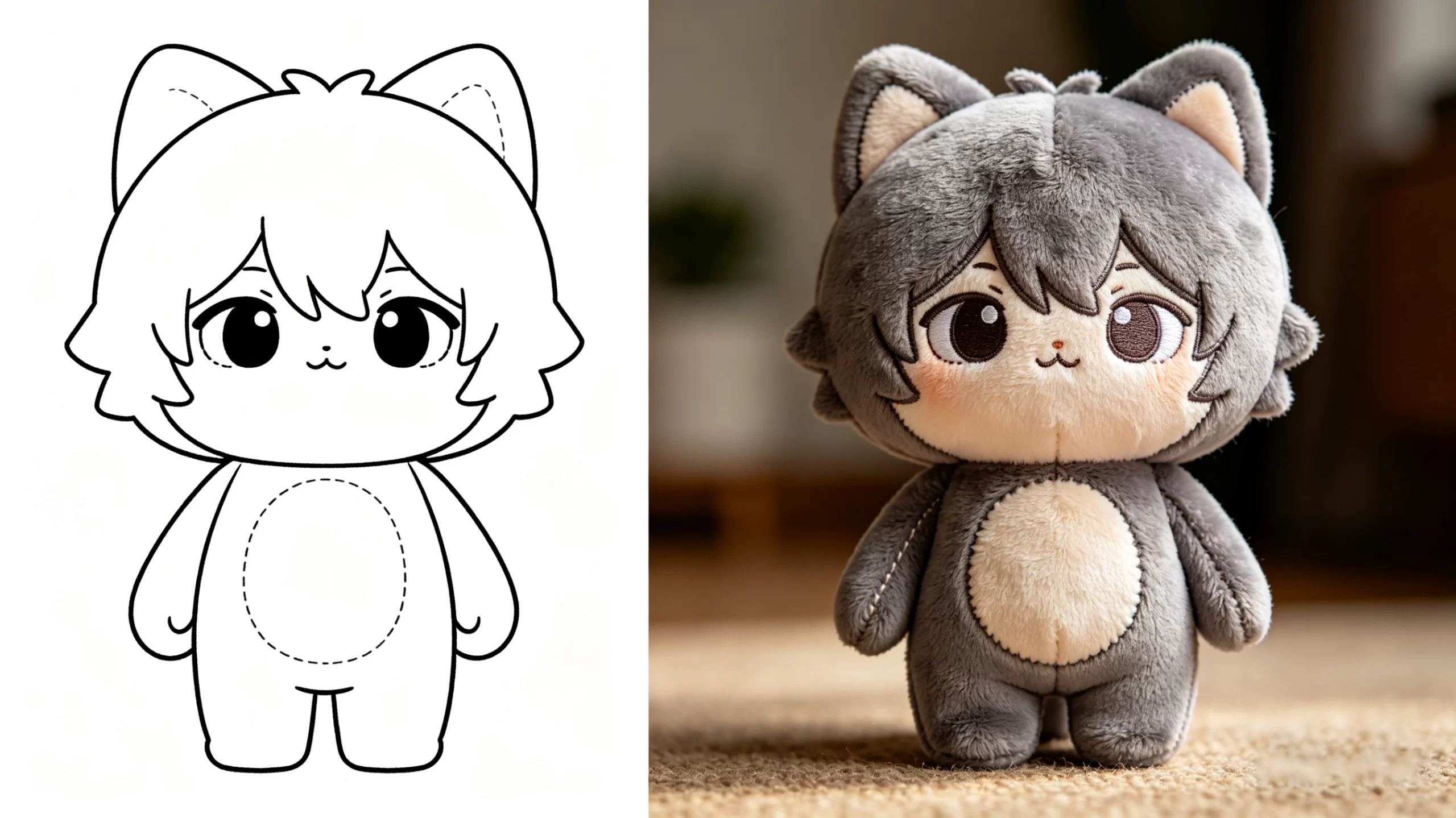
Custom plush toy projects work differently because they normally combine product development, material selection, sampling and production planning.
The finished toy may require its own pattern, several fabric colors, embroidery files, printed elements, accessories, labels and packaging. Each of those inputs can have a different purchasing or production minimum.
This means one plush project can effectively contain several MOQs.
In broader sourcing terms, MOQ constraints can apply to variants, production multiples and upstream materials, not only the total finished-product quantity.
For plush buyers, this explains why two toys that look similar in size can receive very different MOQ quotations.
Why 300 Pieces Can Work for One Plush Design but Not Another
Imagine two buyers both request 300 plush toys.
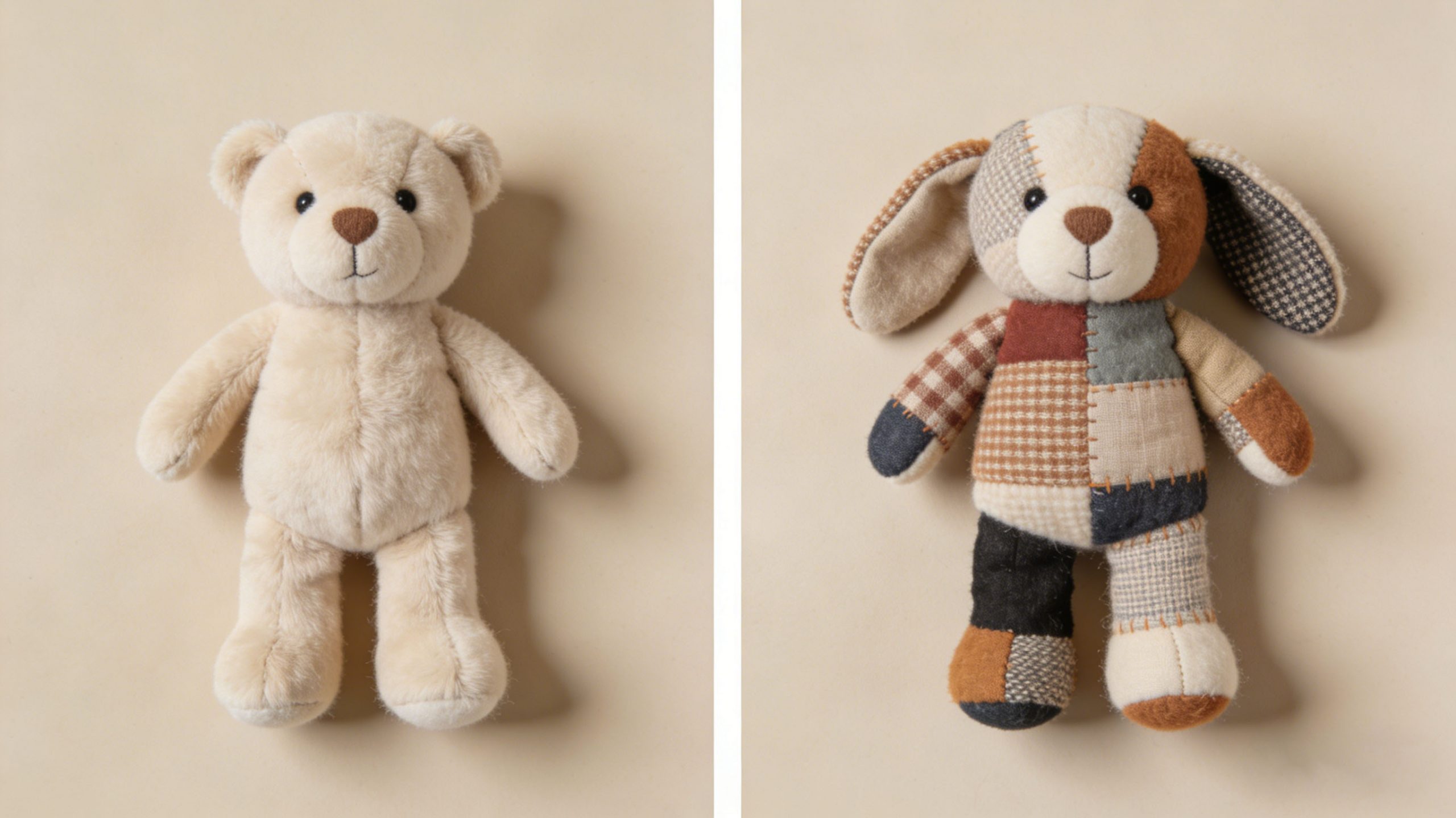
Project A is a 20 cm bear using two common polyester fabrics, standard embroidery and a simple sewn label.
Project B is also 20 cm, but it uses six fabric colors, long-pile faux fur, complex facial embroidery, a removable costume, a molded accessory and a custom printed box.
The finished quantity is identical.
The production conditions are not.
Project A may use fabrics already available in commonly stocked colors. Its embroidery is simple, and most parts can move through production together.
Project B introduces more purchasing minimums, more suppliers, more preparation work and more opportunities for unused material.
This is why buyers should avoid using product size alone to predict MOQ.
A Practical Comparison
| Design Factor | Lower MOQ Pressure | Higher MOQ Pressure |
|---|---|---|
| Fabric | Common stocked fabric | Custom or specialty fabric |
| Colors | 1–3 colors | Many separate colors |
| Embroidery | Simple face or logo | Large or highly detailed embroidery |
| Structure | Standard plush body | Complex 3D construction |
| Accessories | Few or none | Custom removable parts |
| Variants | One design | Many designs or colorways |
| Packaging | Simple polybag | Custom printed retail packaging |
A more detailed design does not automatically require a huge order. However, every additional custom input creates another quantity constraint that must be checked.
The Five MOQ Layers Buyers Should Check
Instead of treating MOQ as one figure, we usually recommend checking five separate layers.
1. Finished Product MOQ
This is the number buyers usually see on a quotation.
For example:
MOQ: 500 pcs per design
However, that number only describes the final production quantity. It does not explain what is happening underneath.
2. Fabric and Color MOQ
Fabric is one of the most common hidden MOQ drivers.
If a design uses a standard fabric and a commonly available color, a small production run may be easier to arrange.
A custom-dyed fabric is different.
Even if you need only a small quantity for 200 toys, the textile source may require a larger dyeing or purchasing run. The unused material still creates a cost.
Color also matters.
A 600-piece order using one fabric color can be easier than 600 pieces divided across six special colors.
The total quantity has not changed. Material purchasing has.
3. Process and Component MOQ
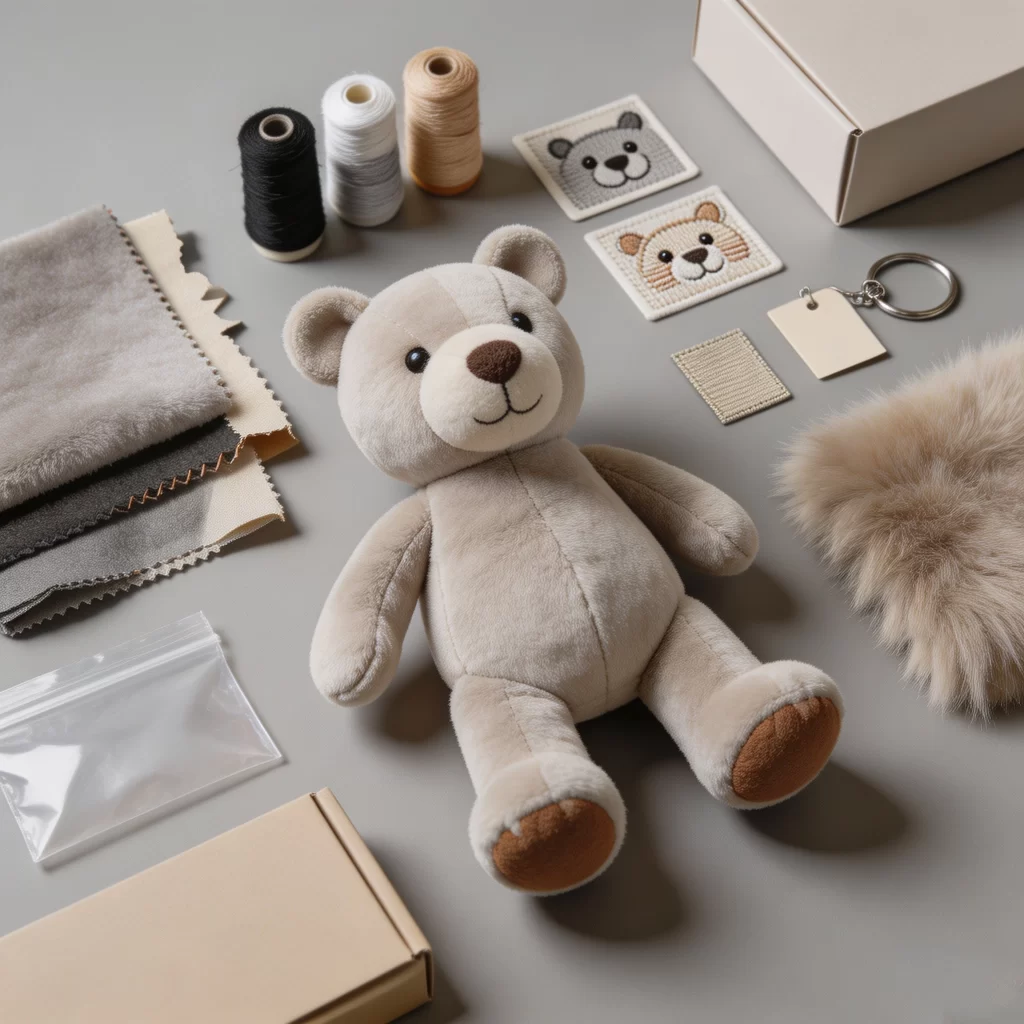
Embroidery, printing, woven labels, metal hardware and molded accessories may each involve separate setup requirements.
The issue is not always the quantity of material used per toy.
It is the preparation required before production starts.
A custom metal accessory, for example, may involve tooling or a component supplier’s own minimum quantity. A simple embroidered eye can normally be integrated much more easily.
This is why replacing one highly customized component can sometimes reduce the practical MOQ without changing the overall plush design.
4. SKU or Variant MOQ
One of the most common buyer misunderstandings happens here.
Suppose a retailer wants:
- 100 brown bears
- 100 pink bears
- 100 rabbits
- 100 cats
- 100 dogs
The total order is 500 pieces.
From the buyer’s inventory perspective, that is one 500-piece order.
From a production perspective, it may behave like five separate 100-piece runs.
Each character may require its own pattern, embroidery setup, color combination and sample approval.
Even different colorways can create separate production constraints when their fabric or embroidery changes.
This is why SKU count should always be discussed together with total quantity.
5. Packaging MOQ
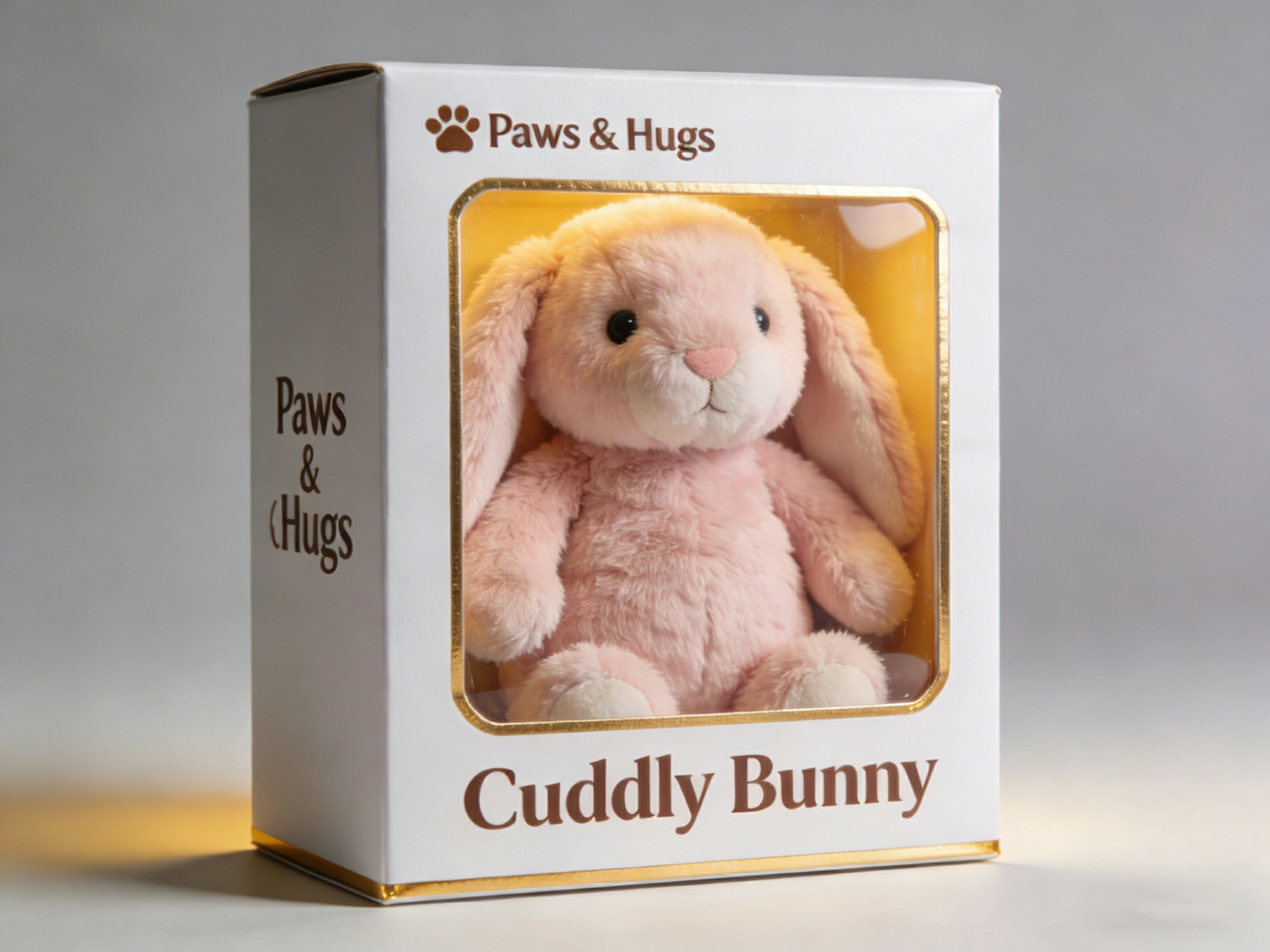
The plush toy and its private label packaging do not always share the same minimum because printing and label suppliers can have their own production requirements.
A supplier may be able to produce a relatively small plush order while the printing supplier requires a much larger run for custom boxes, inserts or branded packaging.
For a first market test, simpler packaging can therefore be more practical.
A polybag plus a sewn label or hangtag may allow the buyer to test the product before investing in a larger printed packaging run.
Why More Designs Can Make a Small MOQ Harder
Buyers often try to reduce inventory risk by ordering many designs in very small quantities.
Commercially, that sounds sensible.
Production-wise, it can create the opposite effect.
Consider two programs:
Program A
- 1 design
- 1 color
- 500 pieces
Program B
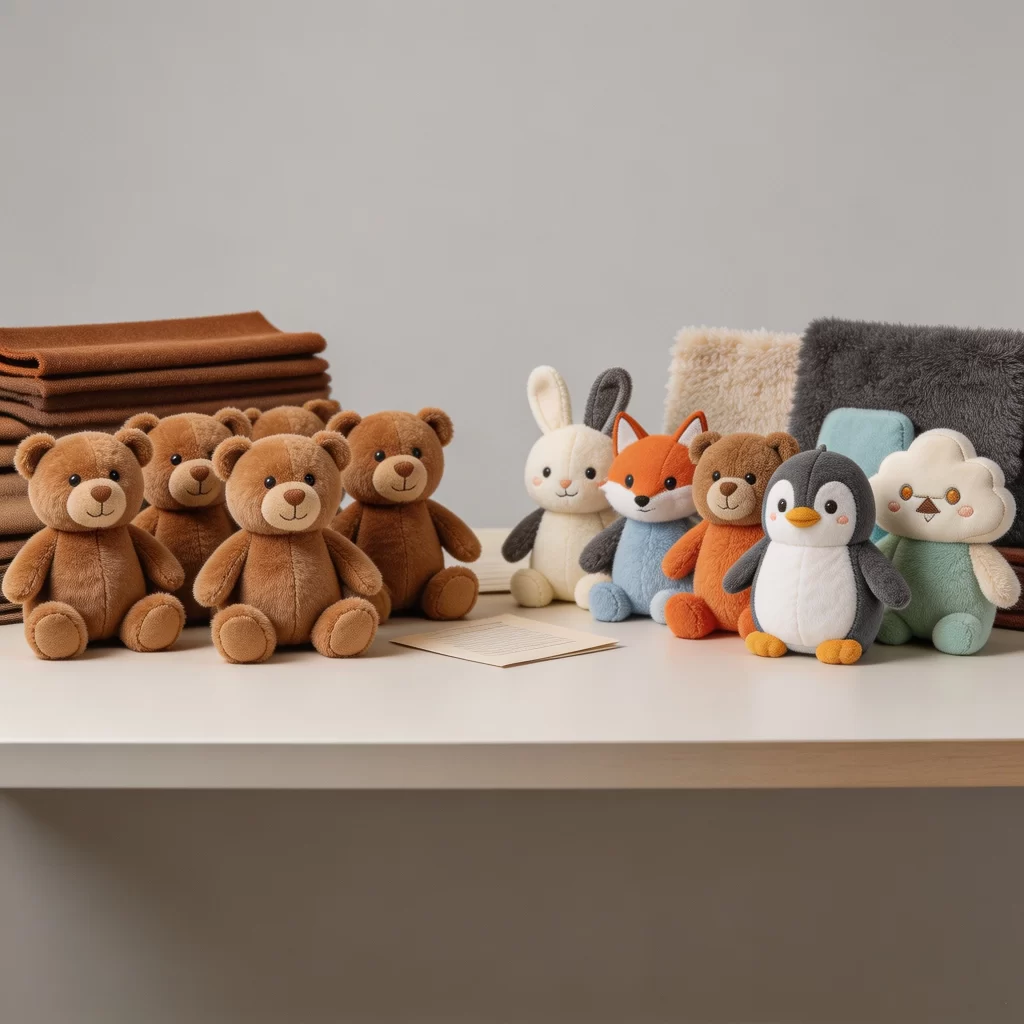
- 5 designs
- 200 pieces each
- 1000 pieces total
Program B requires five sets of production preparation.
If the characters also use different materials, the project becomes even more fragmented.
In our sampling experience, this is one reason a small collection can become unexpectedly expensive. The buyer sees 500 finished toys. The production side sees multiple miniature projects.
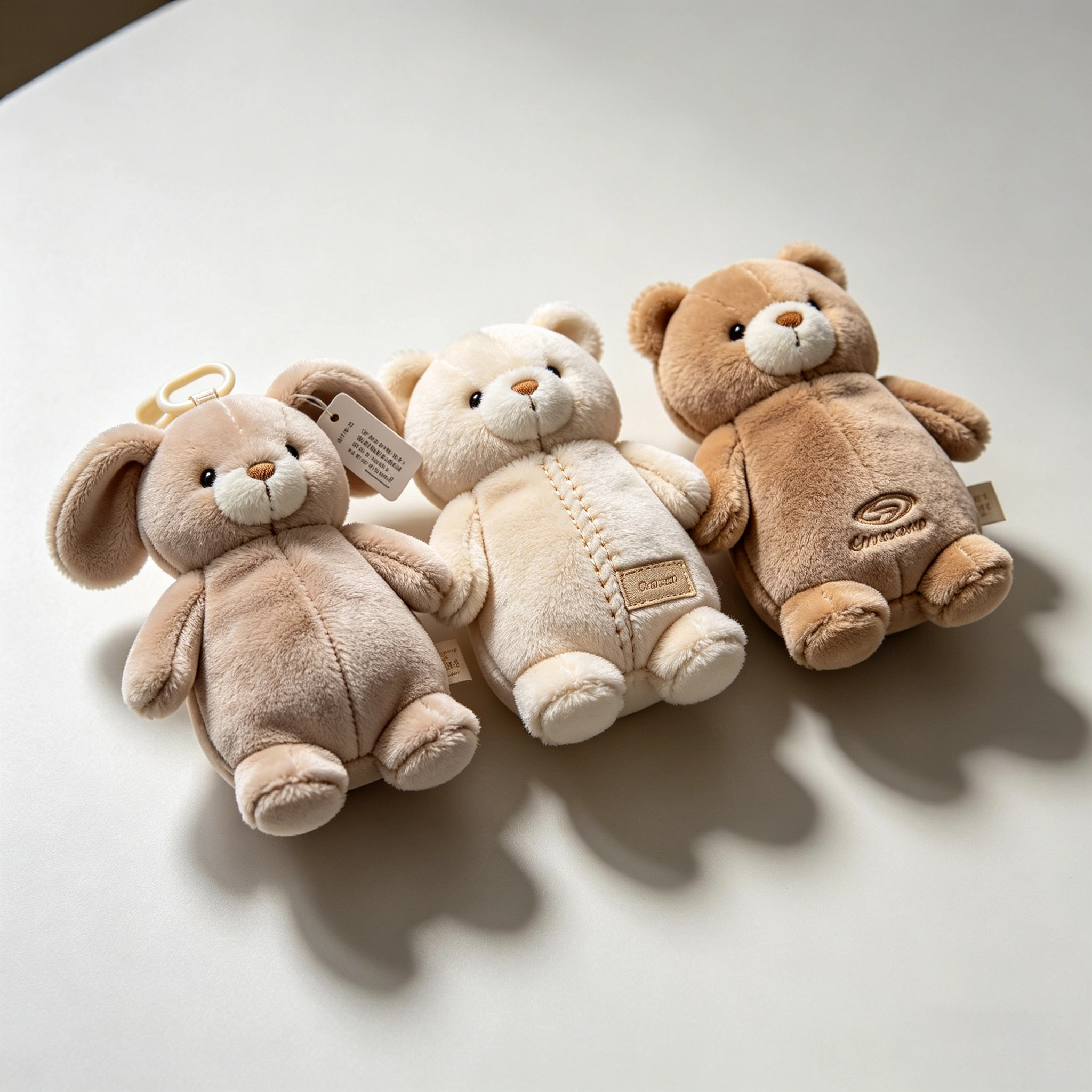
When building a wholesale stuffed animal assortment, sharing fabric colors, labels, accessories or packaging across selected characters can improve both production feasibility and SKU planning.
What Low MOQ Products Usually Have in Common
Low MOQ products are not simply products from a supplier willing to accept less profit.
They usually have characteristics that make small-batch production easier.
Typical low MOQ products tend to use:
- available fabric colors;
- common polyester plush materials;
- limited embroidery areas;
- simple pattern structures;
- standard accessories;
- shared components;
- one main design;
- simple packaging.
Existing or semi-custom styles can also work well when the buyer mainly needs branding changes such as a logo, label or hangtag.
By contrast, a completely new character with specialty fabric, custom accessories and retail packaging has more development inputs to recover.
That does not make the project unsuitable.
It simply means the MOQ needs to be evaluated from the design backward.
A Lower MOQ Does Not Always Mean a Lower-Risk Order
Buyers often assume that ordering fewer units automatically reduces project risk.
It reduces inventory exposure.
It does not necessarily reduce development cost per unit.
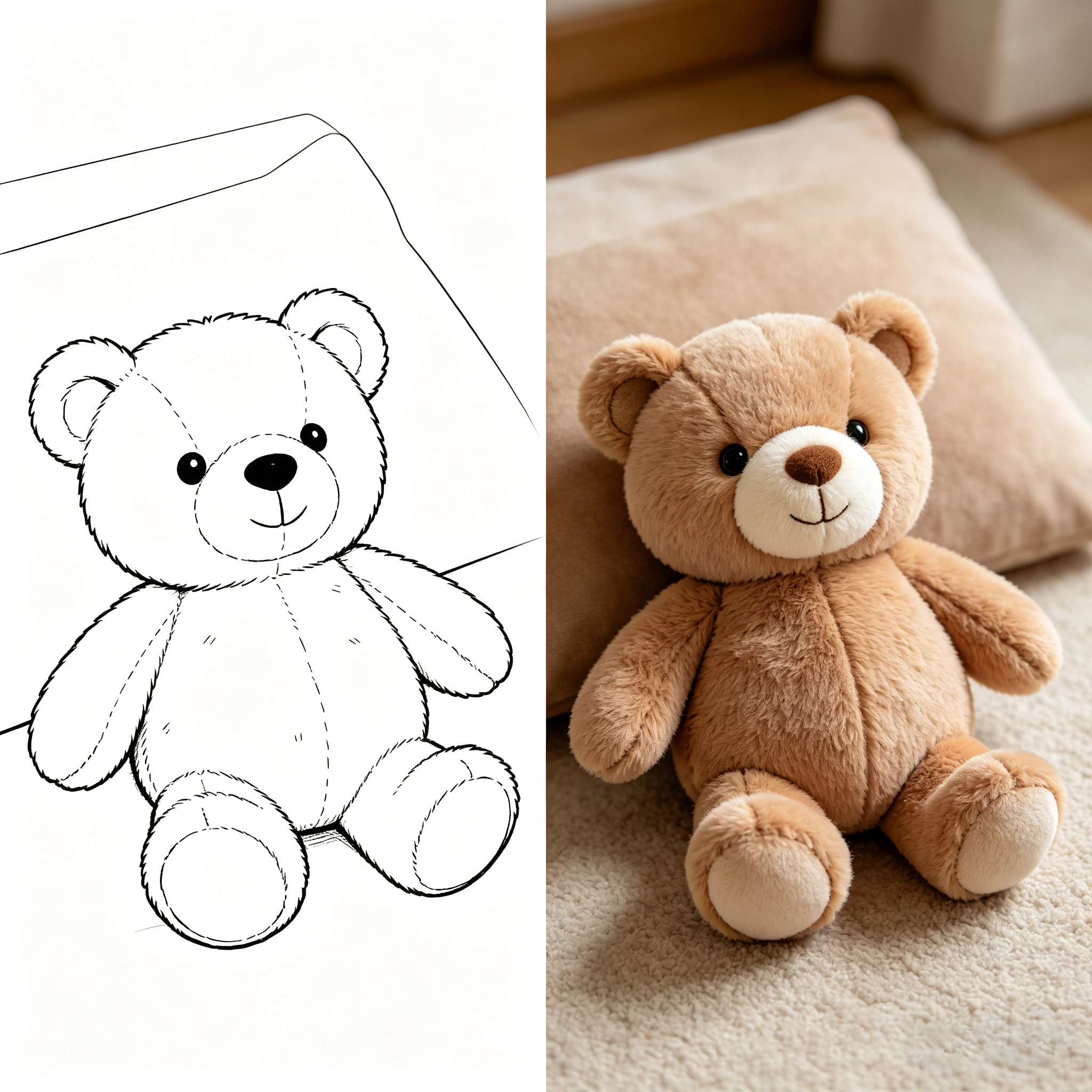
Pattern development, plush toy sampling, embroidery setup and production preparation still happen before the first production unit is completed.
If these fixed or semi-fixed costs are divided across only 100 units instead of 500, the unit price usually carries more of that cost.
Low MOQ can therefore be useful for:
- first market tests;
- new brand launches;
- limited campaigns;
- early retail validation;
- projects with uncertain demand.
However, buyers should compare the complete economics rather than MOQ alone.
Sometimes 300 units at a higher unit price is the sensible choice.
In other cases, moving from 300 to 500 pieces may reduce the unit cost enough to justify the additional inventory.
The right answer depends on expected sales, cash flow and how confident you are in the design.
How to Read an MOQ Quote Before Comparing Suppliers
If Supplier A quotes an MOQ of 200 pieces and Supplier B quotes 500 pieces, Supplier A is not automatically the better option.
First check whether they are quoting the same product specification.
Ask whether the MOQ applies:
- per total order;
- per design;
- per color;
- per size;
- per packaging style;
- per custom component.
Then confirm what changes at the quoted MOQ.
A low quantity may require:
- using available fabric instead of custom color matching;
- simplifying accessories;
- using standard packaging;
- combining material purchasing with another production run;
- accepting a higher unit price.
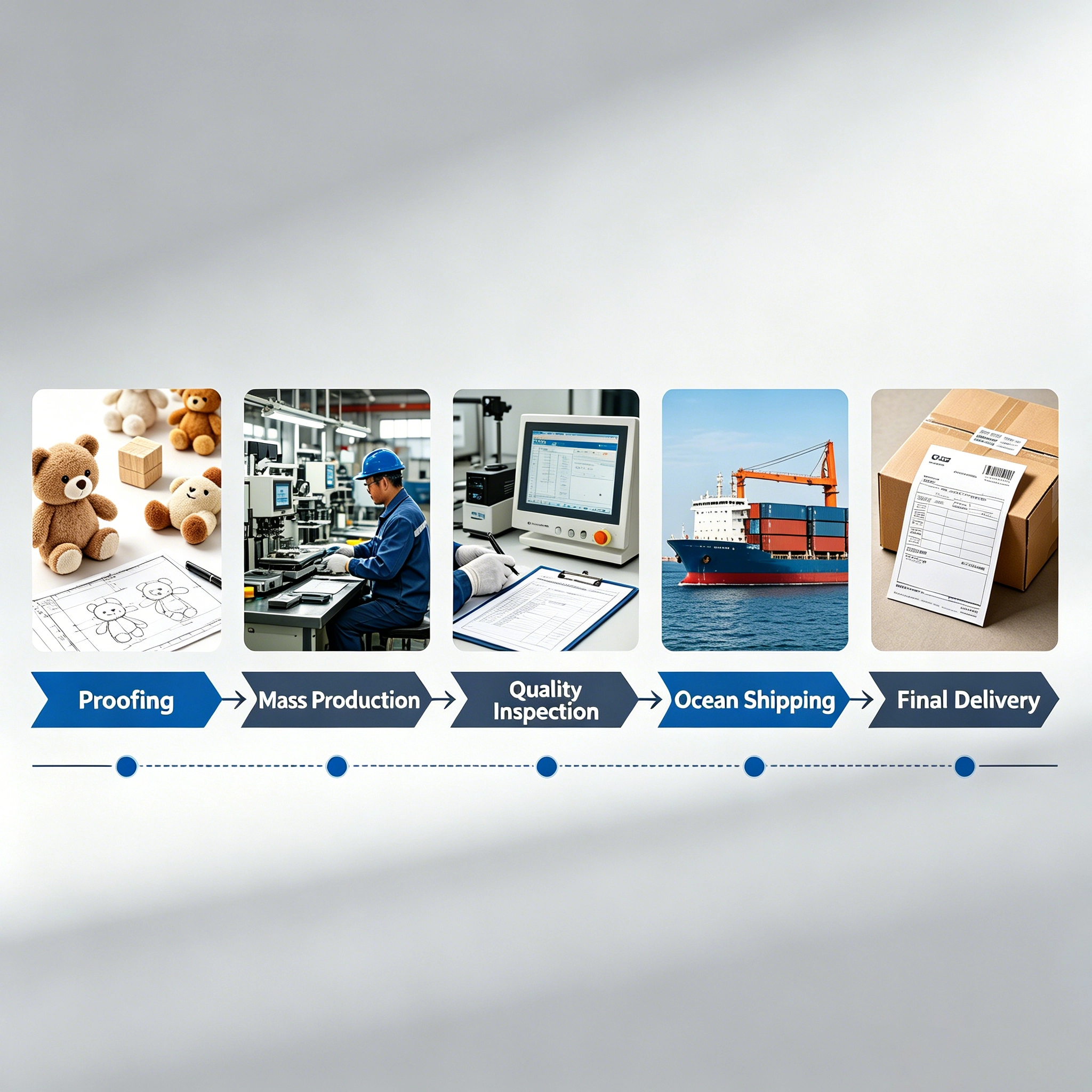
A useful MOQ quotation should explain the conditions behind the number and show how MOQ, pricing and lead time interact within the same custom project.
When MOQ Negotiation Makes Sense
MOQ is often negotiable when the buyer helps remove the constraint causing it.
For example, you may be able to:
- use an existing fabric color;
- reduce the number of colorways;
- share materials across several characters;
- replace a custom accessory with embroidery;
- use standard packaging for the first order;
- increase one SKU while reducing weaker variants.
Simply asking, “Can you lower the MOQ?” gives the supplier very little room to redesign the production plan.
A better question is:
“Which part of this design is preventing us from producing 200 pieces instead of 500?”
That turns MOQ negotiation into a practical product-development discussion.
At Wehao Toys, we usually recommend confirming the prototype and major material choices before treating any MOQ as final. Sampling establishes the actual construction, materials and finishing details that production must reproduce.
Key Takeaways
The basic MOQ meaning is simple: minimum order quantity is the smallest order a supplier will accept.
For custom plush toys, however, the real answer is more layered.
MOQ can be influenced by:
- finished production quantity;
- fabric purchasing;
- individual colors;
- embroidery and printing;
- custom components;
- number of SKUs;
- packaging;
- production setup.
That is why asking for the “lowest MOQ” before showing the design rarely gives a useful sourcing answer.
A better approach is to identify what is creating the minimum quantity and decide whether that part of the design is essential.
For many buyers, that is the difference between simply finding low MOQ products and building a custom plush project that can actually scale.
FAQ About MOQ in Plush Toy Manufacturing
Can different sizes of the same plush share one MOQ?
Sometimes, but not automatically. Different sizes normally require separate patterns and may use different embroidery proportions or packaging, so the supplier should confirm whether they can be grouped into one production program.
Can I combine several designs to meet the minimum order quantity?
Possibly, especially when the designs share fabrics, accessories and packaging. However, 500 total pieces across five unrelated designs may still behave like five separate small production runs.
Does a repeat MOQ order usually become easier?
It often can. Once patterns, samples and specifications are approved, repeat production removes some development work, but current material and component minimums still need to be checked.
Should I ask for MOQ before making a sample?
You can request a preliminary MOQ during quotation, but treat it as an estimate until the design, materials and construction are clear. Significant changes during sampling can change production feasibility.
Can I supply my own fabric or packaging to reduce MOQ?
In some projects, yes. Buyer-supplied components can remove one supplier-side purchasing constraint, but compatibility, quality consistency, delivery timing and required quantities still need to be reviewed.
Does custom color matching always require a higher MOQ?
Not always. If a close stocked color is acceptable, the minimum may remain flexible. Exact custom dyeing is more likely to introduce a separate material requirement.
What information should I send when asking for a low MOQ quotation?
Send your artwork, target size, quantity, number of designs or colors, target market, branding requirements and packaging preference. This allows the supplier to identify which parts of the project are actually driving MOQ.
Planning a Custom Plush Project With a Specific MOQ?
If you already have a target quantity, send your artwork, preferred size, number of designs, branding requirements and packaging plan for review. Instead of looking only at the headline MOQ, the project can be evaluated to identify which materials, components or design choices are affecting the minimum production quantity.
Contact Wehao Toys for a Custom Plush Toy Project to discuss a practical sampling and production direction before committing to inventory.