
Quick Answer
Custom packaging for plush products should be chosen around the sales channel, product size, presentation goal, and shipping method—not simply around which box looks best. Bags usually offer lower packing volume and simpler handling. Boxes improve shelf presence and gift presentation, while inserts help control how the plush sits, faces forward, and fills the available display space.
For brands, the strongest packaging design is usually the simplest structure that performs its actual job. A premium rigid box can make sense for a collectible or gift product, but it may add unnecessary cost and shipping volume to a promotional plush. Likewise, a basic bag may protect a product efficiently but provide too little display value for a retail launch.
Packaging can also carry product and regulatory information. For children’s products sold in the United States, CPSC guidance requires tracking information on the product and its packaging to the extent practicable. European buyers also need to consider the EU Packaging and Packaging Waste Regulation, which became applicable on August 12, 2026.
Start With the Sales Channel, Not the Box Style
One of the most common mistakes in custom packaging is choosing a packaging format before deciding how the plush will actually be sold. A product displayed on a retail shelf has different needs from one shipped directly to an online customer. Promotional giveaways and collectible products create another set of priorities.
A useful packaging decision therefore starts with the customer journey. Ask where the product will be stored, how it will be displayed, whether the customer needs to see the plush before purchase, and how far the finished package must travel. These questions normally narrow the packaging choices much faster than starting with graphic design.
| Sales Scenario | Practical Packaging Direction | Main Priority | Main Tradeoff |
|---|---|---|---|
| E-commerce plush | Polybag, branded bag or compact inner package | Low volume and protection | Less shelf presentation |
| Retail stuffed animal | Window or open display box | Product visibility | Higher cost and carton volume |
| Promotional plush | Bag, header card or simple branded sleeve | Distribution efficiency | Limited premium feel |
| Collectible plush | Printed box, blind box or display box | Series identity | More packaging development |
| Premium gift plush | Rigid or premium folding box | Unboxing experience | Cost, weight and storage |
| Mini plush/keychain | Header card, bag or small box | Compact display | Limited print area |
The important point is that product packaging should support the selling method rather than fight against it.
Bags Keep Plush Packaging Simple and Space-Efficient
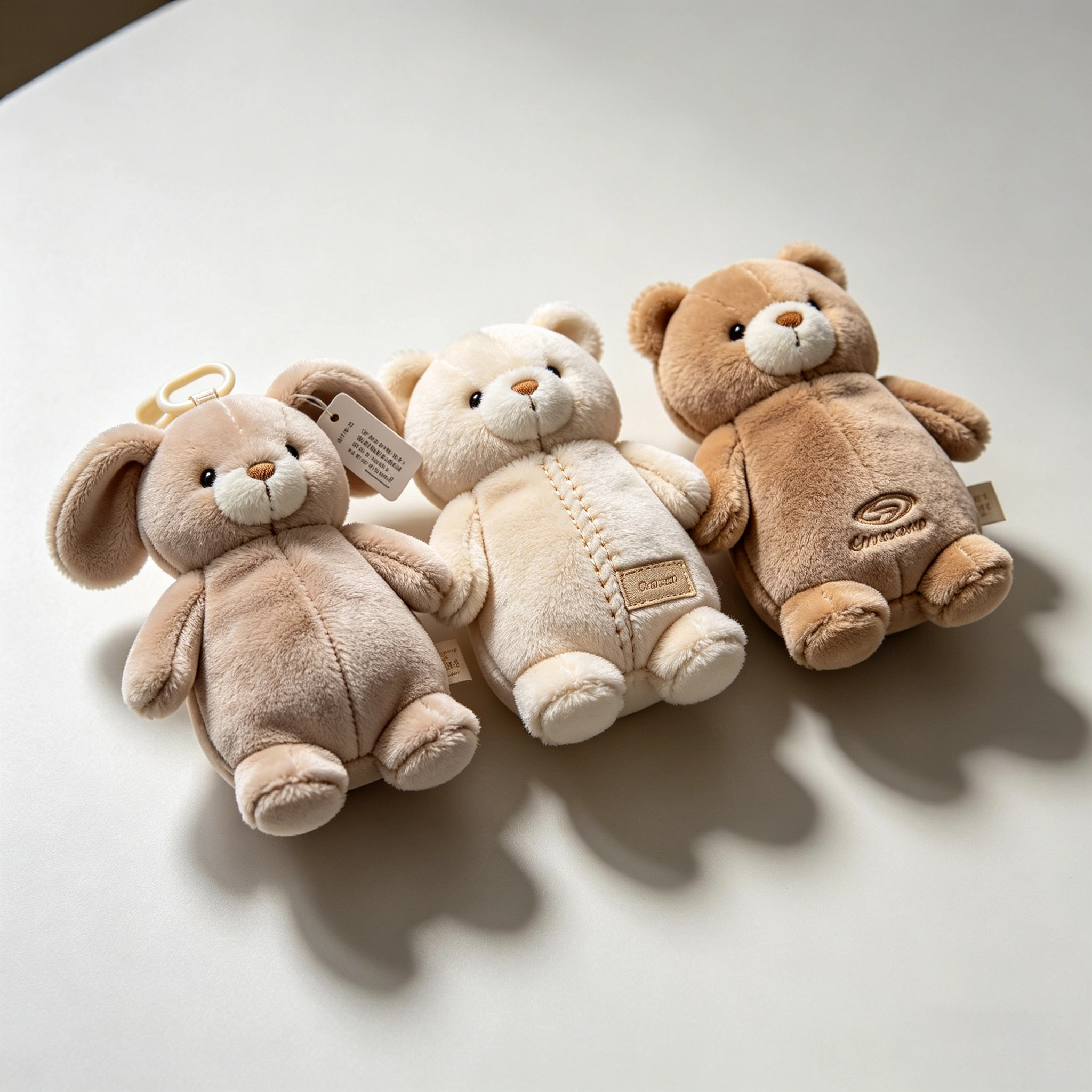
Bags are often the most efficient packaging format for standard plush products because soft toys can tolerate some controlled compression. A transparent polybag keeps the product visible, while printed bags, zipper bags, frosted bags, or reusable fabric bags can introduce more branding.
The advantage is not only the packaging price. Flexible packaging occupies much less space than a rigid box, which can reduce master-carton volume and storage requirements. This matters especially for medium and large plush toys, where the product itself contains a high percentage of air.
However, branded packaging does not automatically require fully printed bags. In many first-run projects, a standard bag combined with a printed insert, sticker, hangtag, or header card gives the buyer more flexibility. Fully customized bags become more practical when quantities are stable enough to justify their own print setup and minimum production run.
Boxes Add Display Value but Change the Cost Structure
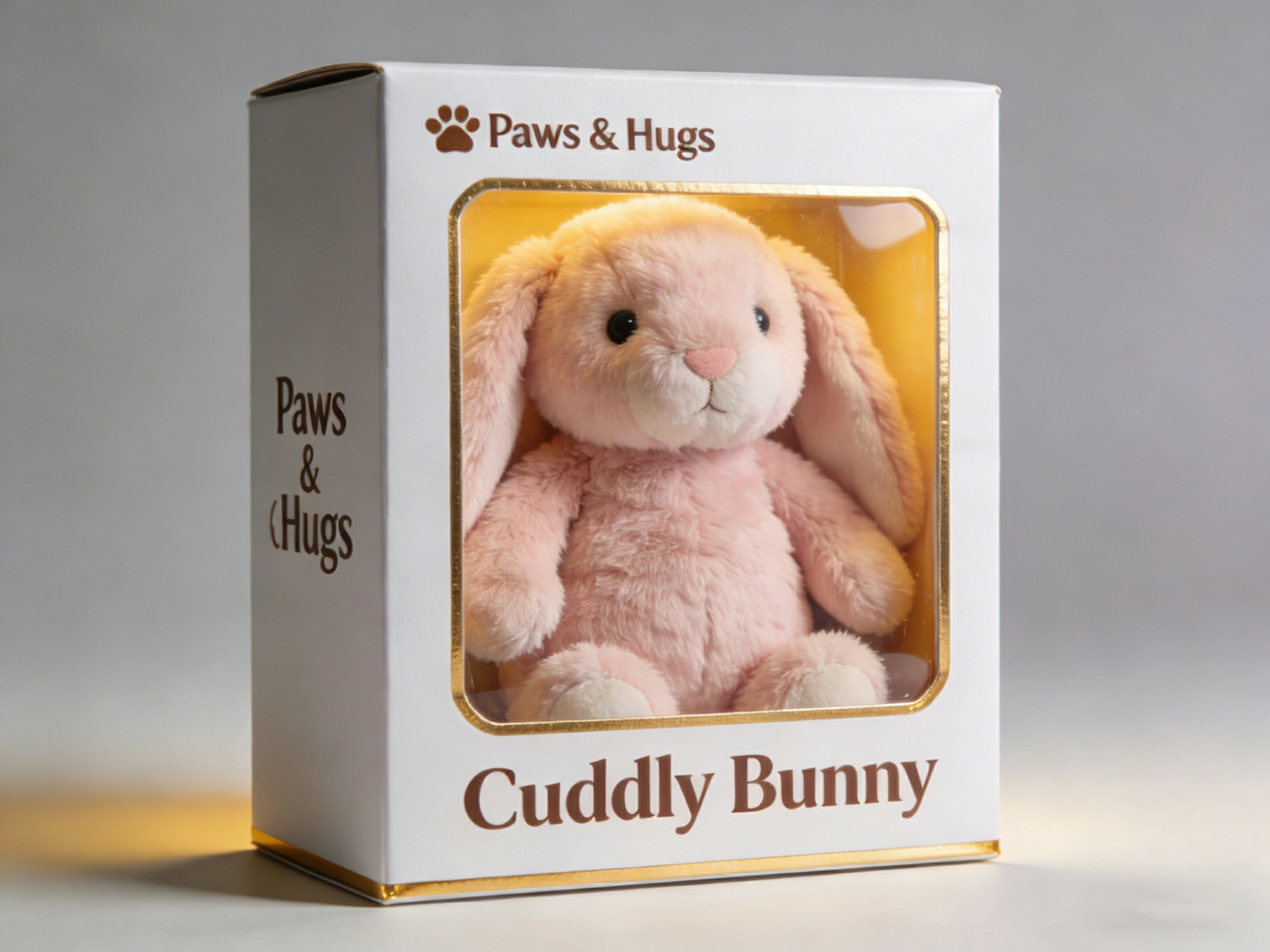
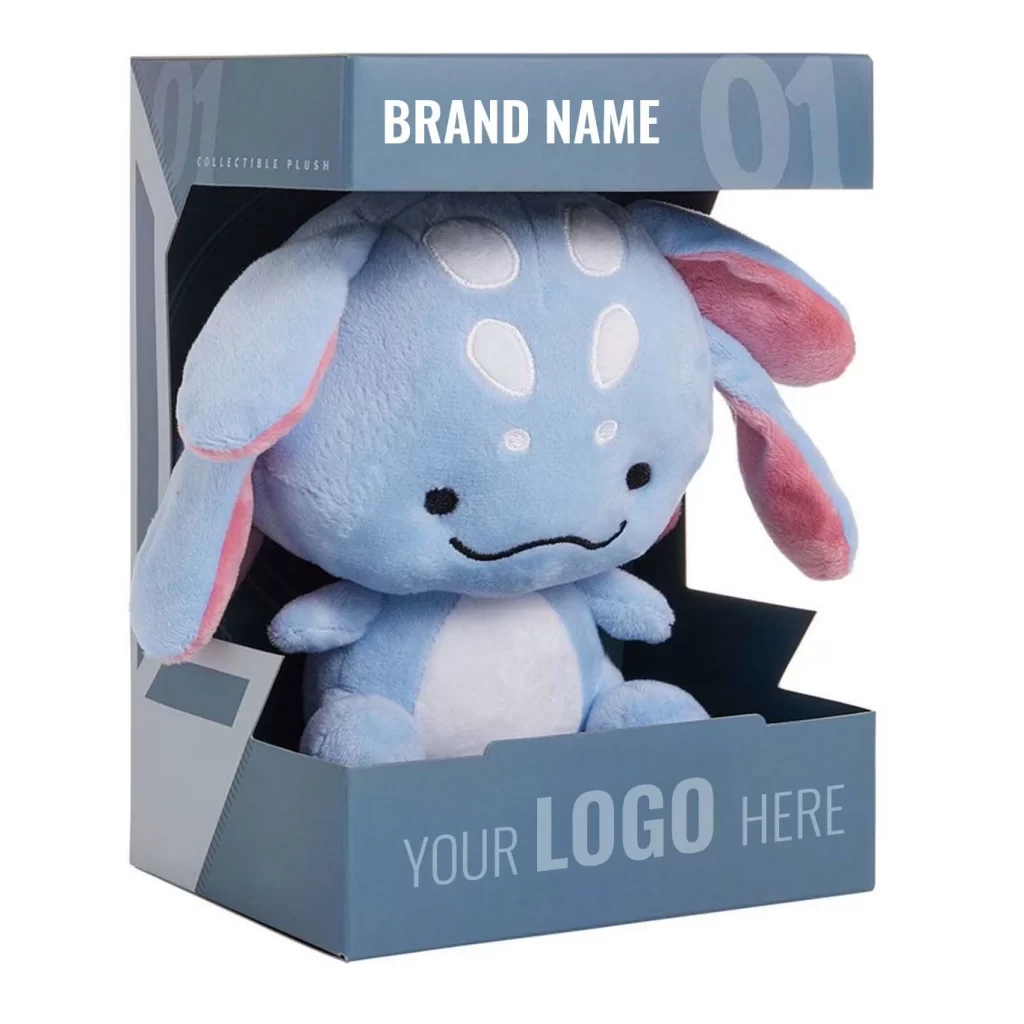
Boxes make the most sense when the package itself helps sell the plush. A window box lets customers see the face and fabric while keeping the toy contained. An open-front display box provides even more visibility, while a closed printed carton creates more graphic space for character stories, product information, and branded artwork.
For collectible plush or premium gift products, this additional display value can be important. The packaging can establish a series identity before the customer even touches the product. This is one reason packaging already plays an important role in collectible plush product planning rather than being treated as a final shipping accessory.
There is a tradeoff. A 25 cm plush may compress significantly in a bag but occupy almost its full dimensions inside a display box. That difference affects carton quantity, warehouse space, international freight, and sometimes packing labor. Buyers comparing two packaging quotations should therefore compare the packed-product volume, not only the price of the box.
Inserts Solve a Different Problem: Product Positioning
An insert does not need to provide all the protection. Its main job may simply be to control how the plush appears inside the package.
A paperboard backer can hold a small character upright. A folded card structure can create height beneath a short sitting plush. A simple paper cradle can prevent the toy from falling backward and exposing only the top of its head through a window.
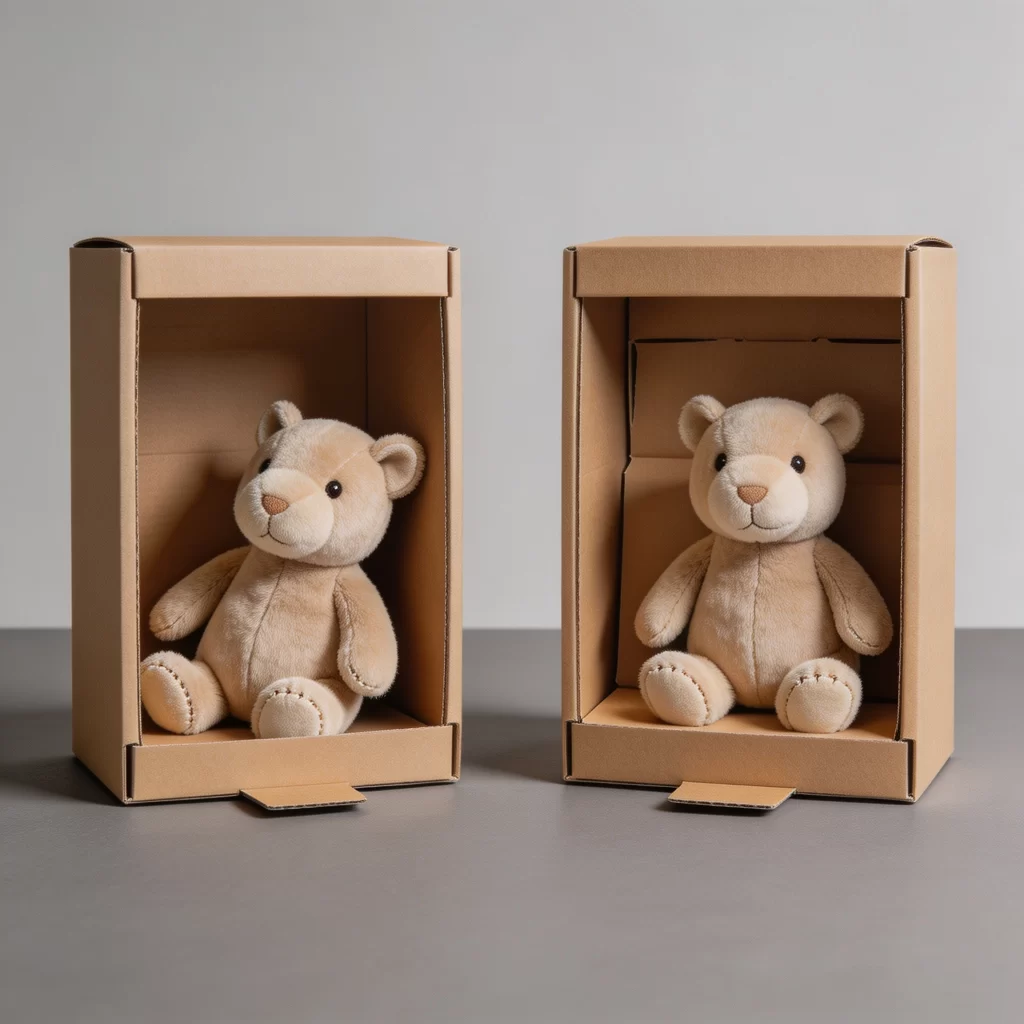
This is particularly useful when a standard rectangular box must contain an irregular plush shape. Instead of making the entire box smaller or adding excessive packaging material, an intelligently designed insert can use the existing space more effectively.
In our sampling experience, this is often where buyers underestimate packaging development. A box can have the correct dimensions and still look wrong because the plush rotates, leans forward, or disappears below the window during transport. The insert and fixing method should therefore be reviewed as part of the display system, not as separate accessories.
Display Value Comes From Fit, Visibility, and Hierarchy
Good packaging does not need more graphics. It needs the right information and the right amount of product visibility.
For plush products, three things usually determine display value: how much of the character can be seen, whether the face remains in the intended position, and whether the brand graphics compete with or support the product. A highly illustrated box may actually weaken presentation if it hides the most recognizable features of the plush.
Size relationship matters as well. Putting a small 10 cm plush inside an oversized box rarely makes it look more premium. Without a strong insert or intentional empty-space design, it can simply make the product appear smaller.
We usually recommend evaluating the package from normal customer viewing distance. If the character, product name, and brand cannot be understood quickly, adding more decorative elements is unlikely to solve the problem.
The Hidden Costs Buyers Miss in Custom Packaging
The packaging quotation is only one part of the real cost.
Custom printing may require its own setup, plate, die-cutting, proofing, or finishing charges. Window structures, sleeves, inserts, foil details, embossing, and special laminations can add additional operations. Packaging suppliers may also have production minimums that do not perfectly match the MOQ of the plush itself.
Assembly is another overlooked factor. Folding a carton, installing an insert, fixing the plush into position, closing the package, applying barcode labels, and then loading each unit into a master carton takes more time than placing a plush inside a simple bag.
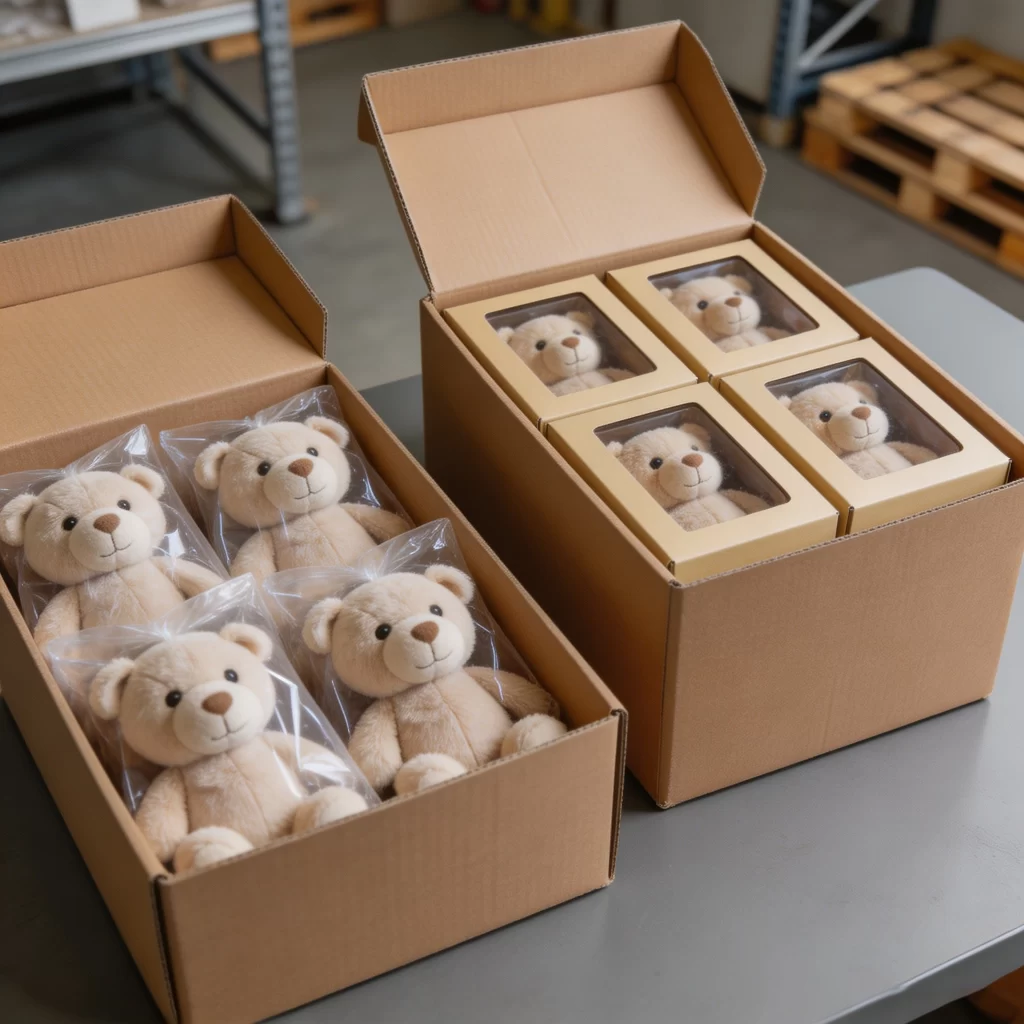
Shipping can create an even larger difference. Plush toys are naturally compressible, but boxes are not. A packaging design that looks inexpensive per piece can become costly once the shipment contains significantly fewer products per cubic meter.
For brands developing several characters, one practical solution is to standardize the main packaging structure and change only selected components. A common box combined with different sleeves, stickers, character cards, or inserts can sometimes reduce packaging SKU complexity without making every product look identical.
Approve Packaging With the Final Plush Sample
Packaging dimensions should be confirmed against a physical or final approved plush sample whenever possible.
Artwork dimensions alone are not enough. Stuffing changes thickness, the pile of the fabric adds volume, ears may sit at different angles, and tails or accessories can extend beyond the expected body outline. Even small differences can change whether a window sits correctly over the face or whether a carton closes without compressing the product.
One common sampling situation is a box designed around the nominal height of a sitting plush. After the final sample is stuffed, the body becomes slightly deeper and the tail pushes against the back panel. The carton may technically close, but the front panel begins to bow and the character is pushed too close to the window.
A white packaging mockup is often enough to detect this before full printing. Color, artwork, finish, barcode location, insert position, and final packing method can then be approved after the structural fit is confirmed.
Packaging considerations are already part of the sample-development workflow on the Wehao Toys site, where packaging design, labeling concepts, and presentation formats are evaluated alongside the product sample.
Retail Packaging and E-Commerce Packaging Need Different Logic
Retail packaging mainly has to survive storage, handling, shelf display, and transport through the retail supply chain. E-commerce packaging also needs to account for parcel handling, changing package orientation, drops, vibration, compression, and interaction with outer shipping packaging.
This does not mean every plush toy needs a heavy shipping box. Plush is relatively tolerant of impact compared with many rigid products. The more important question is whether the selected retail package can survive its real distribution route without crushing, opening, scuffing, or allowing the product to become badly deformed.
For products sold online, a brand may therefore use an attractive retail box inside a separate transport carton or mailer. Another product may use only a compact branded bag and an outer shipping carton. The right structure depends on what needs to reach the customer intact.
ISTA recommends selecting package tests according to the actual distribution channel and notes that package performance should be reconsidered when the product, package, materials, or process changes.
Branding and Compliance Need Space on the Same Package
Branded packaging often begins with the front panel, but B2B projects also need to plan the less exciting panels.
Depending on the product and destination market, space may be needed for company information, barcode or SKU labels, product identification, warnings, age information, traceability, material or recycling information, and retailer-specific labels. These requirements should be considered before the artwork becomes crowded.
For U.S. children’s products, CPSC tracking-label guidance states that identifying information must be ascertainable from permanent marks on the product and its packaging to the extent practicable. That can affect how much usable area remains for branding.
European packaging planning now also needs to consider Regulation (EU) 2025/40 on packaging and packaging waste, which applies from August 12, 2026. The regulation changes the framework around packaging and packaging waste across the EU, so environmental or packaging claims should not be added casually without checking the actual material, structure, documentation, and applicable requirements.
What to Include in a Plush Packaging Brief
Before requesting a detailed packaging quotation, buyers should ideally provide:
- final or estimated plush dimensions;
- expected order quantity and number of SKUs;
- target selling market;
- retail, e-commerce, promotional, collectible, or gift use;
- preferred packaging format;
- packaging reference images;
- artwork or brand guidelines;
- required barcode, SKU, label, or compliance information;
- whether the product must remain visible;
- delivery destination and preferred shipping method.
Not every detail has to be final at the quotation stage. However, giving the supplier the intended sales channel and packaging direction prevents the quotation from being based on a completely different structure.
Key Takeaways
Custom packaging ideas for plush toy brands should begin with how the product will be sold, displayed, stored, and shipped. Bags are usually efficient when volume and cost matter. Boxes create stronger retail and gift presentation, while inserts improve pose and visual control.
The biggest mistake is treating packaging as graphic design added after the plush is finished. Packaging affects unit cost, production MOQ, assembly, carton loading, freight, branding, and sometimes regulatory information. It should be developed alongside the final product rather than after bulk production has already started.
For many projects, the best packaging is not the most elaborate option. It is the structure that protects the plush, presents it correctly, supports the brand, and reaches the customer without creating unnecessary cost.
FAQ About Custom Packaging for Plush Products
Can one printed box be used for several plush characters?
Yes, if the characters have similar packed dimensions and can use the same structural layout. Brands can sometimes differentiate each SKU through stickers, sleeves, insert cards, or variable labels instead of printing a completely different box for every character.
Should barcodes be printed directly on the packaging?
Not always. Direct printing works well for stable SKUs and larger repeat orders, while barcode labels provide more flexibility during early product launches or when different retailers require different codes. Confirm the required barcode format and placement with the intended sales channel before printing.
Can a reusable drawstring bag replace a retail box?
It can for some gift, lifestyle, promotional, or direct-to-consumer products. However, it does not provide the same stacking, shelf-facing, or structural display function as a carton, so the choice should match the sales channel.
Can custom boxes be supplied flat?
Many folding-carton structures can be delivered flat before final assembly, which helps reduce storage space before packing. Rigid gift boxes and some special constructions cannot be flattened in the same way.
Can different packaging components have different MOQs?
Yes. Boxes, printed bags, hangtags, stickers, inserts, and labels may come from different production processes and therefore have different minimum quantities. This is worth checking before committing to a packaging concept with many custom components.
Should packaging colors be approved only from digital artwork?
For color-sensitive branded packaging, a physical print proof or production sample is more reliable. Paper stock, printing process, surface coating, and lamination can all change how a color looks compared with a monitor.
Is it acceptable to print “eco-friendly packaging” on the box?
Only when the claim can be supported by the actual packaging materials and applicable market requirements. Broad environmental claims should be reviewed carefully rather than used as general marketing language, especially for products entering regulated markets such as the EU.
Do all plush products need premium packaging?
No. Promotional products, online-only items, and large soft toys often gain little from expensive rigid packaging. Premium packaging makes more sense when presentation, gifting, collecting, or retail shelf value is important enough to justify the additional cost and shipping volume.
Planning Custom Packaging for Your Plush Project?
If you already have a plush design, packaging reference, or early retail concept, send the product size, estimated quantity, target market, sales channel, and preferred packaging style together with your artwork. Wehao Toys can review the plush and packaging as one project so that product fit, branding, inserts, labels, packing method, and shipping requirements can be considered before bulk production.
Contact Wehao Toys for a Custom Plush Toy Project