
Quick Answer
Yes, a stuffed animal may make bedtime easier for some adults by adding comfort, familiarity, and a consistent wind-down cue. However, there is not strong evidence showing that an ordinary stuffed animal directly improves sleep quality or treats insomnia.
Direct research is surprisingly limited. A systematic review of plush toys and sleep in adults found no statistically significant improvement in total sleep time compared with usual care. So the better question is not whether a plush toy “causes better sleep.” It is whether it helps a person feel comfortable enough to settle into sleep more easily.
Searches such as “stuffed animals for adults sleep” often mix two questions together: is sleeping with one normal, and can it actually help? Sleeping with a plush as an adult is not unusual. Whether it improves sleep depends much more on the person, the bedtime routine, and the design of the plush itself.
A Stuffed Animal May Help the Bedtime Routine More Than Sleep Itself
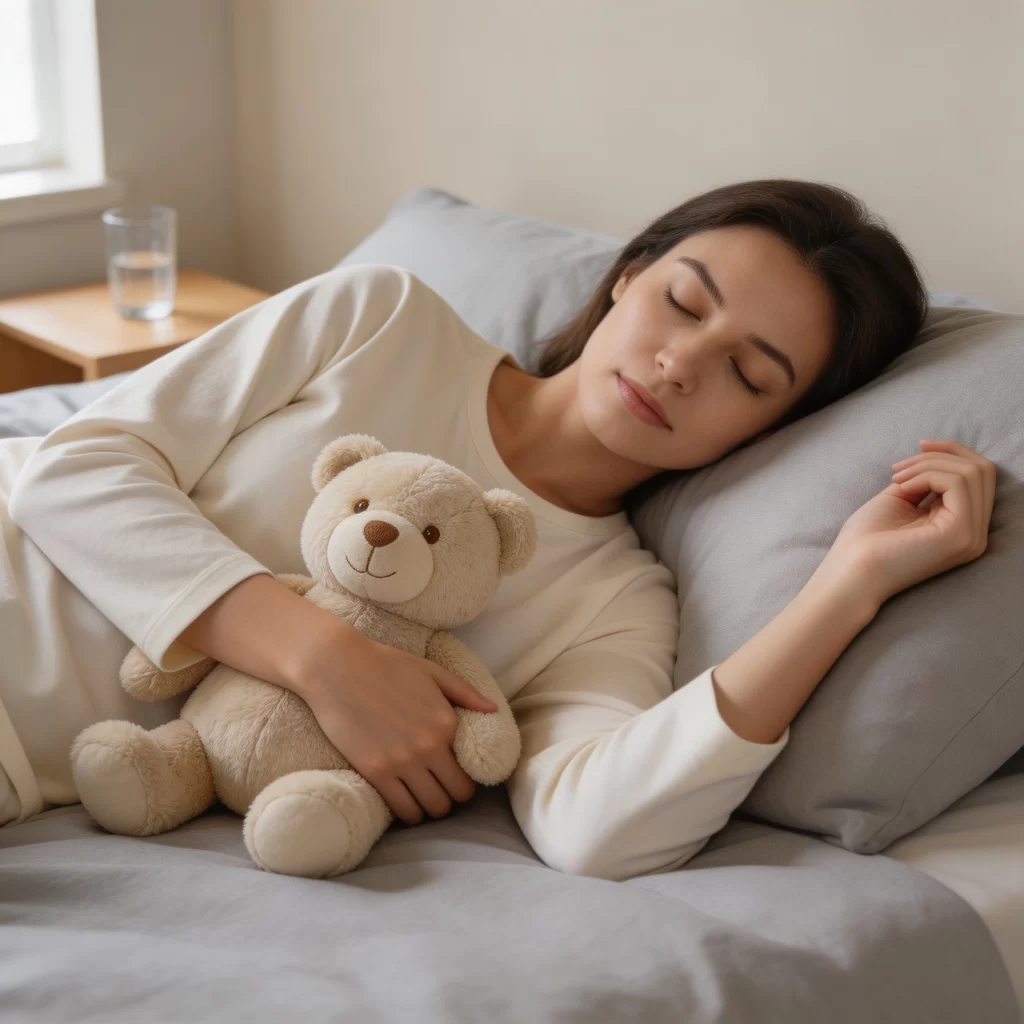
One useful way to understand a comfort stuffed animal is as part of a bedtime routine.
A consistent bedtime routine gives the brain repeated signals that active parts of the day are ending. Sleep guidance commonly recommends creating a predictable wind-down period before going to bed rather than expecting sleep to happen instantly.
A familiar plush can become one of those signals.
Someone may finish reading, put away a phone, turn off the main light, and pick up the same stuffed animal before sleeping. After enough repetition, the object becomes associated with that quiet part of the evening.
That does not mean the plush changes sleep physiology.
It means the object may support a routine that already helps the person shift from activity to rest.
This distinction matters, especially for brands developing adult wellness or bedtime products.
What a Comfort Stuffed Animal Can Realistically Change
A plush cannot control how long someone sleeps. It can change the physical experience around bedtime.
For some adults, the value comes from familiar touch and repeated use, which is also central to how an emotional support stuffed animal is designed around comfort rather than medical treatment.
A well-designed adult bedtime plush may provide:
- A familiar tactile point. Holding the same soft object can make an unfamiliar or quiet environment feel more familiar.
- Something comfortable to hold. Some sleepers naturally prefer having their arms wrapped around a pillow, blanket, or plush.
- A clear bedtime cue. Repeated use can make the plush part of a personal sleep routine.
- Portable familiarity. A smaller sleep plush can travel between home, hotels, dorms, or other sleeping environments.
There is an important tradeoff.
A plush that feels comforting for ten minutes on a sofa may become uncomfortable after several hours in bed. An oversized head can push against the chin. A firm belly can force the arms apart. Long plush pile may feel warm around the face.
That is why a sleep plush toy should be designed for prolonged contact, not simply for shelf appearance.
What Does the Research Actually Say?
The evidence needs to be separated into three different areas.
| Evidence | What It Suggests | What It Does Not Prove |
|---|---|---|
| Direct adult plush research | Research exists, but it is very limited | Regular plush toys are proven sleep treatments |
| Bedtime-routine research | Consistent wind-down habits can support preparation for sleep | A stuffed animal itself causes better sleep |
| Weighted-product research | Some populations report benefits from weighted products | A weighted stuffed animal will work for every adult |
The 2022 adult sleep review is particularly useful because plush toys were included directly. Four studies involving 381 older adults were analyzed, but the researchers found no significant difference in nighttime total sleep time among robots, plush toys, and usual care. The authors also noted major limitations in the available evidence.
Weighted products have somewhat more research, but most of that evidence concerns weighted blankets rather than weighted stuffed animals. A review of research on weighted blankets and sleep reported possible improvements in some sleep outcomes among psychiatric inpatient and outpatient populations, but that evidence cannot simply be transferred to every adult or every weighted plush design.
So a realistic conclusion is:
A plush may improve the experience of going to bed without necessarily changing measurable sleep outcomes.
For many product concepts, that is already a meaningful value proposition.
The Best Adult Bedtime Plush Is Designed Around the Body, Not Just the Artwork
This is where custom plush development for a sleep-focused product becomes different from designing an ordinary decorative character.
Hug-Friendly Shape
A visually impressive plush can still be uncomfortable to hold.
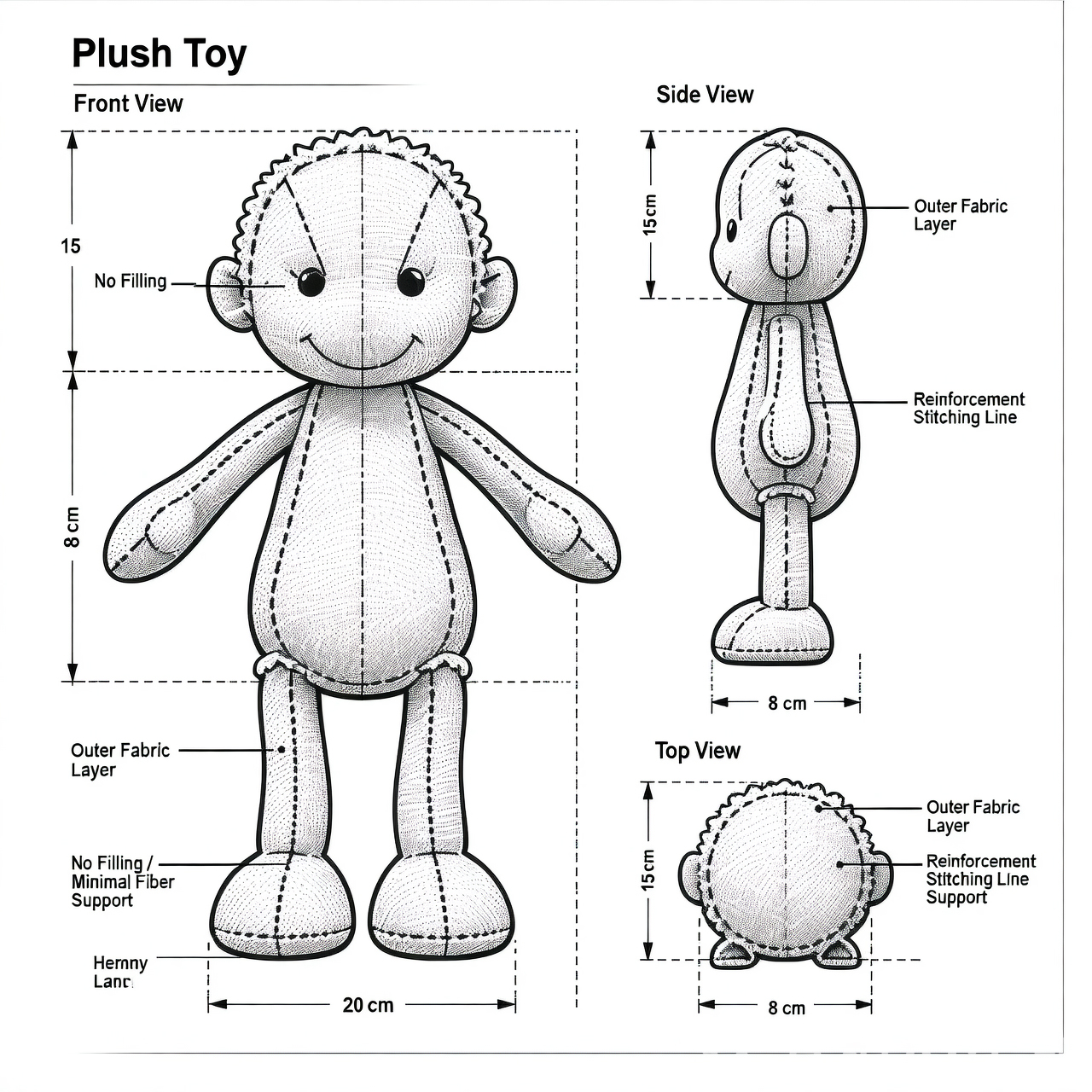
For an initial adult bedtime concept, we often prefer a medium, rounded body instead of thin limbs and a heavily oversized head. A roughly 30–45 cm prototype can be a useful starting range for evaluating hug feel, although the final size should match the intended use.
The body should give the arms somewhere natural to rest.
Moderate Stuffing Works Better Than Maximum Fullness
Buyers often associate more filling with higher quality.
For a sleep plush, that can be a mistake.
An overfilled belly becomes firm. The product starts behaving more like a solid cushion than a soft stuffed animal. It may photograph well, but feel awkward against the chest.
In our sampling experience, moderate filling with controlled shape usually works better than simply increasing stuffing volume.
Surface Texture Matters During Long Contact
A sleep plush may touch the hands, arms, neck, or face for hours.
That makes fabric behavior more important than it is for a decorative plush.
Short or medium-pile plush and soft minky-style surfaces can provide a smooth feel while keeping the shape visible. Very long pile may look extremely cozy in photography but can feel warmer, flatten during repeated use, and make cleaning more difficult.
Remove the Details the User Can Feel
Hard plastic eyes, metal accessories, thick embroidered patches, stiff clothing, exposed zippers, and rough labels deserve extra attention.
They may be harmless visually but irritating in bed.
For sleep-oriented products, we usually prefer embroidery and soft construction in the main contact areas.
Even label position matters.
Cleaning Is Part of Comfort
An adult bedtime plush is likely to have more frequent skin and bedding contact than a collectible plush.
The care method should therefore be decided during development rather than added to the label at the end.
A plush that stays soft but takes too long to dry can be impractical. A machine-washable concept sounds attractive, but the seams, embroidery, stuffing recovery, and internal components must actually support that claim.
Regular vs Weighted Sleep Plush: They Solve Different Problems
A regular comfort plush and a weighted plush should not be treated as interchangeable products.
| Design Point | Regular Sleep Plush | Weighted Sleep Plush |
|---|---|---|
| Main Feel | Soft and lightweight | Soft with noticeable weight |
| Internal Structure | Mostly fiberfill | Fiberfill plus secured weighted section |
| Repositioning | Easy | Requires more effort |
| Cleaning | Usually simpler | Can become more complicated |
| Shipping | Lower weight | Higher freight cost |
| Sampling Risk | Shape and stuffing balance | Shape plus weight distribution and pouch security |
| Best Positioning | Comfort and bedtime routine | Grounded holding experience |
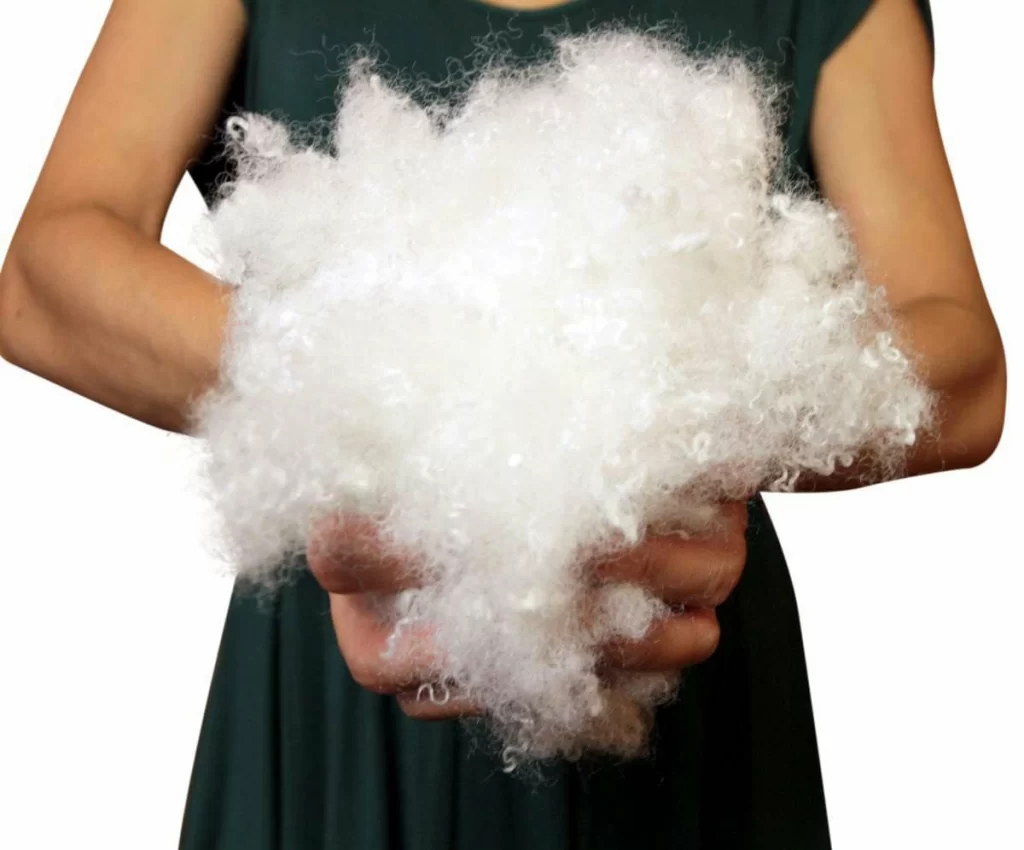
A weighted plush can feel more stable against the body, but whether weighted stuffed animals are worth it also depends on weight distribution, cleaning, internal construction, and the user’s intended experience.
The weighted section cannot simply be mixed through ordinary fiberfill. Its position, containment, seam load, cleaning method, and movement inside the body all need evaluation.
For brands unsure whether weight is essential, at Wehao Toys, we usually recommend proving the basic comfort shape first and adding a weighted system only when it is central to the product concept.
That prevents an expensive internal feature from trying to compensate for an uncomfortable outer design.
What Brands Often Get Wrong With Adult Sleep Plush
The biggest mistake is thinking “sleep plush” means adding more comfort features.
Often, fewer features work better.
A project can become unnecessarily complicated through scented inserts, removable heating packs, electronics, speakers, long-pile fabrics, pockets, weighted filling, and decorative accessories.
Each feature may add a benefit, but it can also add:
- another hard point inside the toy
- another sampling variable
- more difficult washing
- higher material and assembly cost
- greater shipping weight
- additional failure points
- longer revision cycles
Another common mistake is making an adult product look too juvenile.
Adult buyers may still want cute products, but “cute” does not always mean bright colors, oversized cartoon eyes, and childlike graphics. Muted colors, simple expressions, clean silhouettes, and subtle embroidery often fit adult bedrooms more naturally.
The third mistake is putting the claim before the product.
Calling something an “insomnia plush” does not make it more effective.
A Better Way to Evaluate a Sleep Plush During Sampling
Product photos are not enough for this category.
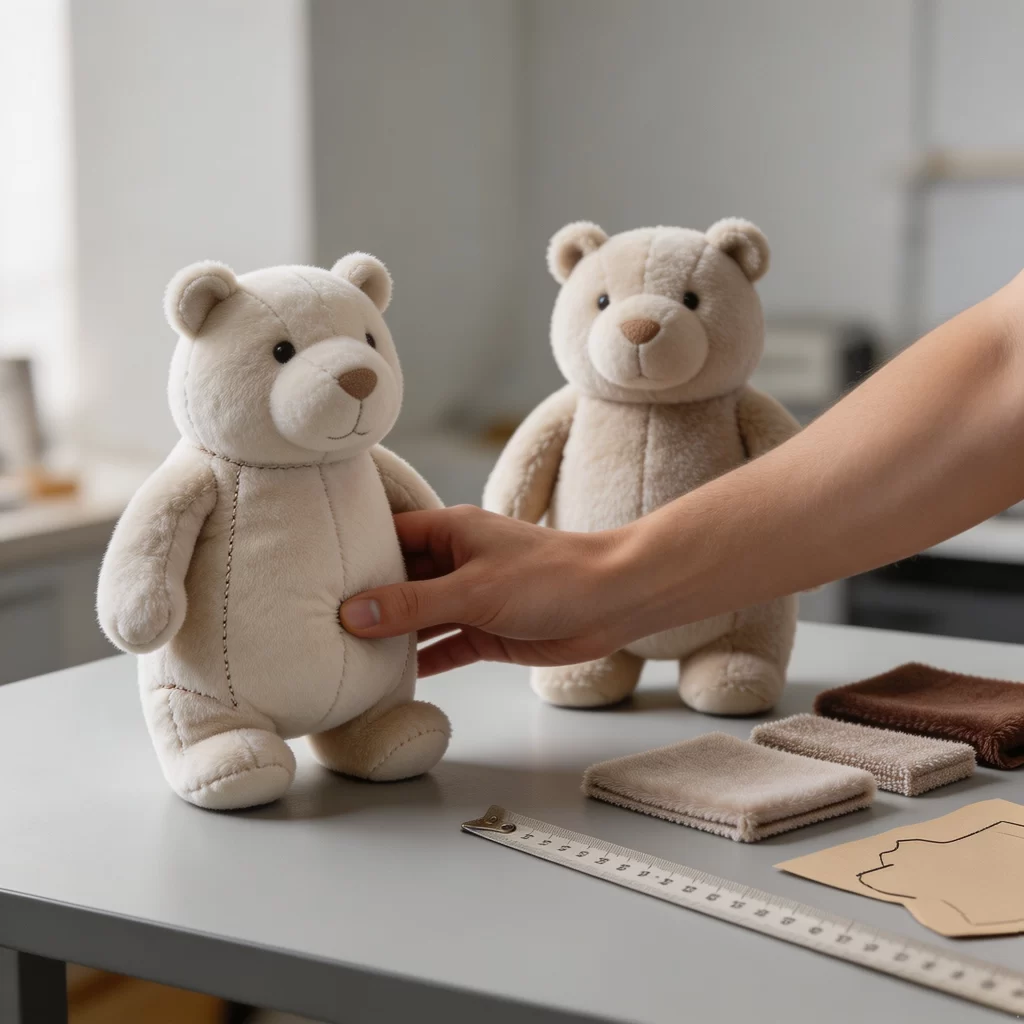
During development, we recommend a simple bedside-use review in addition to normal sample inspection.
Hold the prototype in the positions a user is likely to use it: sitting, reclining, lying on the side, and holding it against the chest.
Then check:
- whether the arms fall naturally around the body;
- whether any seam, embroidery, label, or accessory creates a pressure point;
- whether the plush is easy to reposition with one hand;
- whether repeated squeezing changes the stuffing distribution;
- whether the product returns to its intended shape after the planned cleaning method.
For weighted designs, also rotate and lift the sample repeatedly to see whether the weighted insert migrates toward one side.
This is not a medical test or formal safety test.
It is a practical product-development check that can reveal problems a front-view approval photo will never show.
For custom projects, these checks are best resolved through a structured custom plush toy sampling process rather than after bulk production begins.
Keep Comfort Claims Separate From Medical Claims
For the U.S. and European markets, adult-focused plush products should be positioned around the experience they can reasonably deliver.
Useful descriptions include:
- bedtime comfort plush
- soft sleep companion
- cuddle plush
- rest companion
- adult bedtime plush
- hug-friendly plush
Claims such as “cures insomnia,” “treats anxiety,” or “guarantees better sleep” require a very different level of evidence and should not be casually attached to a stuffed toy.
The product may genuinely be loved by customers.
That still does not make it a medical treatment.
If the same product is later intended or marketed as a children’s toy, the compliance question also changes. In the United States, manufacturers and importers should review applicable CPSC toy safety requirements, including relevant ASTM F963 and CPSIA obligations. For toys placed on the European Union market, brands should also follow the EU requirements for placing toys on the market and the applicable conformity process.
Key Takeaways
A stuffed animal can make bedtime feel more comfortable for some adults, but current evidence does not justify calling it a proven sleep treatment.
The strongest product value usually comes from routine, tactile familiarity, hug feel, and practical comfort.
For brands researching stuffed animals for adults sleep, the design question is therefore more useful than the medical question: does this product remain soft, comfortable, washable, easy to hold, and pleasant after repeated nightly use?
A good sleep plush does not need to promise more.
It needs to be a product people naturally want beside them every night.
FAQ About Stuffed Animals for Adults and Sleep
Is it normal for adults to sleep with stuffed animals?
Yes. Adults may keep a plush for comfort, nostalgia, habit, decoration, or simply because they prefer holding something while sleeping. Age alone does not determine whether a stuffed animal is useful or appropriate.
Can a stuffed animal replace a body pillow?
Not automatically. A plush can provide something to hold, but it is not necessarily designed to provide the same size, shape, or body support as a purpose-built pillow.
Is a bigger stuffed animal better for sleeping?
Not always. Very large plush toys can take up more bed space, trap more heat, and become harder to reposition or wash. The better size depends on whether the user wants a small companion, chest-hugging plush, or pillow-style design.
Should an adult bedtime plush be machine washable?
Machine washability can be useful for frequently handled products, but it should only be claimed when the actual construction supports it. Brands should test fabric appearance, stuffing recovery, seams, embroidery, and drying behavior on the finished sample.
Can a weighted stuffed animal be marketed as a sleep aid?
It can be positioned around a weighted or grounded holding experience, but brands should avoid guaranteeing improved sleep without suitable evidence. Research on weighted blankets should also not automatically be presented as evidence for a weighted plush.
Can the same sleep plush be sold to adults and children?
Potentially, but intended users affect compliance. In the U.S., toys intended primarily for children 12 and under may require applicable third-party testing and certification under U.S. toy safety requirements. Products intended as toys in Europe should also be evaluated under the applicable EU toy safety requirements before being placed on the market.
Planning an Adult Comfort or Bedtime Plush Product?
If you are developing an adult comfort plush, bedtime companion, weighted plush, or wellness-focused stuffed animal, start with the real use scenario rather than adding features immediately. Share your concept, preferred size, target feel, artwork, expected quantity, sales market, and any ideas for weight or washable construction. We can review the design from a plush-development and sampling perspective before you commit to production. Contact Wehao Toys for a Custom Plush Toy Project and send us the details you already have.