1. Why Unit Price Alone Is a Dangerous Metric When Comparing Plush Quotes
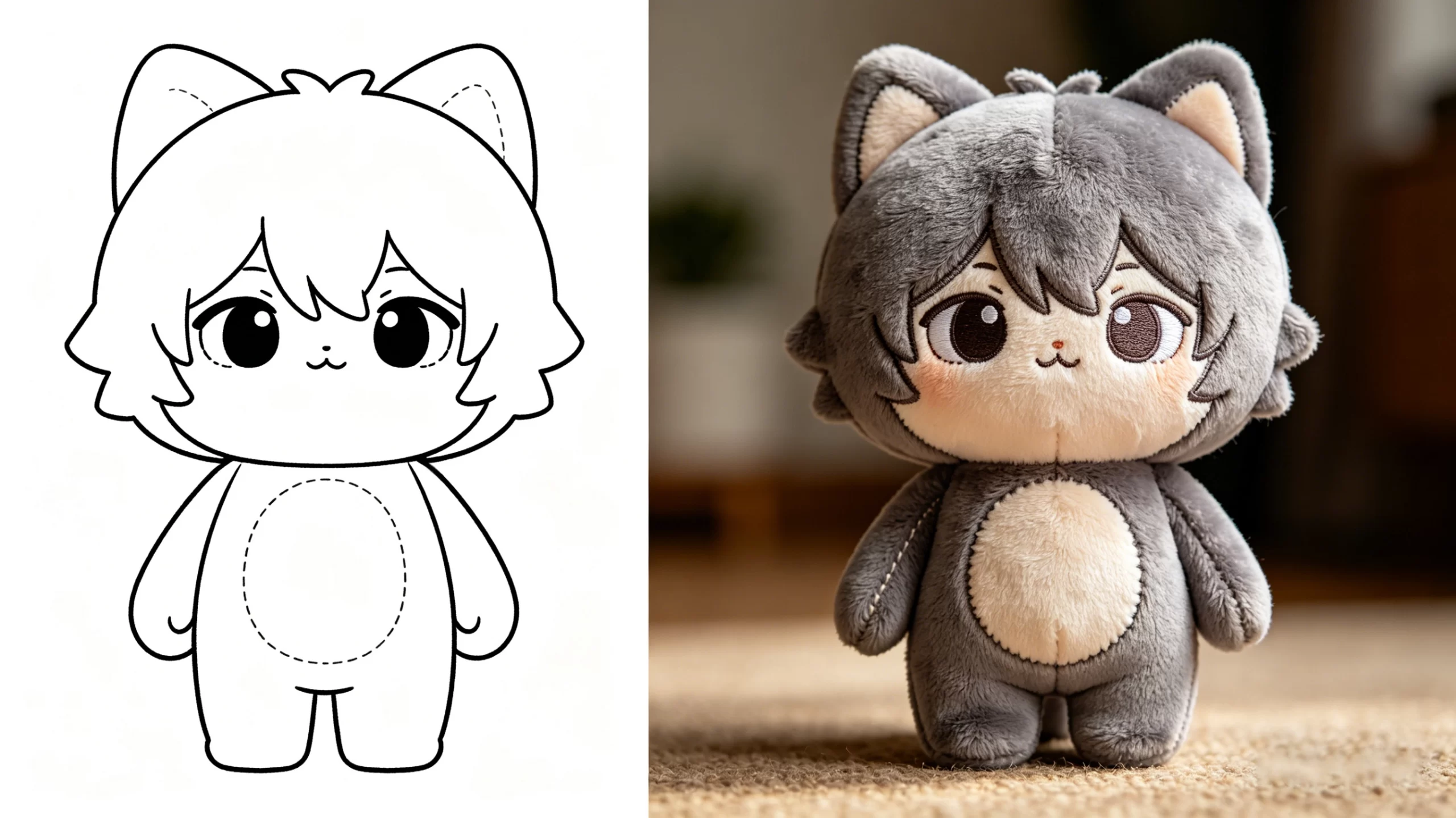
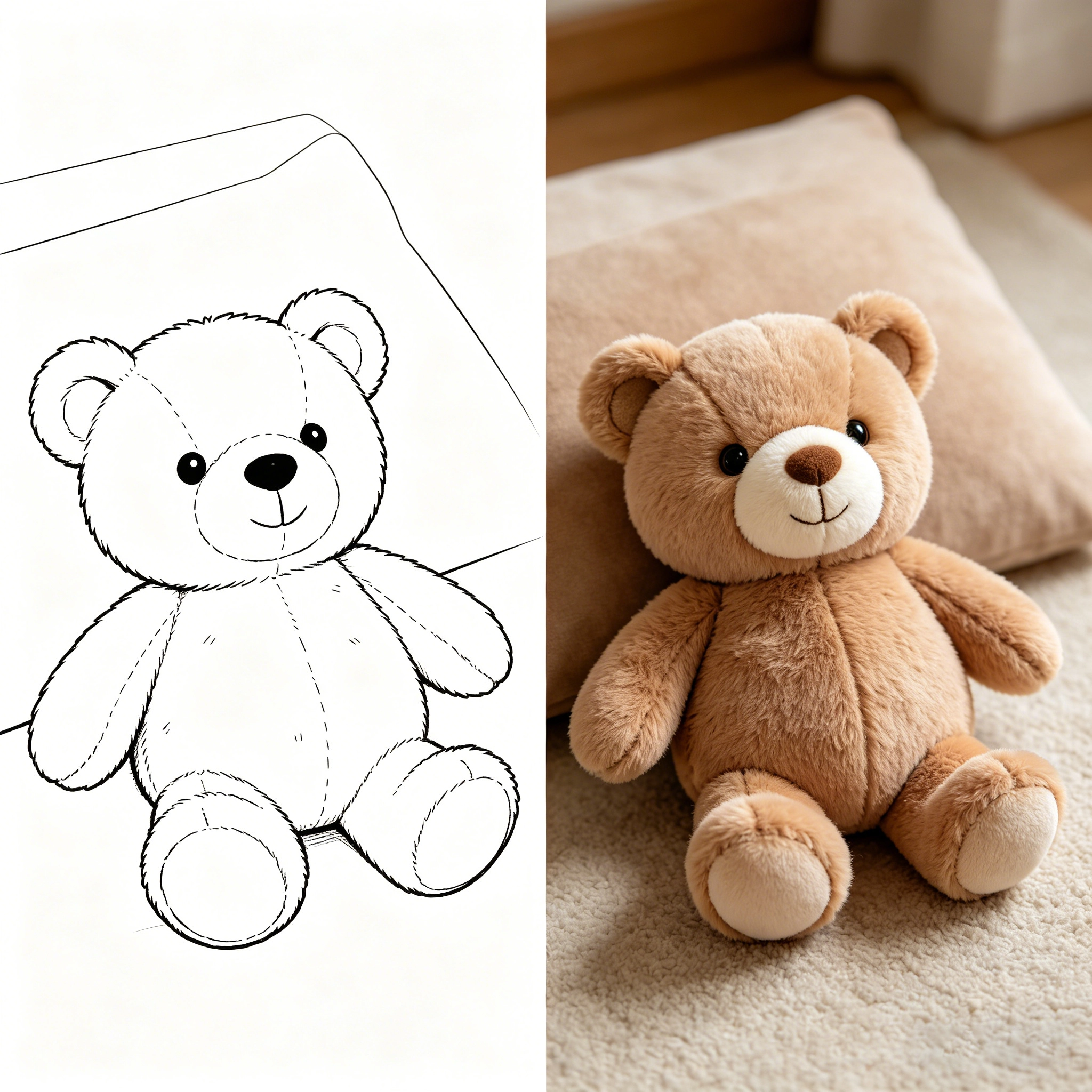
When procurement managers request bids from three different factories for the exact same 25 cm mascot sketch, it is common to receive unit prices ranging from $2.80 to $4.60 per piece. For buyers asking how to compare custom plush toy quotes effectively, the biggest sourcing mistake is assuming that the lowest unit figure represents the most efficient factory. In cut-and-sew textile manufacturing, wide price gaps almost always reflect unstated differences in material density, pattern complexity, internal stuffing purity, and commercial trade terms.
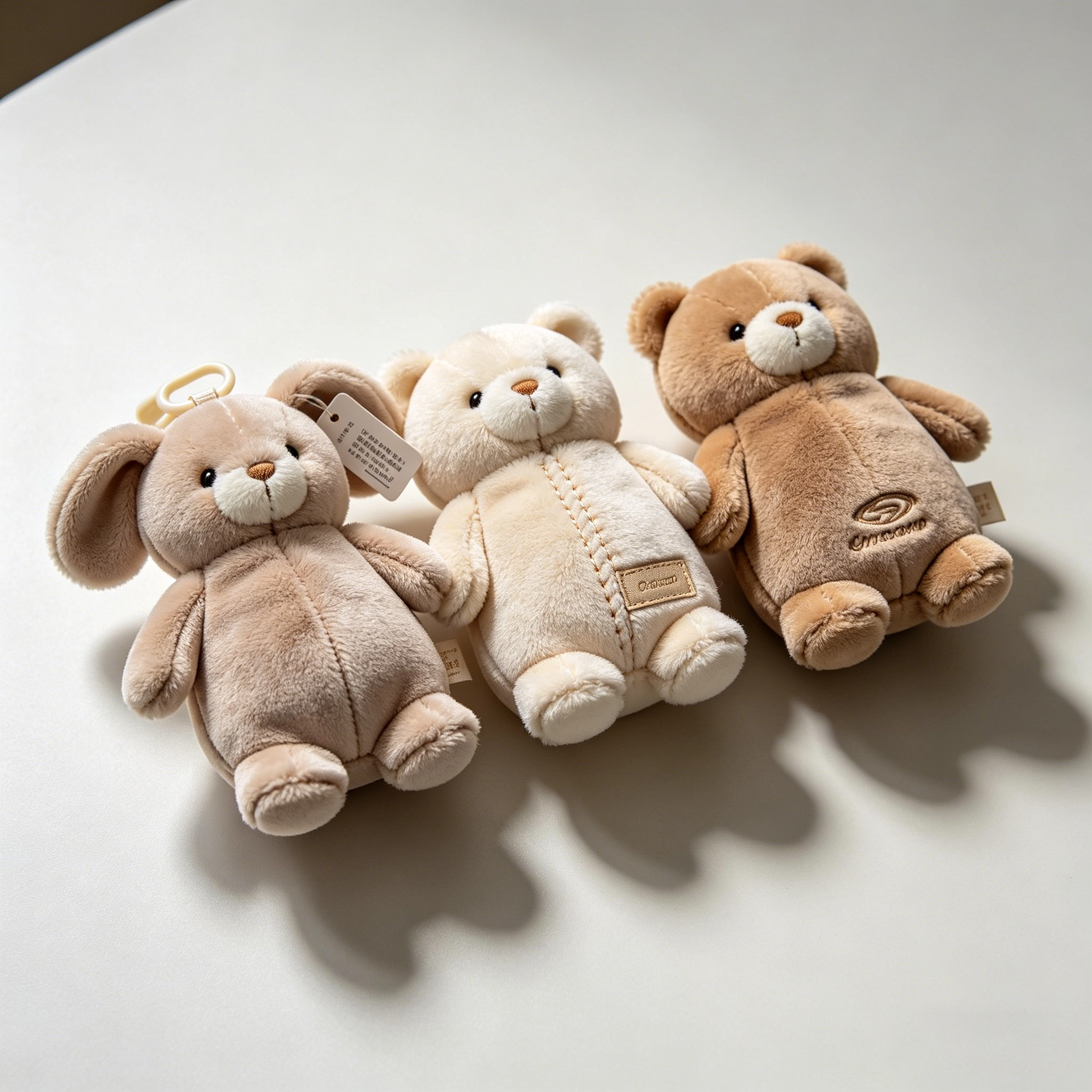
A meaningful plush toy quotation comparison requires auditing the underlying Bill of Materials (BOM) and service scope line by line. One supplier may quote an Ex Works (EXW) price using thin 210 GSM tricot-backed velboa, recycled hollow fiber, and screen-printed eyes, while another quotes Free on Board (FOB) pricing inclusive of 320 GSM spandex minky, virgin 7D siliconized fiberfill, computerized satin embroidery, and export carton packing. Without locking down identical technical specifications upfront, buyers end up comparing fundamentally different products.
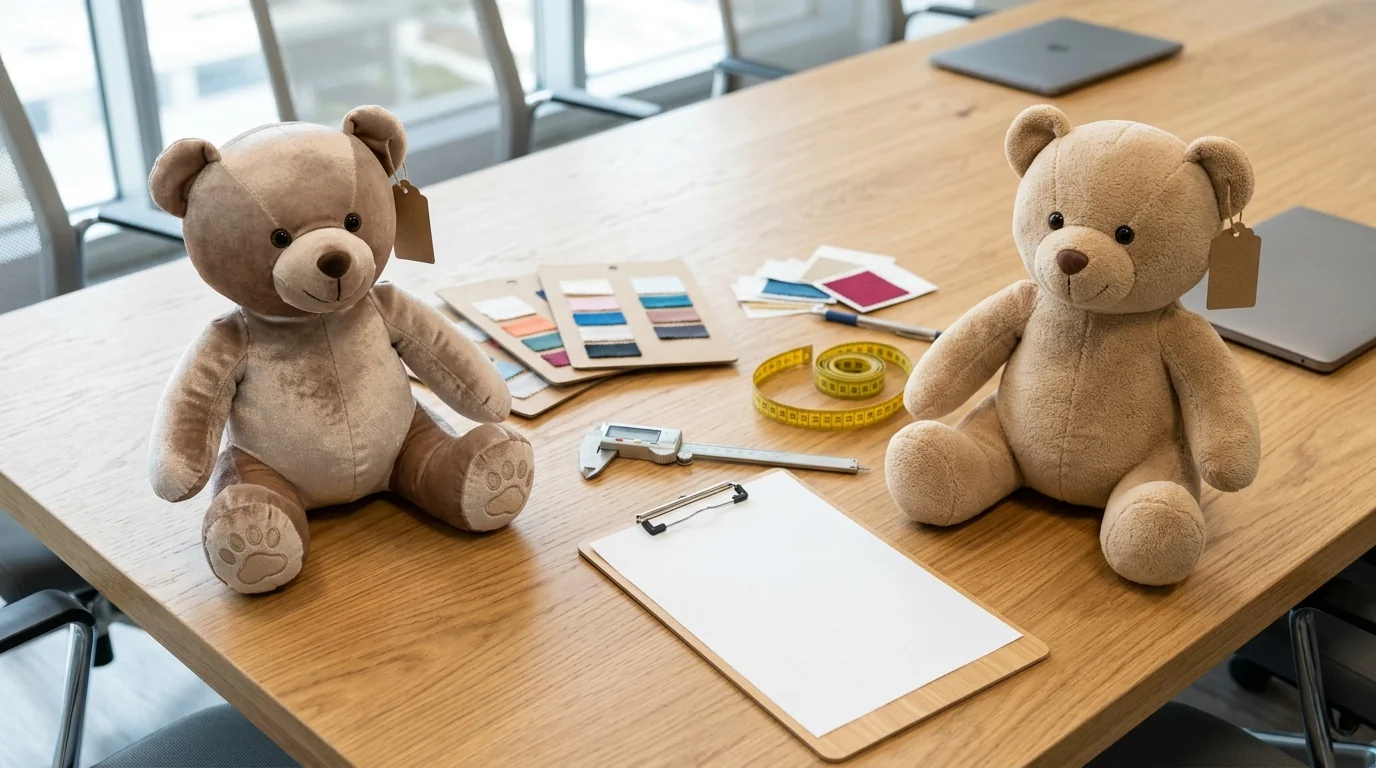
To eliminate guesswork, experienced brand teams standardize their Request for Quotation (RFQ) packages before approaching a custom plush toys OEM manufacturer. Establishing a transparent baseline across fabrics, stitch counts, accessories, and trade terms ensures every supplier bids on the exact same quality tier.
2. Auditing Material & Construction Specs Behind Custom Plush Manufacturing Costs
Raw textiles and labor account for roughly 65% to 75% of custom plush manufacturing costs. When a quotation looks unusually low, factories have typically substituted lower-tier materials that only become obvious once physical pre-production samples arrive. Answering how can buyers compare plush quotes using the same specifications starts with defining four core physical variables in your tech pack:
- Shell Fabric Weight (GSM) & Pile Density: Standard crystal velboa ranges from 220 GSM (thin, prone to showing backing seams when stuffed firmly) to 300+ GSM (plush, opaque, and durable). Always require suppliers to state exact fabric type, pile length in millimeters, and weight in grams per square meter.
- Internal Stuffing Grade (Virgin vs. Recycled PP Cotton): Virgin 7D/15D conjugated hollow siliconized polyester fiber offers superior resilience and recovery after vacuum packing, whereas ungraded recycled fiberfill costs 25% to 35% less but clumps easily and feels coarse.
- Embroidery Stitch Count vs. Printed Details: High-density satin embroidery for eyes, mouths, and logos is billed by total stitch count (per 1,000 stitches) and machine run time. Substituting heat-transfer printing lowers unit cost but reduces tactile quality.
- Pattern Panel Count & Seated vs. Standing Measurement: A complex 18-panel character takes nearly twice as much sewing labor as a simplified 6-panel pillow plush. Furthermore, confirm whether a ’25 cm’ quote measures total stretched length (ears to toes) or seated height.
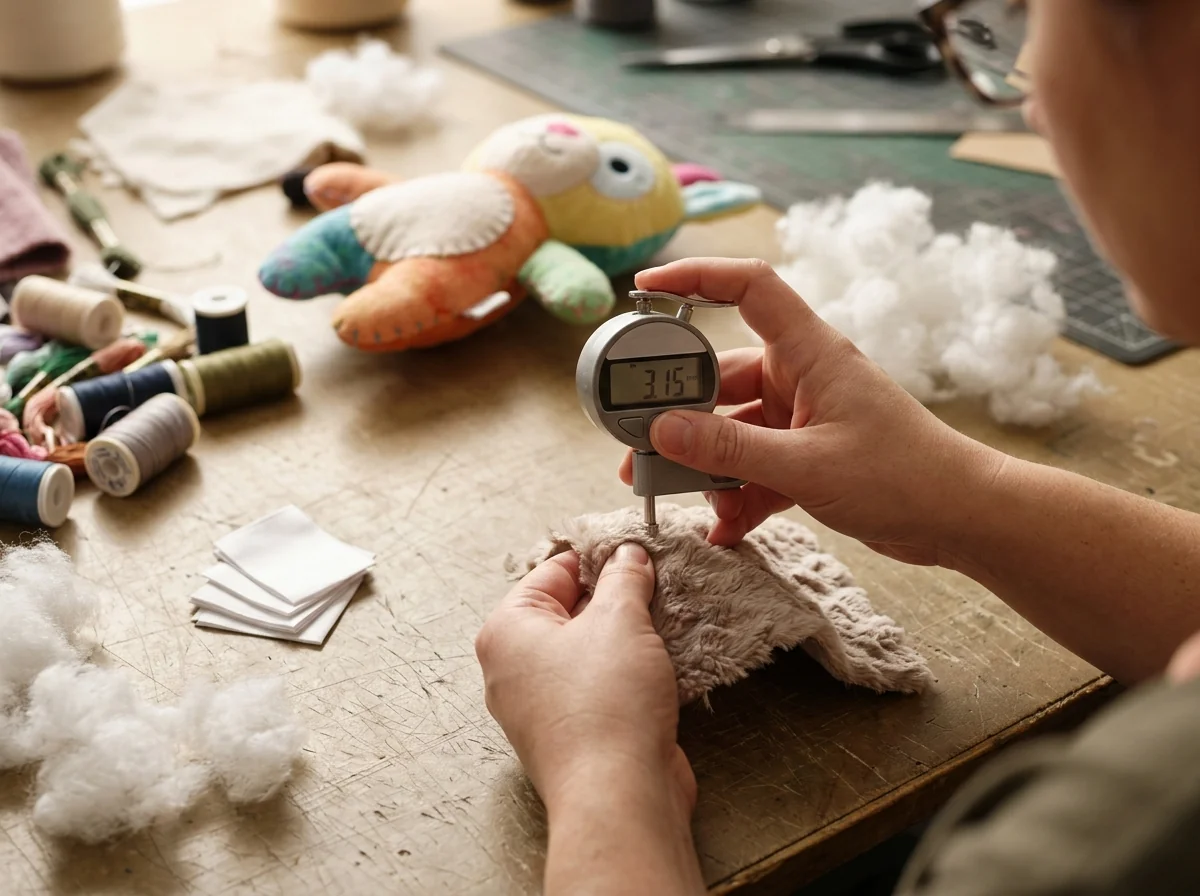
During initial custom plush development and fabric sourcing, requesting labeled fabric swatch cards alongside the written quotation allows your product team to verify hand-feel, stretch recovery, and backing stability before paying for bulk materials.
3. What Hidden Costs Should a Plush Toy Quotation Include?
First-time importers frequently encounter budget overruns because ancillary setup, tooling, and packaging charges were omitted from the initial unit price sheet. When asking what hidden costs should a plush toy quotation include, buyers should audit every supplier proposal against the following breakdown:
| Cost Category | Often Omitted in Low Quotes | Transparent OEM Quote Standard | Typical Cost Impact |
|---|---|---|---|
| Plush Toy Sampling Fees | Revision rounds billed extra per change | Includes 3D pattern drafting + 1–2 revision rounds; often refundable on bulk order | $80 – $200 per SKU upfront |
| Small-Lot Fabric Dyeing Surcharges | Assumes stock colors; charges dye vat fee later | Explicitly states whether PMS color requires a mill dyeing surcharge below MOQ | $150 – $300 per custom color |
| Molds & Embroidery Digitizing | 3D plastic eye molds or complex logo tape setup | Itemizes one-time embroidery digitizing or custom hardware tooling fees | $50 – $500 one-time setup |
| Labels, Hangtags & Inner Packing | Quotes naked toy only without polybag or labels | Includes woven tush label, CPSIA tracking label, hangtag, and individual polybag | $0.12 – $0.35 per unit |
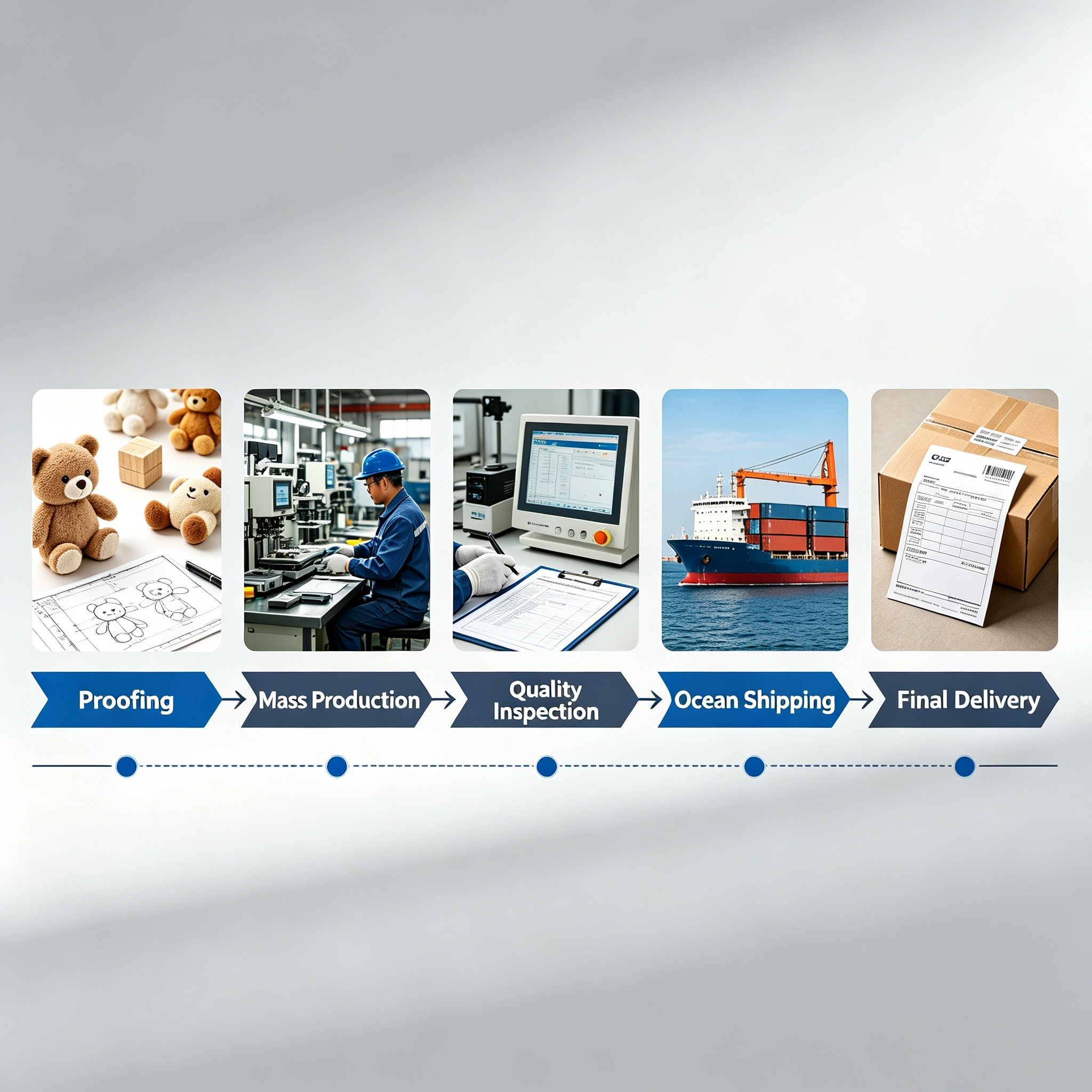
| Export Trade Terms (EXW vs. FOB) | Quotes EXW factory gate (excludes local port trucking/customs) | Quotes FOB main port inclusive of origin trucking, port handling, and export declaration | $0.15 – $0.45 per unit on small runs |
Pay special attention to trade terms defined under official ICC Incoterms 2020 rules. On a 1,000-piece order, an Ex Works (EXW) quote leaves you responsible for domestic trucking from the factory to the port of loading, export customs brokerage, and origin terminal handling charges—fees that can easily add $400 to $700 in unexpected origin bills compared to an all-inclusive Free on Board (FOB) quotation.
4. Evaluating Compliance, Lab Testing, and Quality Control Inclusions
Another critical area where quotes diverge is chemical and mechanical safety compliance. A rock-bottom quotation may utilize uncertified stock fabrics and non-compliant inks that fail third-party laboratory testing for lead, phthalates, or azo dyes. Replacing rejected fabric after bulk cutting is far more expensive than sourcing compliant materials from day one.
Buyers should confirm whether the supplier’s raw material pricing guarantees compliance with plush toy safety standards and chemical regulations. Specifically, verify whether third-party laboratory testing fees—covering U.S. CPSC and ASTM F963 toy safety testing or European EN 71 harmonised toy safety standards—are itemized separately or bundled into the order, and ensure that 100% metal needle detection and AQL 2.5 pre-shipment inspection are standard factory inclusions.
5. Frequently Asked Questions (FAQ)
Q: How do I compare quotes from custom plush toy manufacturers when their prices differ by 40%?
A: Request an itemized cost breakdown specifying exact fabric GSM, virgin vs. recycled fiberfill weight in grams, total embroidery stitch count, packaging components, and EXW vs. FOB Incoterms. Ordering physical prototypes from your top two shortlisted suppliers is the most reliable way to see where material corners were cut.
Q: Are plush toy sampling fees refundable when we place a bulk production order?
A: Many established OEM manufacturers charge $100 to $150 per design to cover pattern maker labor, small-yardage fabric sourcing, and embroidery digitizing, and then credit or refund the sampling fee once your bulk order reaches the standard MOQ (typically 1,000 to 2,000 pieces).
Q: What is a Dye Vat Fee (Upcharge) in a custom plush quotation?
A: Textile mills require minimum dyeing vats (often 300 to 500 kg of fabric) to custom-dye a specific Pantone shade. If your plush order only consumes 80 kg of that color, the mill charges a small-vat surcharge of $150 to $250, which transparent suppliers disclose upfront or help you avoid by offering close stock colors.
Q: Does a standard factory quote include woven brand labels and retail hangtags?
A: A complete OEM quote usually includes a standard 1-color printed wash/tracking label and an individual clear polybag, whereas custom multi-color woven satin labels, die-cut paper hangtags, and printed retail boxes are priced according to your artwork dimensions and print finishes.
Q: Why should I ask for the stuffed weight (in grams) on a plush toy quote?
A: Two 25 cm plush toys made from the exact same pattern can feel completely different if one is stuffed with 110 grams of fiberfill and the other with 165 grams. Specifying target net weight in grams prevents under-stuffing and ensures firm, retail-grade posture.
6. Request a Transparent, Itemized Custom Plush Quote From Wehao Toys
Looking for Clear, Apples-to-Apples Pricing on Your Custom Plush Project? Eliminate surprise surcharges and material guesswork with a fully itemized B2B manufacturing proposal. Wehao Toys provides clear specification breakdowns covering verified fabric GSM, virgin fiberfill weights, embroidery details, packaging options, and FOB/DDP logistics terms. Contact Wehao Toys for a Custom Plush Toy Project today to submit your design artwork and receive a transparent quotation and sampling timeline.