
Quick Answer
Shelf-ready retail packaging does more than put a plush toy inside a printed box. It keeps the product facing the right direction, makes the important features easy to see, gives branding and retail information clear space, and survives handling without making the plush look crushed or untidy.
For plush products, this matters because the toy itself is soft and movable. A beautiful packaging mockup can still fail when the real plush leans forward, disappears behind a cardboard border, presses against the window, or arrives at the retailer with its face turned sideways. Good retail packaging therefore needs to be developed around the physical plush sample rather than treated only as a graphic-design project.
What Shelf-Ready Retail Packaging Actually Means for Plush Toys
A shelf-ready plush product should look intentional as soon as it is placed on display. The customer should quickly understand what the product is, see the character clearly, identify the brand, and pick up the package without the presentation falling apart. At the same time, retail information such as the barcode and required labels needs enough usable space.
This creates a useful distinction between packaging that contains the toy and packaging that presents the toy. A simple bag may be completely suitable for transport or e-commerce fulfillment, but it does not automatically create the same shelf presence as a well-proportioned display box. Conversely, a large printed box is not automatically better if most of its volume is empty or the product cannot be seen properly.
In our experience, the strongest retail packaging usually solves several small problems at the same time. It controls product position, creates a clear viewing angle, protects the surface from handling, and gives every printed panel a purpose. That combination is what makes a plush product feel finished rather than simply packed.
The Plush Toy Should Still Be the Hero
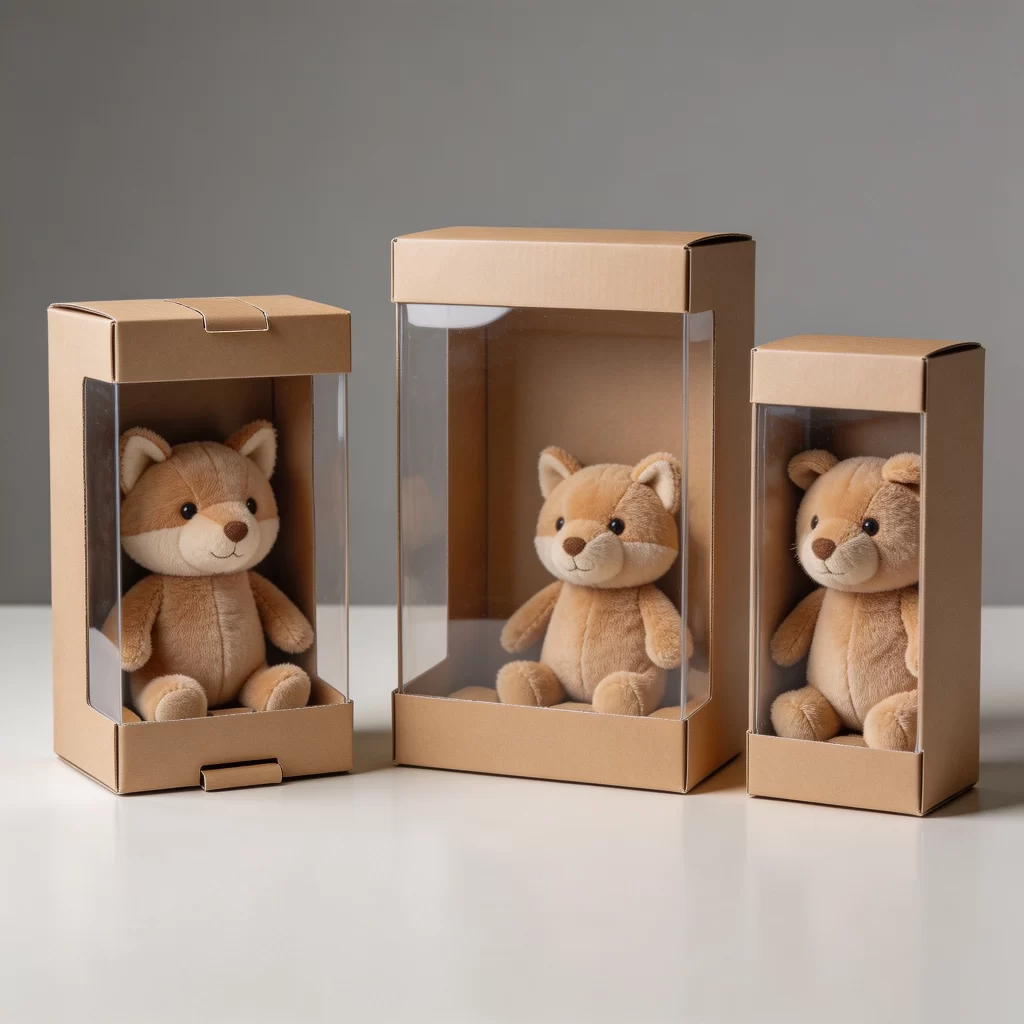
One of the easiest mistakes in toy packaging is allowing the packaging design to become more visually dominant than the toy. Plush products sell heavily through shape, face, fabric texture and character expression, so covering these elements with large cardboard borders can weaken the presentation. A customer should not need to imagine what most of the plush looks like.
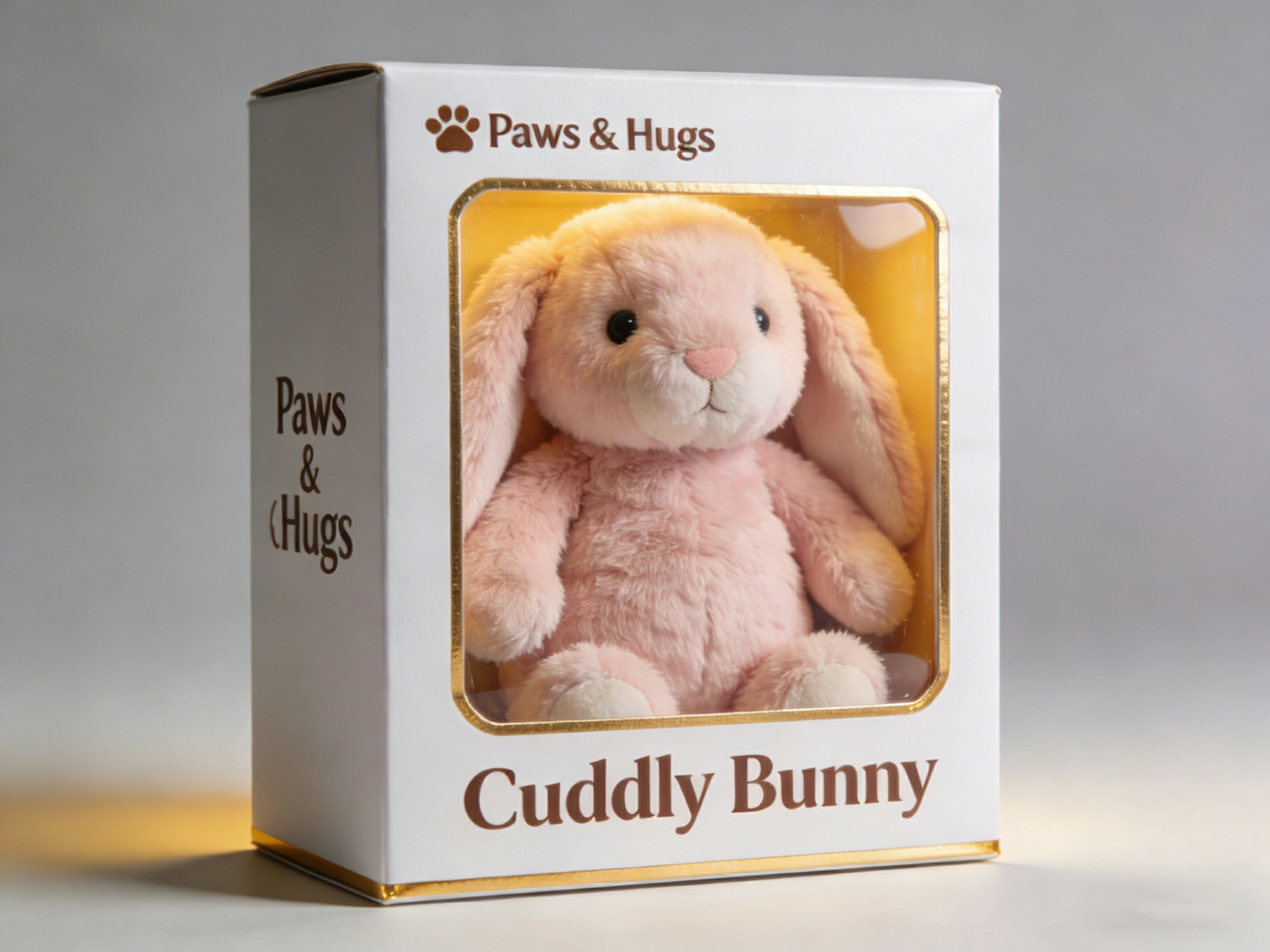
For a window box, check what percentage of the character remains visible after the actual product is inserted. The face, main silhouette and important design features should usually remain unobstructed. For a mascot with a distinctive belly logo, for example, a window that only reveals the head may remove an important part of the product identity.
The same principle applies to product orientation. Soft plush toys can rotate or slump after packing, especially when the body is lightly stuffed. An internal cardboard insert, soft tie, shaped tray or controlled fixing point may therefore create more retail value than adding another decorative print finish.
Choose the Packaging Structure Around the Plush, Not the Artwork
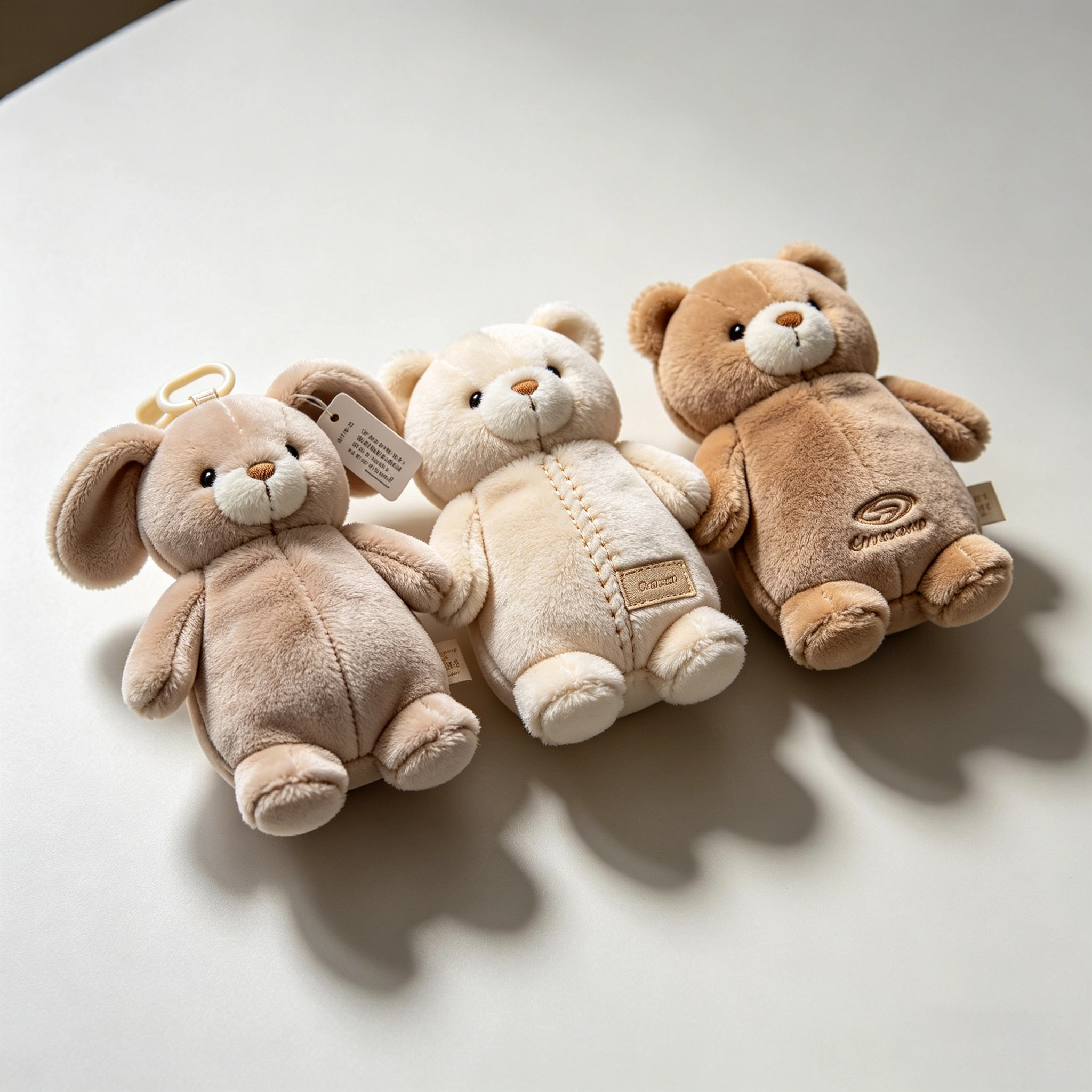
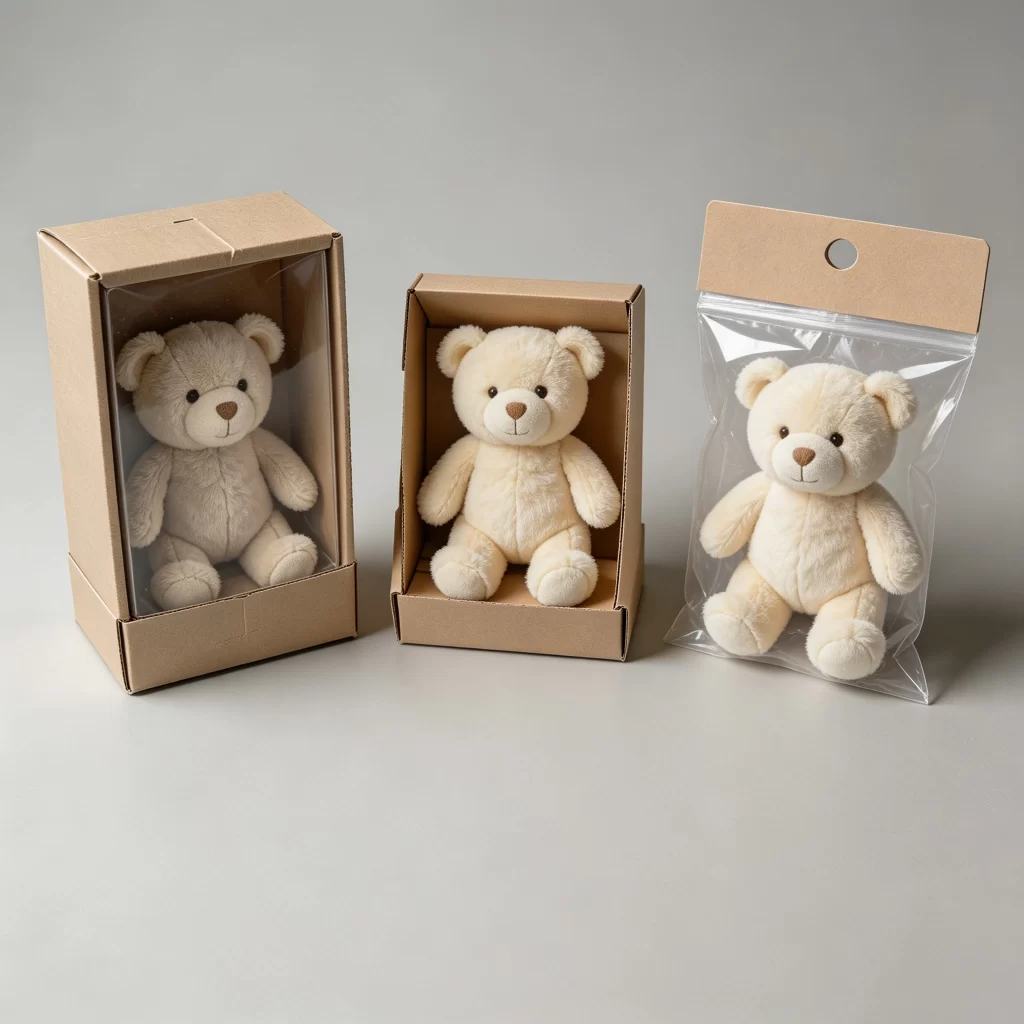
The packaging format should be selected after considering the plush size, body shape, softness, sales channel and desired level of presentation. There is no single retail packaging format that works best for every plush toy. A 10 cm plush keychain, a 25 cm sitting mascot and a 40 cm teddy bear create very different structural requirements.
Window Box
A window box works well when buyers need product visibility while keeping most of the toy protected. It is especially useful for gift plush, collectible characters and private-label products where both the printed artwork and the physical toy contribute to the presentation. However, the window opening needs enough structural border around it so the front panel does not become weak or distorted.
Open-Front Display Box
An open-front display box can make the plush feel more accessible because customers can see and sometimes touch the fabric directly. It also avoids reflections from a clear plastic window. The tradeoff is that the product receives less protection from dust and repeated retail handling, so this format works better when the store environment and product positioning support it.
Header Card or Branded Bag
For smaller plush toys, plush keychains or price-sensitive retail programs, a printed header card or branded bag may be more efficient. It uses less packaging volume and generally requires less assembly than a full display box. It offers less premium presentation, however, so the decision should reflect the expected retail price and sales channel rather than packaging appearance alone.
A Display Box Needs the Right Product-to-Box Ratio
A common misconception is that a larger display box automatically makes a plush toy look more valuable. In practice, excessive empty space often makes the product look smaller. A box that is too tight creates the opposite problem: ears bend, long-pile fabric is compressed, and the face may press against the window.
The useful question is therefore not “How big should the box be?” but “How much controlled clearance does this plush need?” The answer depends on the product. A firm sitting plush can tolerate a closer fit, while a character with long ears, a large tail or fluffy fabric may need more clearance to arrive in its intended shape.
We usually recommend checking the package with the approved physical plush rather than using dimensions alone. Plush dimensions are not as rigid as those of hard products because stuffing pressure and fabric pile affect the occupied space. Even a small dimensional difference can change how the final product sits inside a close-fitting display box.
Give the Front, Side and Back Panels Different Jobs
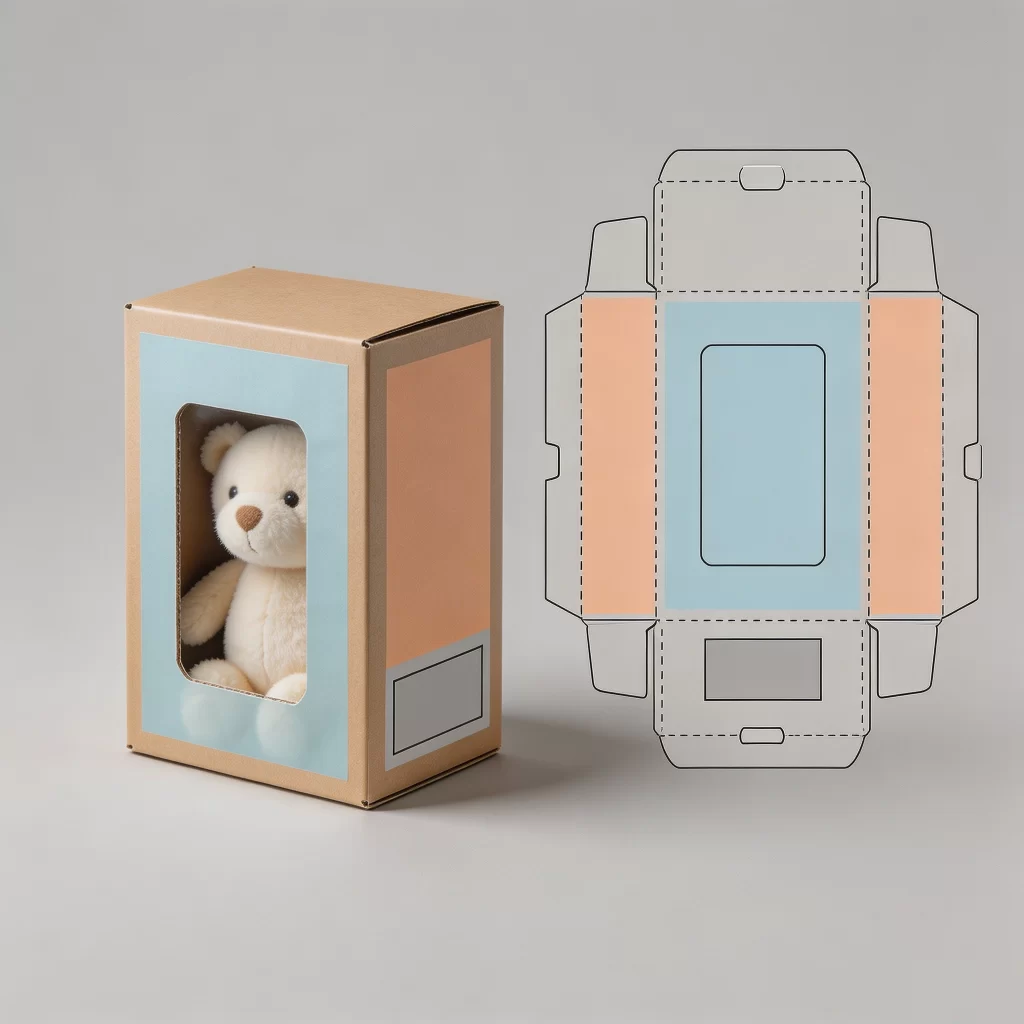
Good retail packaging does not try to place every message on the front. The front panel normally needs the clearest visual hierarchy because it carries the first shelf impression. Brand identity, character or product name, and product visibility should take priority over long explanations.
Side panels can carry secondary information such as character details, collection identification or brand storytelling. The back panel is usually more suitable for product information, barcode space, responsible-party information, warnings where applicable, and other less visual content. This creates a cleaner front while keeping important retail information available.
Barcode placement should also be treated as a functional requirement rather than a last-minute artwork addition. GS1 US recommends positioning point-of-sale barcodes generally in the lower-right area on the back of packaging, away from package edges, while maintaining the required clear area around the symbol.
For children’s products sold in the United States, packaging artwork may also need to accommodate applicable tracking information. CPSC guidance states that children’s products require distinguishing tracking marks on the product and its packaging to the extent practicable, including information that allows the production source to be identified.
European packaging planning now has another consideration. The EU Packaging and Packaging Waste Regulation generally became applicable on 12 August 2026 and introduces requirements covering packaging design, composition and waste reduction, although individual provisions have different implementation timelines. Brands selling into the EU should therefore review the final packaging specification against the current PPWR requirements rather than relying on an older packaging template.
A Packaging Mockup Is Not a Packaging Sample
A packaging mockup is useful for checking graphic hierarchy, color direction and basic layout before printing. It can also show how the toy is expected to appear inside the box. However, a digital mockup cannot confirm whether the physical plush remains upright, whether the window flexes, or whether the insert is difficult to assemble.
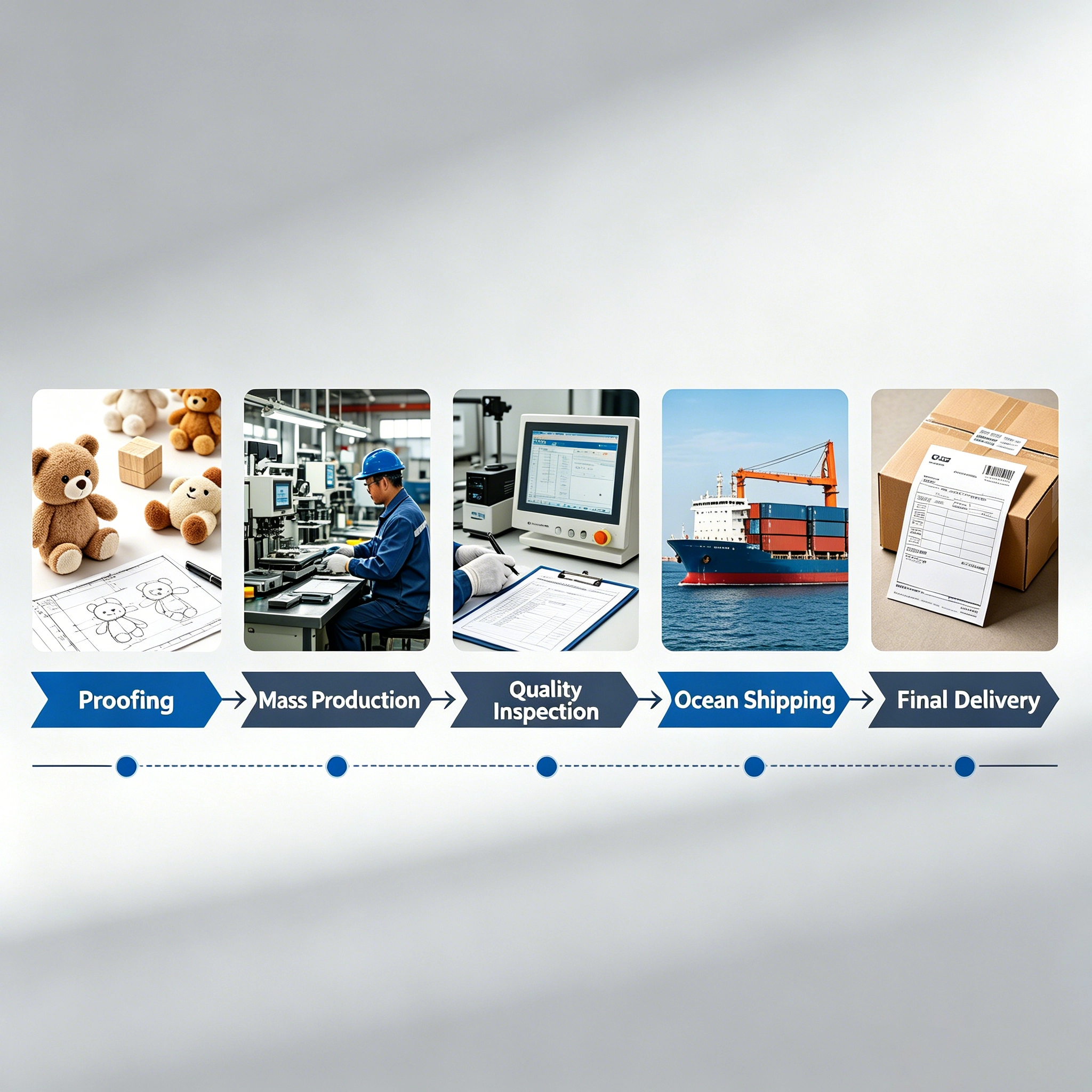
This is why packaging development benefits from separate checkpoints. A dieline confirms dimensions and folding structure, a digital mockup confirms artwork placement, and a physical white sample can reveal structural problems before full-color printing. A final printed sample then lets the buyer review color, finish, product positioning and assembly together.
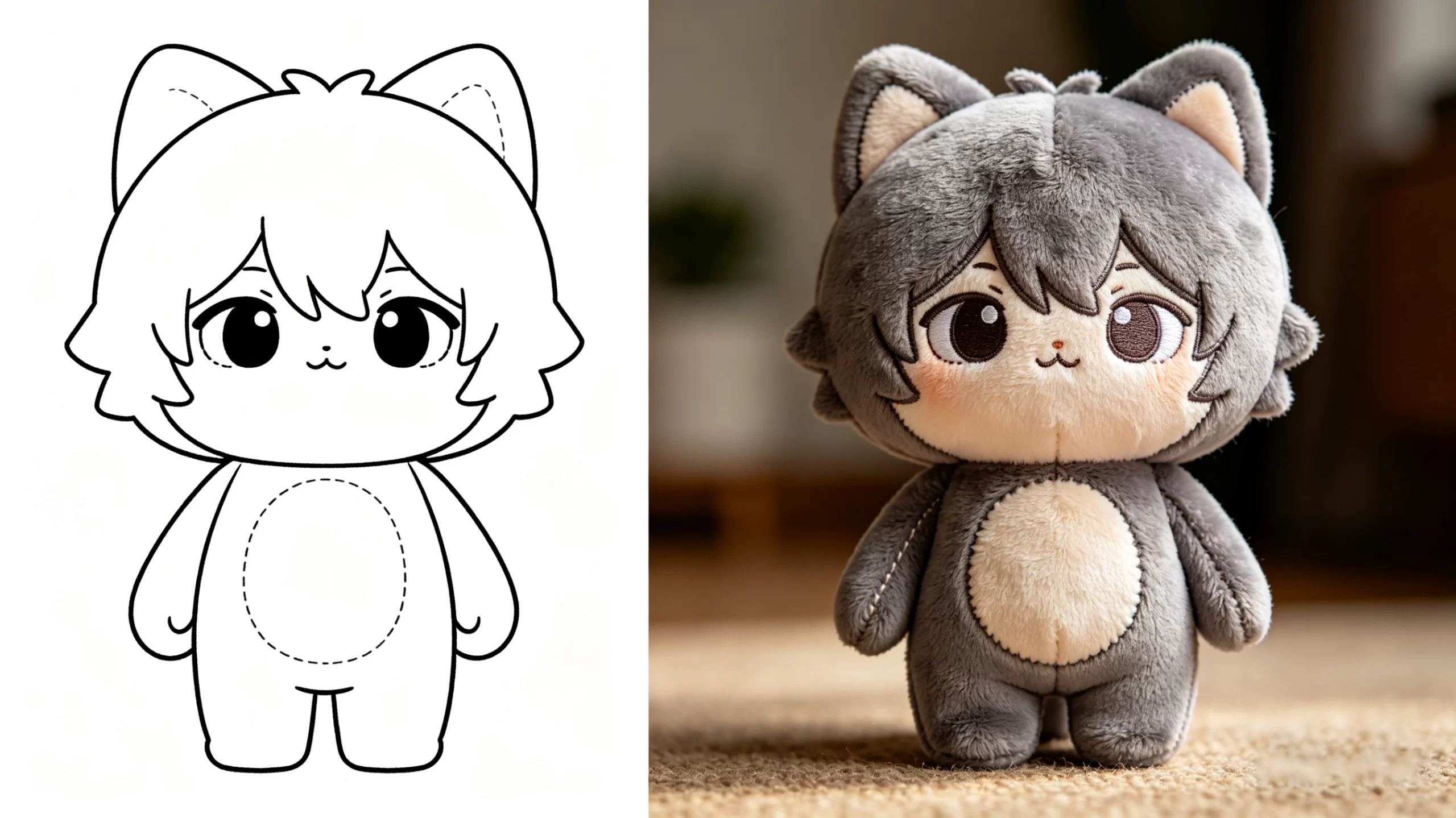
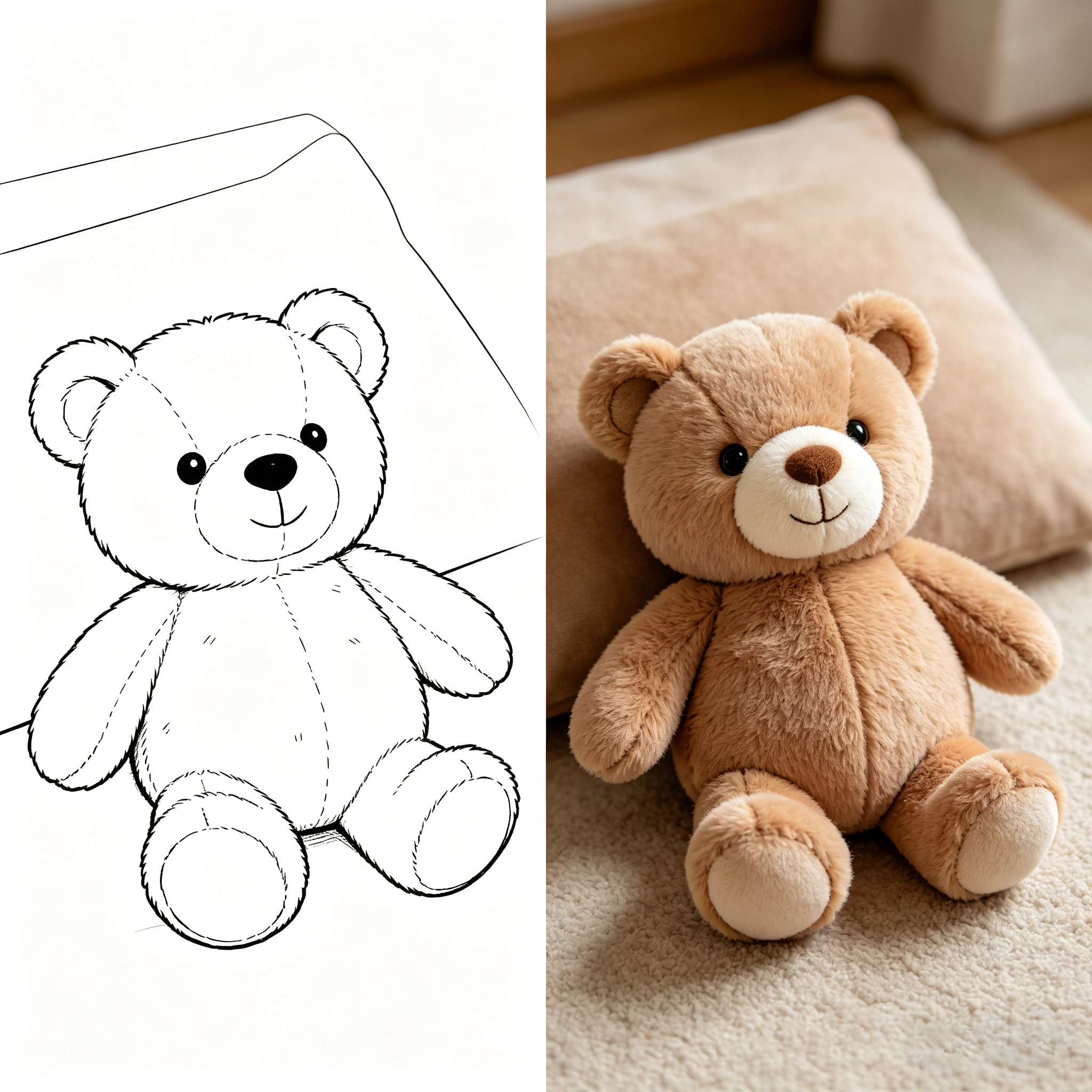
One issue we often see is packaging artwork being approved before the plush sample is final. If the plush height, ear position, accessory or sitting angle changes later, the existing insert or window may no longer fit properly. Reviewing packaging alongside the approved product sample usually reduces this type of revision loop, which is also why packaging considerations belong naturally within the broader sampling process.
Retail Packaging Cost Is More Than the Price of the Box
When buyers compare packaging quotations, they often focus on the unit price of the printed box. That number is important, but it does not represent the full effect of the packaging choice. Structural inserts, transparent windows, printing finishes, manual fixing, label application and packaging assembly can all add cost or handling time.
Shipping volume can be even more significant for plush toys. Plush products can sometimes be compressed for transport when packed simply, but rigid retail boxes usually limit compression. A box that adds only a few centimeters around each product can therefore increase the number or size of export cartons required across a bulk order.
This does not mean that buyers should avoid display packaging. It means the packaging should earn the volume it uses. If a larger display box supports a higher-value retail position, protects a collectible product or improves shelf presentation, the extra cost may be justified. If the product will mainly be sold online and removed from the shipping carton immediately, simpler packaging may be commercially stronger.
Retail Packaging Checklist Before Final Approval
Before approving retail packaging for a plush product, check the complete packaged item rather than the artwork file alone.
- Can the customer’s first viewing angle clearly show the plush face and main silhouette?
- Does the toy stay upright after normal handling?
- Are ears, tails, accessories or long fabric being crushed?
- Is the package appropriately sized rather than unnecessarily oversized?
- Does the window or opening expose the most important product features?
- Is the front panel visually simple enough to understand quickly?
- Is there enough space for barcode, product information and required market-specific labeling?
- Can the barcode remain flat, unobstructed and easy to scan?
- Have the approved plush dimensions been used for the final packaging dieline?
- Has a physical packaging sample been reviewed rather than only a digital packaging mockup?
- Are inserts, ties and fixing methods practical for bulk packing?
- Has the effect of the retail box on export-carton volume been checked?
- Have U.S., EU or retailer-specific packaging requirements been reviewed for the actual sales market?
- Can the packaging survive normal transport and shelf handling without making the product look untidy?
A retail packaging checklist for plush toy products should therefore evaluate appearance, structure, information and logistics together. A package is not shelf-ready simply because the graphics look professional. It is shelf-ready when the real packaged product can move from packing carton to retail display with minimal correction.
Key Takeaways
Shelf-ready retail packaging begins with the physical plush toy, not with a box template.
A strong package should:
- make the plush easy to see;
- control how the toy sits inside the pack;
- match the expected retail price and sales channel;
- reserve practical space for barcodes and required information;
- be tested as a physical package before mass production;
- and justify the added packaging and shipping volume.
The goal is not to create the most complicated toy packaging. The goal is to make the plush product look complete, easy to merchandise and ready for the way it will actually be sold.
FAQ
Does a plush toy need a window box to look retail-ready?
No. A hangtag, header card, open display tray or branded bag can all work depending on product size, selling price and retail channel. A window box is useful when protection and strong presentation are both important, but it should not be treated as a universal requirement.
Can the same packaging artwork be used for the United States and Europe?
Sometimes, but it should not be assumed. Required product information, warnings, responsible-party details and packaging-related requirements can differ between markets, so the compliance information area should be reviewed before the artwork is released for printing.
When should I give my supplier the UPC or EAN barcode?
Ideally, provide the final barcode before packaging artwork approval. This gives the designer enough room to preserve the barcode size, quiet zones and suitable placement instead of squeezing it into unused space at the end.
Can one display box size be shared by several plush characters?
Yes, if the characters have similar dimensions and positioning. However, differences in ears, tails, hats or body width may require different inserts even when the outer carton remains the same, so each SKU should still be physically tested.
Do I need a fully printed packaging prototype?
For simple low-risk packaging, a structural white sample plus approved print proof may sometimes be sufficient. For important retail launches, gift packaging or complex display boxes, a printed prototype gives buyers a better way to review color, finish, window positioning and the complete shelf appearance before bulk printing.
Can I request a packaging quotation before the packaging design is finished?
Yes, but the quotation will normally be preliminary. Box dimensions, material, printing, window structure, insert type, finishing and quantity all affect cost, so pricing becomes more reliable once these specifications are defined.
Who should prepare the packaging dieline?
The packaging producer normally provides the production dieline based on the confirmed package dimensions and structure. Your designer can then place artwork on that dieline, but the final production file should still be checked by the packaging supplier before printing.
Should plush packaging be designed before or after the toy sample?
Basic packaging direction can be discussed early, but final structural dimensions are better confirmed against an approved or near-final plush sample. This reduces the risk that later changes to the toy force another box or insert revision.
Preparing a Plush Toy for Retail?
If your project needs a display box, branded bag, hangtag, insert or other retail presentation, send the plush design together with the expected product size, sales market, quantity and packaging references. Wehao Toys can review the plush and packaging requirements together so that product positioning, package dimensions and branding details can be evaluated before bulk production.
Contact Wehao Toys for a Custom Plush Toy Project