
Quick Answer
Plush toys can work better than generic trade show giveaways when your brand has a mascot, character, recognizable visual identity, or campaign story worth turning into a physical object. They are especially useful when the giveaway should attract attention, start a conversation, reward a meaningful booth interaction, or remain visible after the event.
They are not automatically the best choice. Pens, tote bags, drinkware, notebooks, and other practical promotional items can be cheaper, faster to source, and easier to distribute at very high volume. The better question is not “Are plush toys better?” but “What job should this giveaway perform?”
Trade Show Giveaways Should Have a Job, Not Just Fill a Bowl
Most exhibitors know that visitors expect some form of promotional merchandise. A recent VistaPrint survey of U.S. trade show attendees found that 80% said they usually collect promotional items, with T-shirts, tote bags, pens, water bottles, and power banks among the most popular choices. ASI’s 2026 promotional product research also found strong recipient interest in useful products such as apparel, blankets, drinkware, and bags.
That is an important reminder for anyone planning trade show giveaways: usefulness still matters. A pen is easy to understand, a tote bag helps carry items around the show, and a bottle has a clear everyday function. Plush should not try to win this comparison by pretending to be more practical than those products.
Its value comes from a different direction. A plush mascot can make a brand character physical, a mini plush can become a desk object, and a plush keychain can move around the venue on an attendee’s bag. That makes plush most useful when the objective is recognition, interaction, or character-led brand memory rather than simple utility.
Promotional product research has long shown that branded merchandise can support strong brand recall, although those findings apply to promotional products generally rather than proving that plush is always more memorable than other formats. PPAI reported that nine out of ten consumers in its 2017 study could correctly recall branding when prompted about a promotional product they had received.
When Plush Has an Advantage Over Generic Booth Giveaways
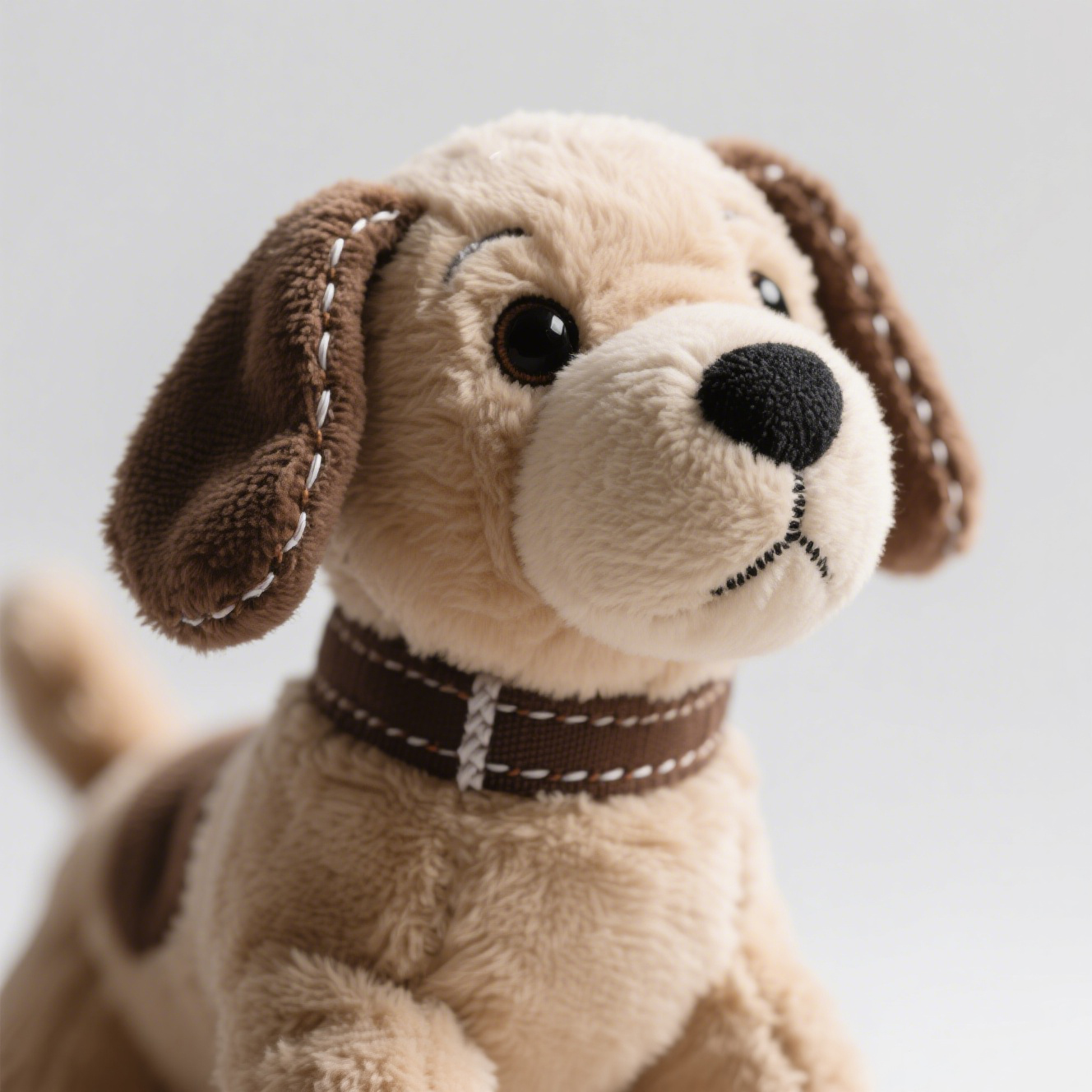
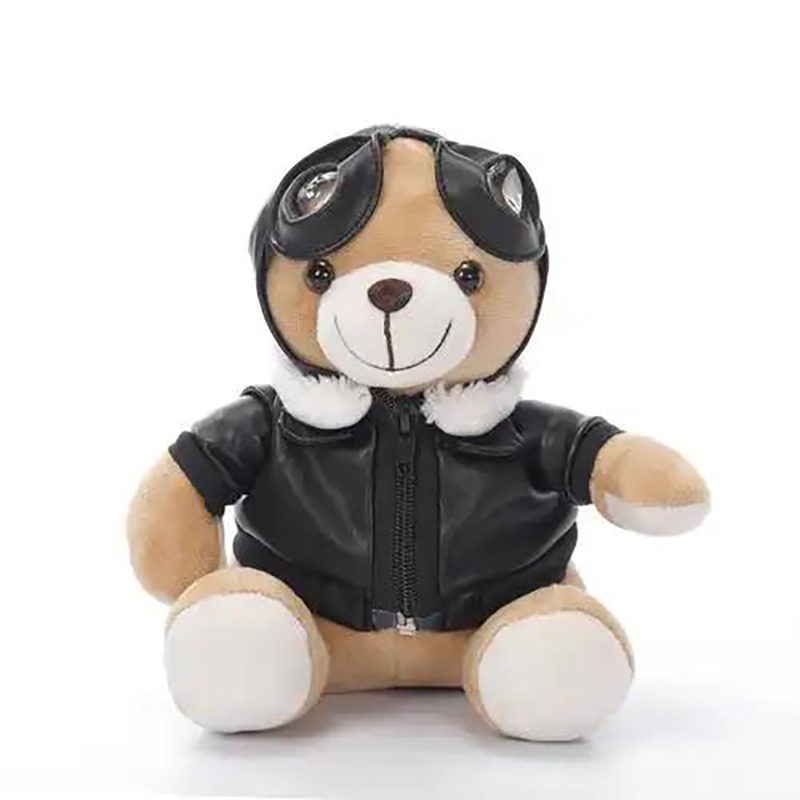
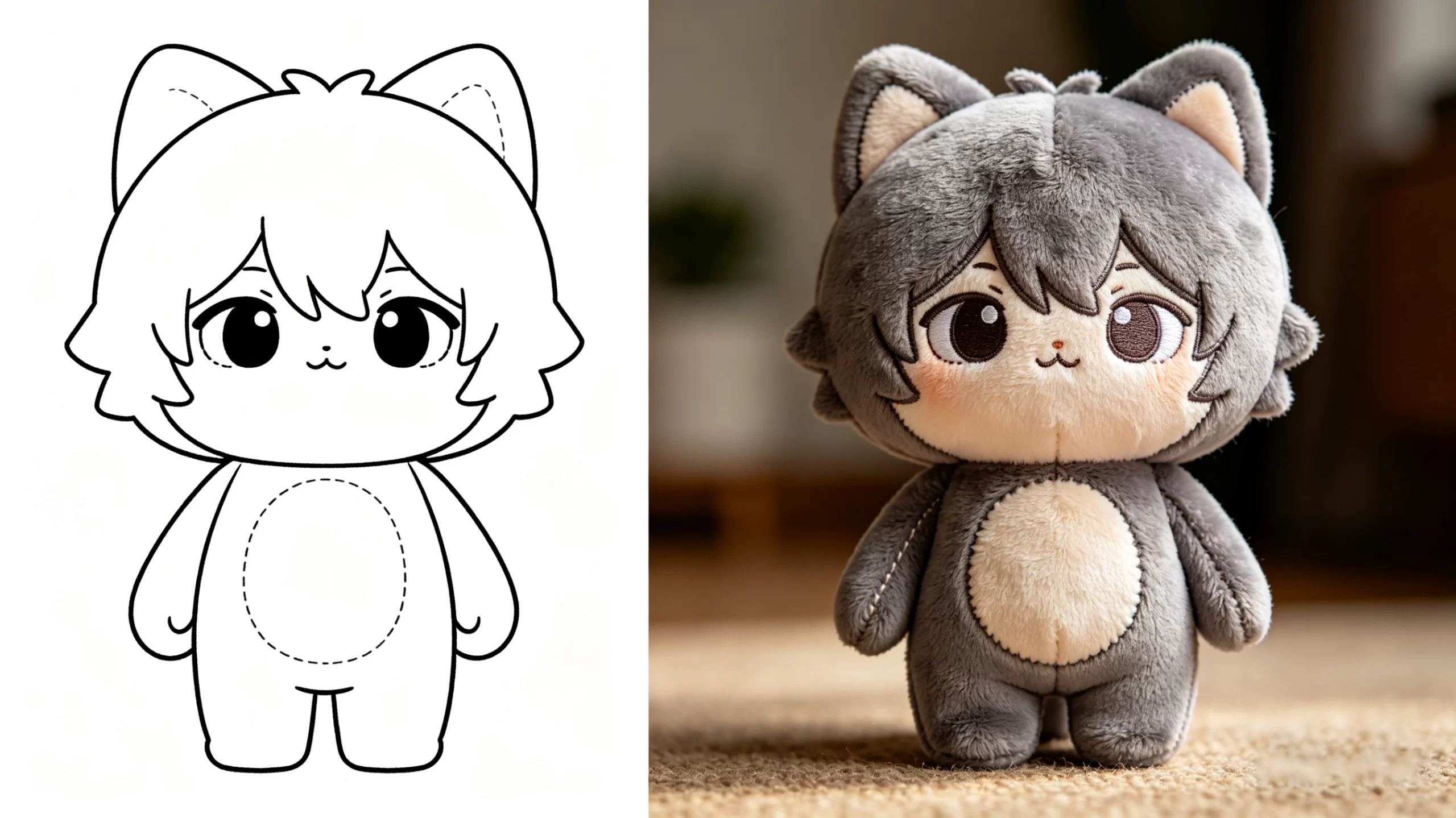
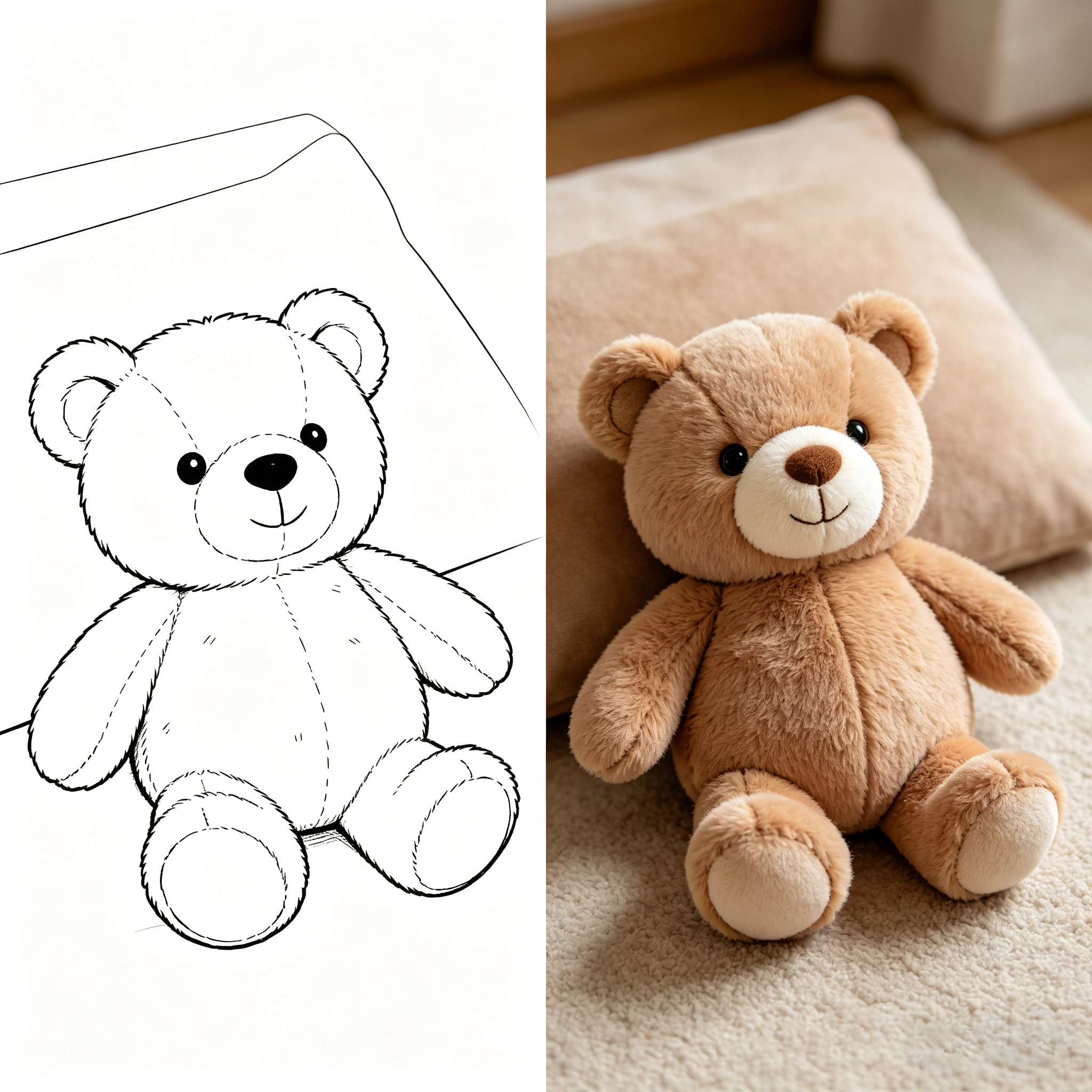
The strongest case for plush appears when the brand already has something people can recognize. If your campaign has a mascot, logo character, animal, product character, or distinctive symbol, plush gives that visual asset a three-dimensional form people can hold. A generic item can carry the logo, but a custom promotional plush toy can become the logo character itself.
This creates a different type of booth interaction. Instead of beginning with “Would you like a pen?”, staff can introduce the character, explain why it exists, or use it as the reward after a demo. In technical or B2B industries, that softer opening can make an otherwise formal booth feel easier to approach without replacing the actual sales conversation.
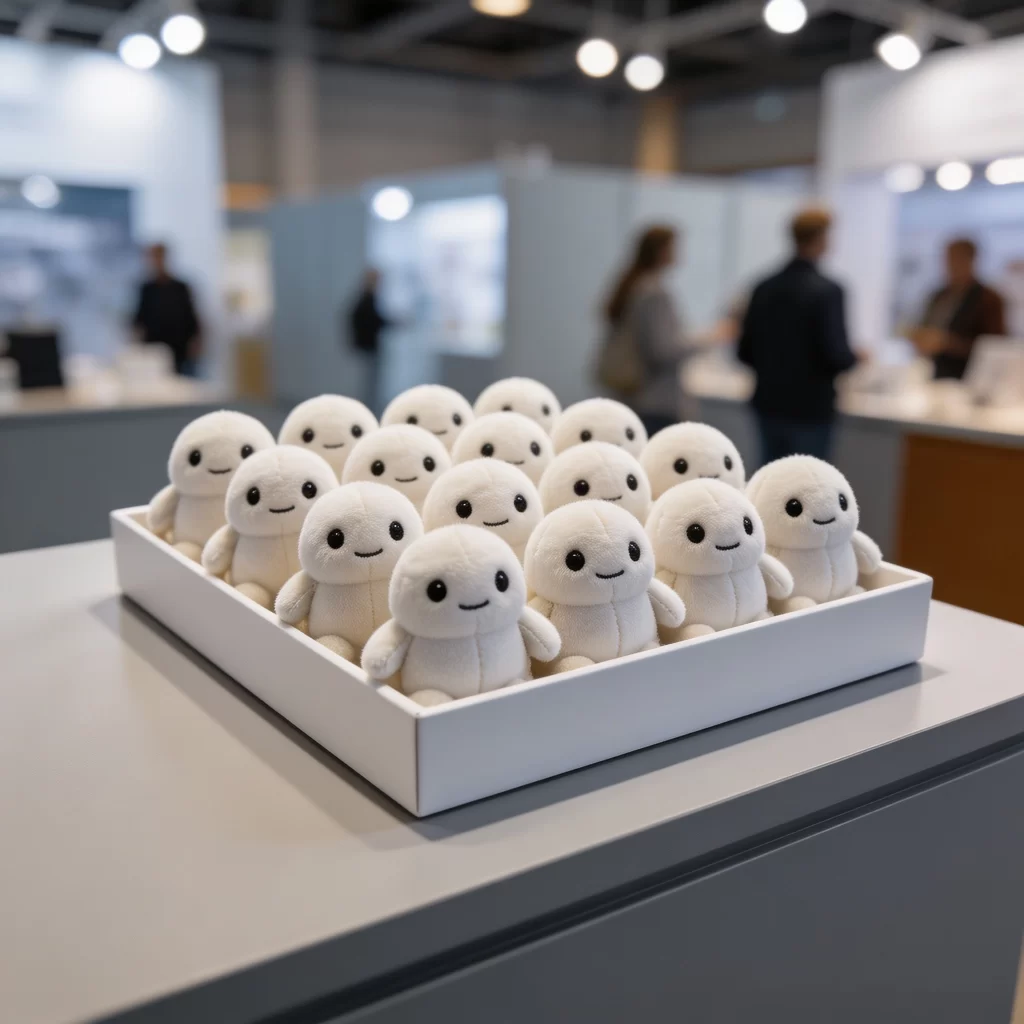
Plush can also create visual activity around the stand. A tray of mini characters, a larger mascot on the counter, or attendees carrying plush keychains can make the giveaway visible before another visitor receives one. That is useful when booth giveaways need to work both as gifts and as part of the physical event display.
However, character quality matters. A poorly translated mascot with the wrong face, proportions, or colors can weaken rather than strengthen recognition. In our sampling experience, mascot projects usually need more attention to facial embroidery, silhouette, fabric pile, and proportion than a simple logo printed on a standard promotional item.
Plush vs Generic Promotional Items: Where Each Works Better
The right comparison is not plush versus “cheap swag.” Many generic promotional products are useful and effective. The decision should be based on campaign function.
| Decision Point | Plush Giveaway | Generic Promotional Item |
|---|---|---|
| Mascot or character recognition | Strong | Usually limited to printed branding |
| Immediate practical utility | Moderate to low | Often strong |
| Visual booth impact | Strong when displayed well | Depends on product |
| Very high-volume distribution | Less suitable for premium custom designs | Often better |
| Emotional or gift-like feel | Strong | Product-dependent |
| Portability | Good with mini plush/keychains | Usually good |
| Short sourcing deadline | More difficult for fully custom projects | Often easier |
| Design development required | Yes for custom characters | Often minimal |
| Brand storytelling | Strong | Usually depends on print area |
| Lowest possible unit cost | Rarely the main advantage | Often stronger |
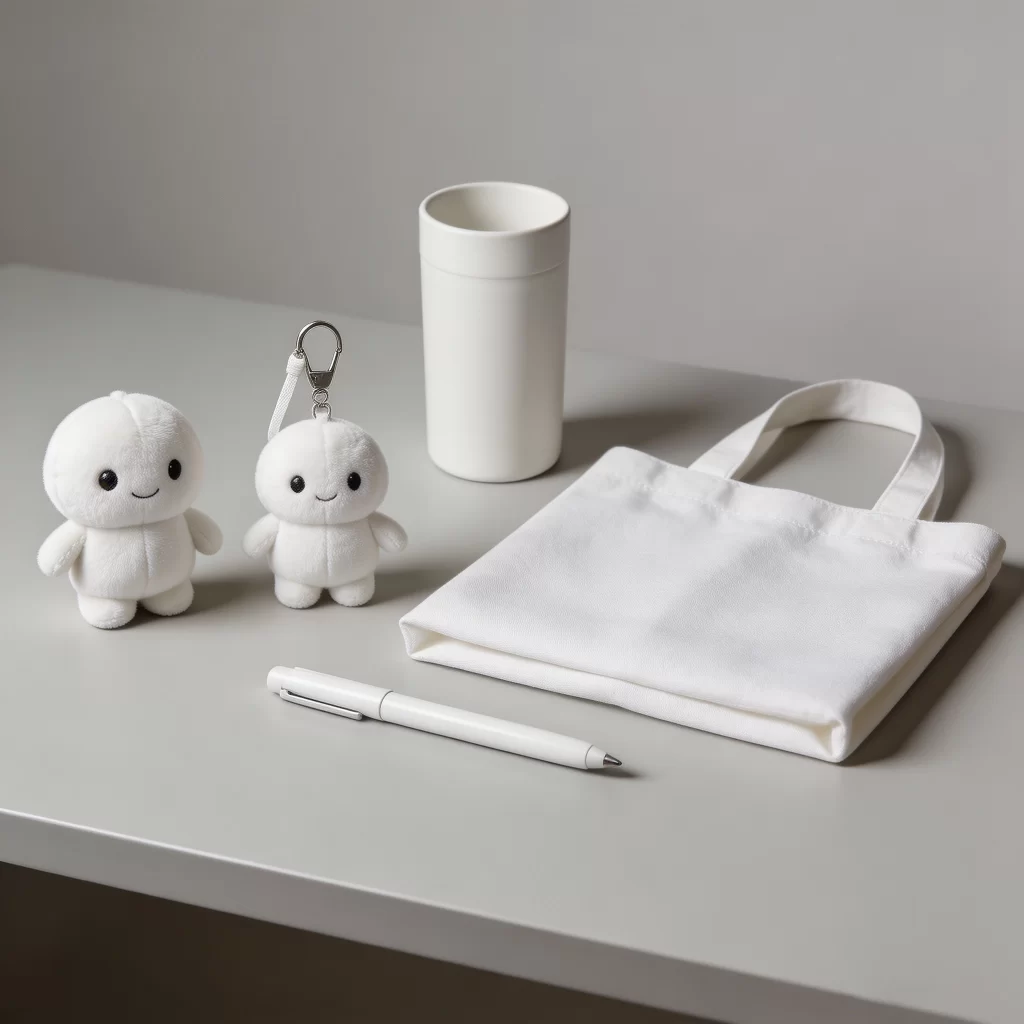
This comparison also explains why plush should not replace every event giveaway. If 10,000 visitors need an inexpensive object in a short timeframe, a standard promotional item may make far more sense. If the goal is to give 500 qualified prospects something connected directly to the brand’s identity, the economics can look very different.
Many buyers focus only on unit price and miss the distribution model. An item costing less is not automatically more efficient if thousands are taken without meaningful interaction. A more expensive giveaway can still make commercial sense when it is deliberately reserved for the visitors the sales team actually wants to continue talking with.
Do Not Give the Same Item to Every Visitor
One of the most useful ways to control a plush giveaway budget is to stop treating every booth visitor equally. A person walking past the stand, someone who completes a product demo, and a scheduled buyer meeting do not represent the same level of engagement. There is no reason all three must receive the same expo gift.
A simple giveaway ladder can work better:
- Casual visitor: brochure, digital follow-up, or no physical gift
- Badge scan or short interaction: low-cost promotional item
- Completed demo or qualified lead: mini plush or plush keychain
- Scheduled meeting or important prospect: medium mascot plush
- VIP, partner, media, or campaign winner: premium presentation version
These are planning roles rather than fixed rules. The important point is that the value of the giveaway should roughly follow the value of the interaction.
For example, an exhibitor expecting several thousand visitors may not need several thousand custom mascot plush toys. The buyer can estimate likely demos, meetings, and qualified conversations first, then build the plush quantity around those moments. For broader campaign distribution, bulk stuffed animals can be planned separately from the premium booth-gift tier.
This also makes the giveaway feel earned rather than random. Visitors understand that the plush is connected to an activity, meeting, or campaign moment, while staff retain better control over stock during a multi-day event.
Small Plush Usually Makes More Sense on the Show Floor
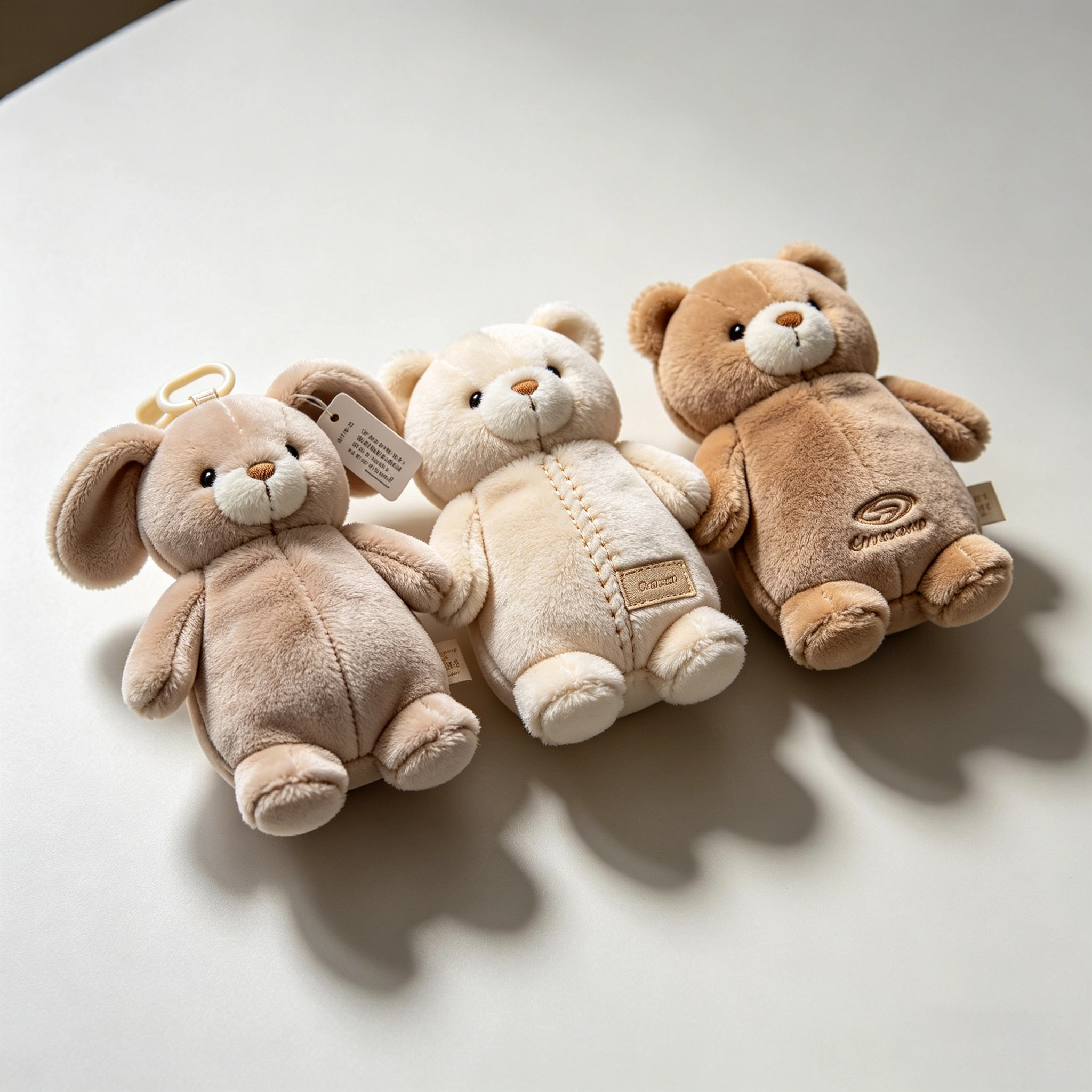
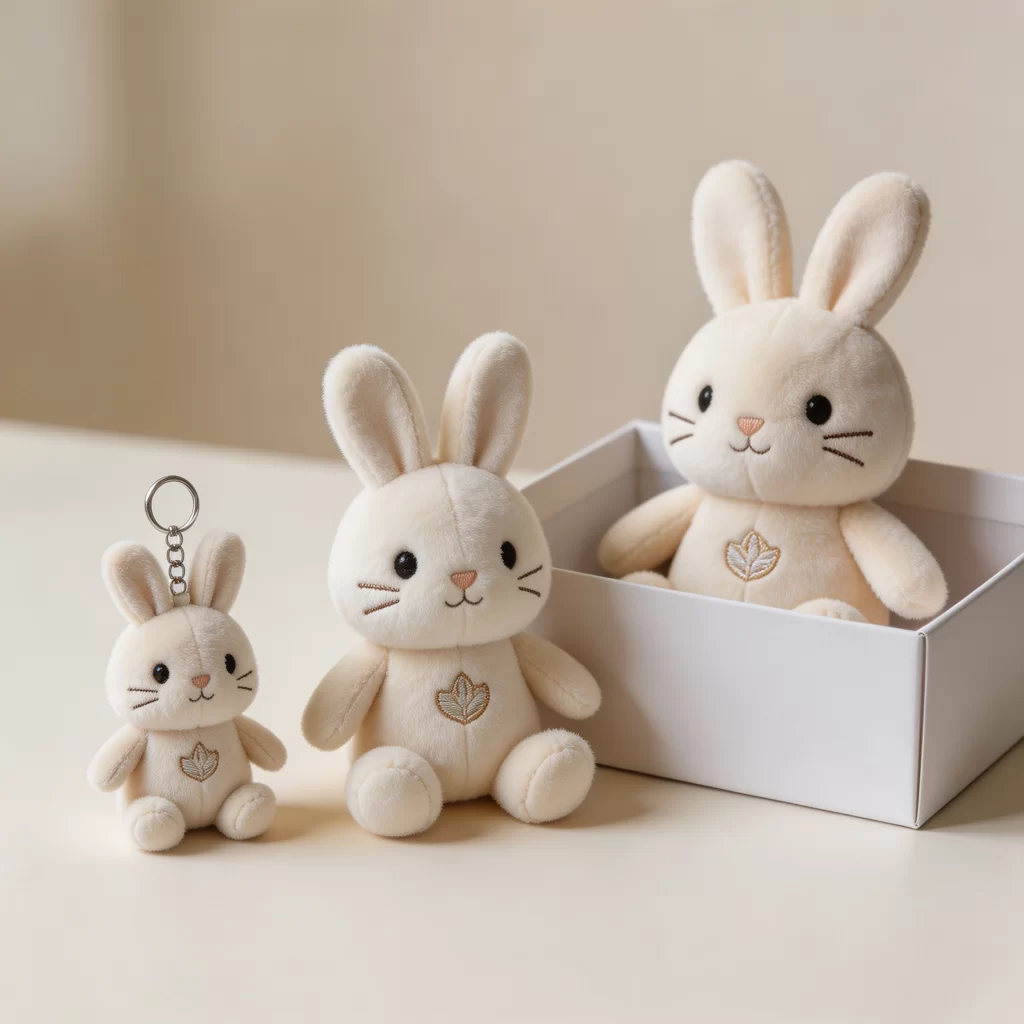
For high-volume booth giveaways, a mini plush or plush keychain is usually easier to carry than a larger gift-style toy. Current mini plush formats commonly sit within roughly the 5–10 cm range, while plush keychain projects can often be developed around similarly compact sizes. Small size reduces bulk at the booth and makes it easier for visitors to place the item in a tote or attach it to a bag.
Small does not mean that every detail from a large mascot should simply be reduced. Fine facial embroidery, narrow limbs, tiny accessories, long-pile fabrics, and complex color blocks may lose definition when the design becomes smaller. We usually recommend protecting the features that make the character recognizable and simplifying details that do not survive the scale change.
Branding also needs to match the available surface area. A small mascot may have room for a clear embroidered symbol but not a long slogan, campaign date, URL, and QR code at the same time. A hangtag or card is often a better place for secondary information, especially for QR codes that need a flat and predictable scanning surface.
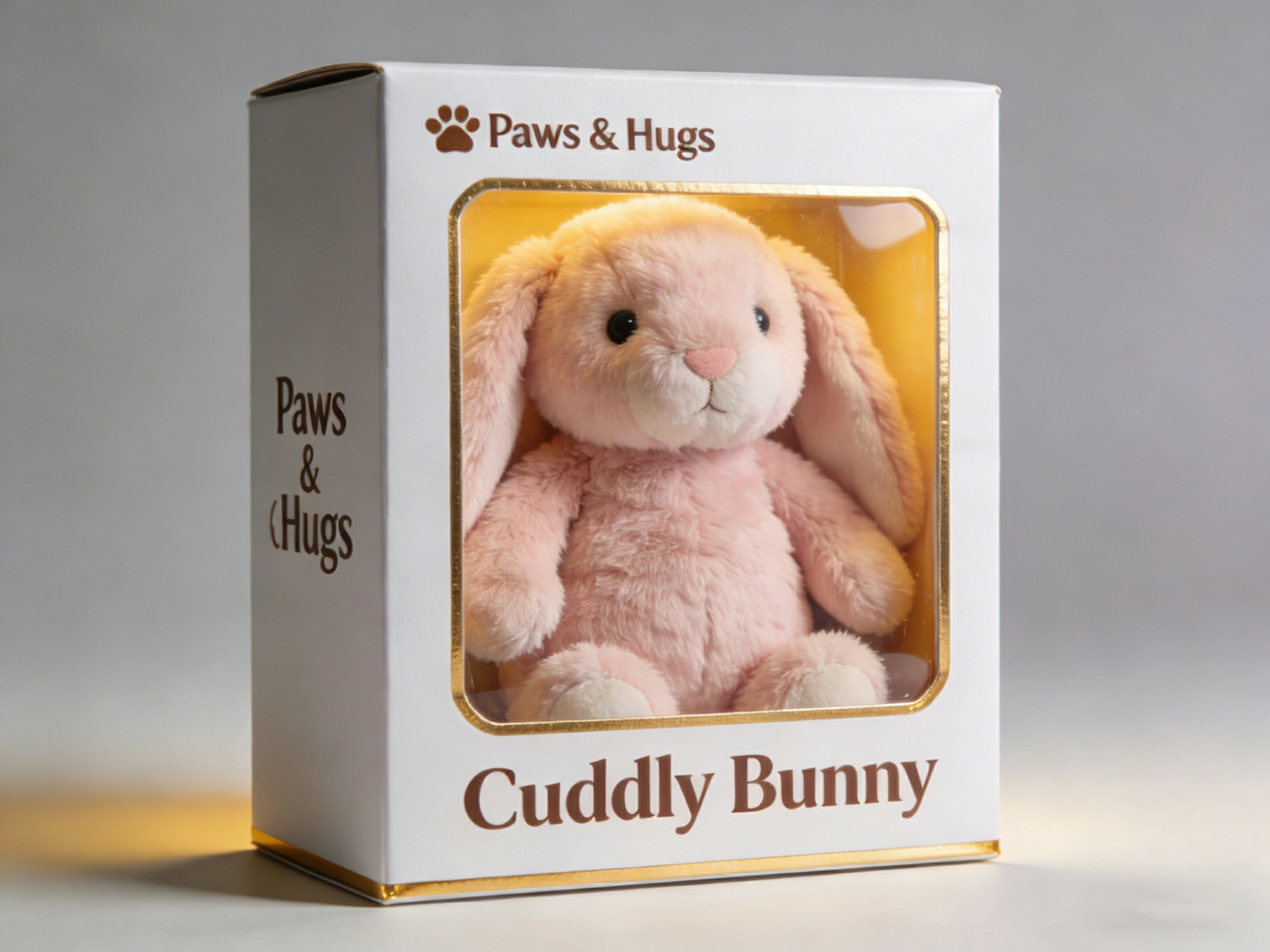
Packaging should remain practical as well. Retail-style boxes can add presentation value, but they also consume booth storage space and increase packing volume. For event distribution, simple protective packing plus a well-designed hangtag may do the job more efficiently unless the plush is intended for VIP gifting.
The Biggest Risk Is Often the Event Calendar
A trade show date cannot move simply because the product needs another sample revision. That makes the calendar one of the most important differences between normal promotional sourcing and event-specific custom plush development. The event date should be treated as a delivery deadline, not a production-complete date.
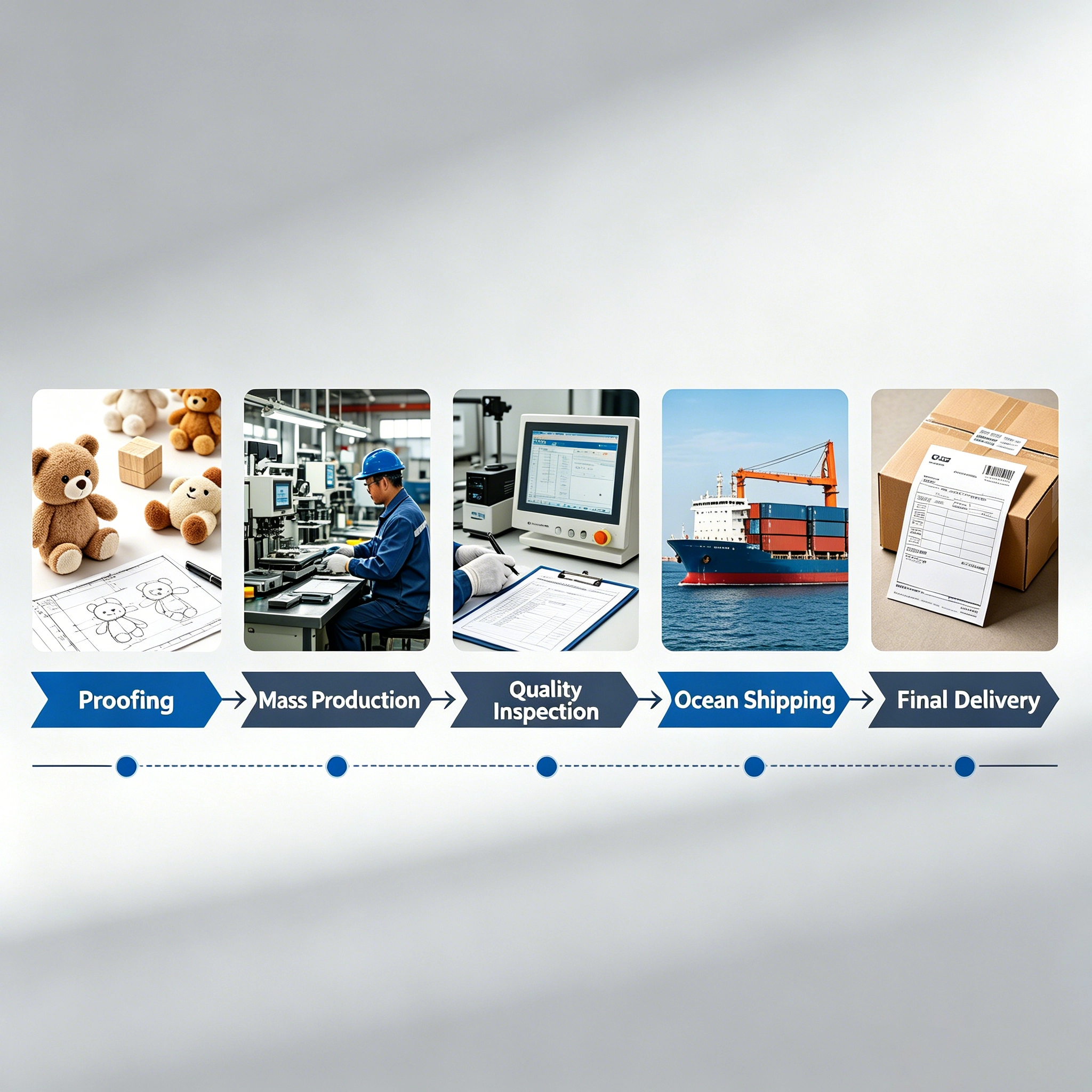
A finished event sample should be reviewed for proportion, embroidery, attachment strength, branding placement, and packing method before bulk production. Current Wehao Toys planning guidance places normal plush sampling around 7–15 days after details are confirmed, with bulk production commonly around 25–40 days after sample approval. Complex shapes, materials, accessories, or packaging can extend that timeline, and international shipping still needs to be added separately.
The hidden delay usually comes from revisions rather than sewing time alone. A mascot face may need another embroidery adjustment, a small character may need simpler hands or ears, or an exact brand color may require another fabric review. Each apparently small change occurs before the final approved reference can move into production.
For event giveaways, we therefore recommend working backward from the date the cartons must physically arrive. Include sampling, possible revision time, production, inspection, packing, freight, customs, and a buffer for unexpected delays. Ordering “one month before the show” is not a sourcing strategy unless the selected product and shipping plan can genuinely support it.
For a more detailed breakdown of custom plush production lead time, the event date should always be treated as the final arrival deadline rather than the point when production should finish.
Do Not Ignore Toy Compliance Because the Plush Is Free
A promotional product may also need toy compliance review when it is designed or intended as a children’s toy. In the United States, CPSC guidance states that toys designed or intended primarily for children 12 and under are subject to mandatory toy requirements, including applicable ASTM F963 provisions, third-party testing, and Children’s Product Certification requirements. Stuffed and bean-bag-type toys also have specific ASTM F963 sections that may apply.
European buyers should also check the applicable EU toy framework rather than treating a giveaway as exempt simply because it is distributed without a retail price. The EU’s new Toy Safety Regulation entered into force on January 1, 2026, but its new rules become applicable from August 1, 2030, creating a transition period that buyers need to understand when planning current projects.
This does not mean every company mascot handed to an adult conference visitor should automatically be treated in exactly the same way as a children’s retail toy. Intended user, design, claims, distribution, market, and product construction all matter. The safe procurement approach is to define the intended audience before sampling and confirm the testing and labeling scope for the actual market.
Compliance also affects design. Loose accessories, hard components, small detachable decorations, magnets, long cords, and certain packaging choices may create additional review requirements. These issues are much easier to address during development than after several thousand units have already been produced.
When Should You Actually Choose Plush for a Trade Show?
Plush is usually a strong candidate when several of these conditions are true:
- your brand has a mascot or character worth reproducing;
- visual differentiation matters more than pure utility;
- the giveaway is connected to demos, meetings, lead qualification, or a campaign activity;
- visitors can comfortably carry the selected plush size;
- you want the object to remain useful as a display, desk, bag, or keepsake item after the event;
- the project has enough time for sampling and approval;
- the campaign budget allows product development rather than only standard imprinting.
Generic promotional products usually make more sense when the requirement is different. If speed, lowest unit cost, universal utility, or extremely broad distribution matters most, pens, bags, drinkware, apparel, notebooks, and similar products can be the better answer.
The strongest trade show giveaway strategy may therefore use both. A practical low-cost item can support broad booth traffic, while a small branded plush rewards higher-value interactions. A larger mascot can then be reserved for scheduled meetings, prize draws, partners, or VIP visitors.
That approach turns plush from “another free toy” into a controlled campaign asset.
Key Takeaways
- Plush is not automatically better than generic trade show giveaways.
- It performs a different job: character recognition, visual impact, emotional value, and conversation support.
- Mascot-based brands have the clearest reason to consider plush.
- Mini plush and plush keychains are usually easier to distribute at exhibitions.
- Avoid putting every visitor into the same giveaway tier.
- Simplify small plush designs instead of shrinking every detail.
- Keep event packaging lighter than retail packaging unless presentation is important.
- Plan from the venue arrival date backward, not from the factory completion date.
- Confirm compliance when the product may be intended for children.
- A mixed giveaway strategy can be more efficient than choosing one item for everyone.
FAQ About Plush Trade Show Giveaways
How many plush designs should we prepare for one trade show?
One main design is often easier to manage than a large collection, especially for a first campaign. Two colors or a small variation can create choice, but every additional character may introduce separate sampling, embroidery, material, and production requirements.
Can we customize an existing plush instead of developing a new mascot?
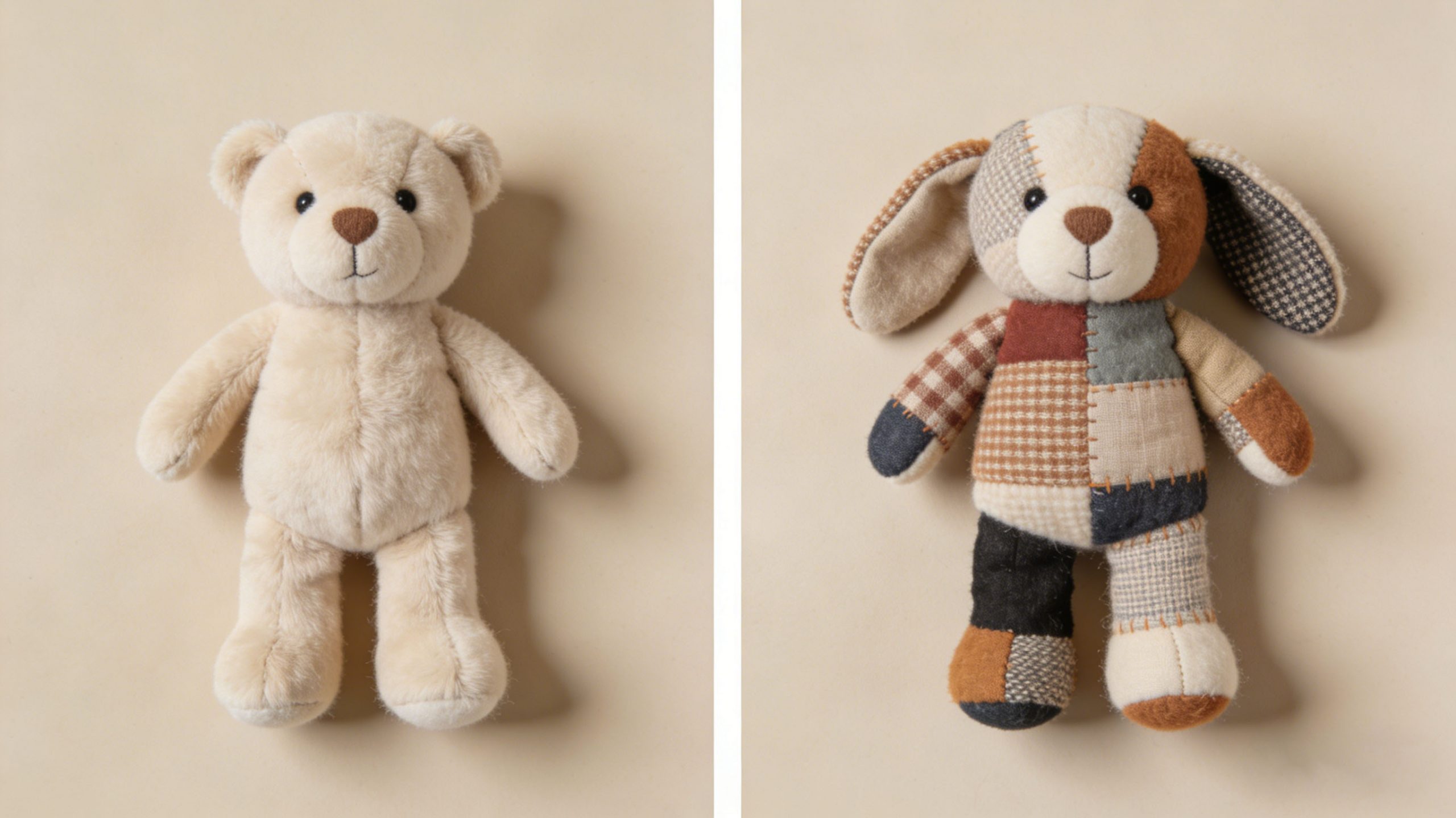
Yes. An existing or semi-custom style can sometimes be adapted with a branded shirt, embroidery, woven label, or hangtag. It can shorten development and reduce complexity, although it will provide less distinctive character ownership than a fully custom design.
What files should we send when requesting a quotation?
Send the mascot artwork or logo, preferred size, estimated quantity, target event date, delivery country, branding requirements, and preferred packaging. Pantone references, vector artwork, character style guides, and front/side views are especially useful when visual accuracy matters.
Should a QR code be printed directly onto the plush?
Usually not if reliable scanning is important. Fabric bends, stretches, and curves, so a printed hangtag or insert card normally provides a flatter surface and easier quality control. Always test the final printed QR code before bulk production.
Do trade show plush toys need individual packaging?
Not always. Bulk or simple protective packing can be more efficient when staff will distribute the items directly from the booth. Individual packaging becomes more useful when hygiene, premium presentation, retail crossover, separate shipping, or additional printed information matters.
Can unused plush giveaways be reused at the next event?
Usually yes if the design is not tied too closely to one event. Keeping the main plush evergreen and placing dates or event-specific messaging on removable hangtags can make leftover inventory easier to use for future exhibitions, sales meetings, or customer gifts.
Can an event order be shipped to more than one destination?
It can usually be planned that way, but split shipping should be confirmed before final packing. Venue deadlines, warehouse addresses, carton marks, quantities per destination, and on-site receiving rules need to be clear before the shipment is prepared.
Planning Plush for an Upcoming Trade Show?
If your campaign has a mascot, character, or visual idea that could work as a mini plush, keychain, or higher-value meeting gift, send the artwork together with your event date, expected quantity, destination, and giveaway plan. The project can then be reviewed around the real campaign objective rather than simply choosing a toy size.
Contact Wehao Toys for a Custom Plush Toy Project to evaluate the most practical format, sampling plan, branding method, and production schedule before committing to your event inventory.